Sunday, August 14, 2011

En la Gran Carpa de Paz - Barrancabermeja, Colombia

by Diane Lefer


In Barrancabermeja, Colombia you don't have to moisturize, there's so much petroleum in the air. They bathed your brow in oil... goes a line from the city's own anthem (to be sung at public events following the national anthem, and the himno of the departmento de Santander) and they say nothing happens here without the permission of Ecopetrol, the state-controlled oil company, (though the degree of control can be questioned as each aspect of oil extraction and refining and shipping in Colombia seems to have its own financial structure with the Colombian government owning shares here and there and transnational corporations controlling projects and then there are the shares sold to the public so that it remains a great mystery who is really in charge of anything). Nevertheless I guess I would not have found myself in Barranca if Ecopetrol had not given its blessing to the Primer Festival Internacional de Teatro por la Paz.

Tatiana, you wanted to know how it went for me in tu tierra, in a part of tu tierra where you have never been, and still overwhelmed by everything I saw and heard and experienced during the past two weeks (May 20-30, 2011), I am trying to organize my thoughts enough to tell you.

Before I left for Colombia, all I knew (from the internet) was that Barrancabermeja was infamous for massacres, disappearances, street battles between guerrilla armies and rightwing paramilitaries, oppressive heat and humidity, characteristic odor, and mosquitoes carrying chloroquine-resistant malaria. How did such a place--which only recently got its first movie theatre open to the public--become the site of an International Theatre Festival for Peace and where did I get the thoroughly presumptuous idea I could lead writing workshops there in Spanish?

So let me introduce you to: Yolanda Consejo Vargas, dancer and theatre artist born in Mexico, and her husband Italian-born director Guido Ripamonti. In 2007, they found themselves in Barranca, in the low-income neighborhood, Comuna 7, and there they found a community that had organized itself to resist violence and oppression. They saw the people of Comuna 7 reweaving the social fabric that had been shredded during years of terror and trauma, people committed to healing social wounds, educating their children for social responsibility and for peace. Inspired, Yolanda and Guido moved in and decided to stay. They began offering classes in theatre and literature and dance and more as well as training their students to go into primary schools to share what they'd learned.


A year ago, Yolanda had the idea that the Centro Cultural Horizonte Ciudadela Educativa should organize an international festival. Artists from around the world would present performances and also teach. There would be activists and academics offering presentations and discussion groups, everything open free to the public, everything aimed at advancing a culture of peace. Out went the invitations, riding through the ether on little more than faith. The acceptances came in: from all over Colombia, from Mexico (so many in fact that some of us began to refer to Barrancaberméxico), from Venezuela, from Argentina and Chile, from France and Italy and Germany and Israel, from an Iranian exile in Canada, from my frequent collaborator Hector Aristizábal (Colombian living here in the US), and from me. Hotels offered rooms for the international visitors. Social organizations such as the Corporación de desarrollo y paz del magdaleno medio and of course Ecopetrol pledged support. Lacking a theatre space, Yolanda and Guido had a huge tent--one that could accommodate 800 people--set up on the lawn in between the city's one library and the university. The university, the policlínica, the teacher's college, the high school, the vocational training institute offered auditoriums and classrooms for the lectures, workshops and conferences.


Such an event had never before been seen in Barrancabermeja. Not that the city lacks culture. Barranca attracts people from all over the country who arrive seeking work and they bring their music--their cumbias and vallenatos--and cuisine and local traditions with them. I've rarely met people as open and friendly and kind. All over town, people gave us a warm welcome, delighted that foreigners would visit not for oil but for art. Musicians from Atlántico invited me and Chilean performance artist Andrea Lagos (one of my roommates) to ride with them on the back of their open truck as they headed off to parade with other groups through town. The parade started off from a spot near the monument to Padre Camilo Torres, the guerrilla priest who fell in combat the first time he went into battle alongside the ELN. I read his words: "LA CONSTANTE LUCHA REVOLUCIONARIA DEL PUEBLO, NOS LLEVARA A LA V... DE LA VICTORIA" as children played on the sloping metal of the sculpture and turned it into a slide, and I wondered at the tacit approval of Ecopetrol. Could the monument stand without it?

Monument or no monument, the army and police are in firm control of Barrancabermeja. Security is tight. Tatiana, I know you don't like to hear about violence, but I need to refer to the killings that took place in Comuna 7, about the 20 families still waiting to know what happened to their loved ones who were taken away and disappeared in 1998, still waiting as a priest put it, to recover the "huesitos." And I refer to that and to the years of violence that followed because while I was in Comuna 7, I saw people out strolling late at night, riding bicycles, sitting outside cooking, eating, drinking with friends, living normal lives, unafraid. Terror continues, however, in the countryside with car bombs and firefights and where small farmers and other civilians continue to be driven from their land and their homes.

But enough about violence. Do you know the slogan of the city that's posted everywhere? Barrancabermeja--Donde el Amor es Clave.

And I was supposed to be writing about theatre. With 50 shows, I couldn't see them all and regret I don't have space to mention all I did see. Grupo Norte Sur from the Reynosa-Tamaulipas area of Mexico presented a stunning version of Macbeth--one of the most powerful productions I've ever seen. The opening and closing scenes were realistic depictions of the terror now unfolding in those communities. Director Medardo Treviño created indelible images, German Expressionism in style, for the rest of the production. The play began at 1:00 AM and ended at 3:00 AM and was absolutely worth staying up for. The young people from the Centro Cultural Horizonte offered the premiere of Préludio, directed and choreographed by Yolanda, an often breathtaking, intensely physical and imagistic vision of their world. All week they'd been helping out, waiting on everyone hand and foot, and suddenly they revealed themselves onstage as gods and goddesses, as did my roommate Andrea. Another young group, Teatro Encarte from El Peñol outside of Medellín, gave a performance--Voces del Barrio--with so much impact they were almost immediately offered a booking in Mexico, the first time these kids will travel outside of their own country.

Somehow, my workshops worked. For three hours every morning I had a wonderful mix of children, college students, curious adults from the community, and teachers all of whom had their own reasons for wanting to learn techniques for getting people to write when they think they can't. Everyone was patient with my bad Spanish and with my difficulties in understanding them, especially when my ears were still clogged from the flight.

I had such a wonderful and inspiring time. Barranca's bad reputation is undeserved. The heat was not as oppressive and suffocating as the internet had me believe. The climate is tropical, but with compañer@s I walked comfortably for hours from one end of the city to another. I enjoyed the breeze that blew through the chalupa traveling the Magdalena River up to Puerto Wilches and back. I had assumed that rooms would, at best, have ceiling fans, but air conditioning was not uncommon. The smell from the refinery seemed less noticeable than what we experience here in Wilmington and parts of Long Beach. I was bitten by mosquitoes, but not plagued by them.

"You've come at a good time," said the man at the hotel desk. "A few years ago, the city was ugly and poor."

And yet, I'm sorry to say this, the city of more than 200,000 has no right to be as ugly and as poor as it is. Where do the riches from the oil industry go? I don't mind walking through rubble and wading through mud for a couple of weeks, but what about the people who live here? Why don't they have better? Why the hell is the infrastructure crumbling? Why are the sidewalks all broken and the roads torn up? Why have the doors fallen off the toilets in the university and the partitions between the stalls? Why do the benches in the parks lack seats? Ecopetrol boasts of having created the wire sculpture of the Cristo Petrolero that looms over La Ciénaga in front of the refinery, a pond that shines a fluorescent chemical green, its surface opaque. As people say, Not even Christ can clean up this water.

The people of your tierra deserve better.

Tatiana, I loved being in Colombia but it's good to be home. I am still suffering from sleep deprivation. And I missed my cat. I know you love yours so you'll understand. Ethnocentric, I often assume that outside the US people aren't devoted to their animals but in the Escuela Normal Cristo Rey the patios and corridors were home to dozens of cats and kittens, strays that shelter there because the students are so dedicated to feeding them and caring for them. All around the carpa and surrounding buildings and streets stray dogs wandered at will, skinny creatures, but with healthy coats, calm and friendly as though they'd never been kicked or abused.

One night, Tatiana, the carpa was filled to capacity, standing room only, more than 800 people watching the show. When I spotted an empty seat, I headed for it, making my way through the tight space between rows. I stopped short when I heard a whimper. A little dog was curled up just at the foot of the chair and try as I might, I could see there was no way to maneuver myself into the space without stepping on the little animal. I resigned myself to standing. Throughout the evening I watched as one person after another headed for the empty seat only to turn around. In this country 5 million people have been violently displaced from their homes, many people in the audience among them. I marveled. No one in the carpa of peace had the heart to displace the little dog.


Diane Lefer is an author, playwright and Los Angeles-based activist. She is co-author, with Hector Aristizabal, of The Blessing Next to the Wound: A Story of Art, Activism, and Transformation (Lantern Books, 2010). Her next stop is Cochabamba, Bolivia, where she will do creative writing workshops for children and families. Want to support her trip? You can make tax-deductible contributions: https://www.facebook.com/pages/Send-Diane-to-Cochabamba/260396420644062?sk=info .

Saturday, August 13, 2011

Focus on a small press: Pilgrimage

If you're a writer seriously attempting to get your stories or articles an audience, you can easily get drowned by the requirements of the publishing world.

Keeping a log of every story and where, when and how it was received (rejected), or comments an editor or agent might have sent. There are deadlines, submission requirements and heavy questions like: do they want Spanish words italicized or underlined? Or not?

This last week I was even given specs of a novel I should write if I wanted to get published. (None of my five completed MSS fit this person's expectations.) Of course, there are few guarantees in the world of publishing, so even if I were to write such a speced novel, it might only become the sixth to populate my files.

Anyway, in all the mayhem of publishing activities, one can forget what one is doing, what one is part of, and what the whole purpose of this hobby, business or passion is about. It's about writing. Creating. A story or poem that wants to see the light of the printed page. Characters or verse that have a need to let themselves be known, watched, read and maybe even liked.

A small press like Pilgrimage can help set you back on track. It's been around for years doing its thing. It's not a very complicated, deadline-driven, heavily textually demanding thing. It's a print magazine. With stories. Here's the website description.

"Pilgrimage is:

• a small magazine living the big questions

• a community-in-print serving an eclectic fellowship of readers, writers, artists, naturalists, contemplatives, activists, seekers, adventurers, and other kindred spirits

• a place to tell the stories that matter

• an invitation to inward and outward exploration

• and an appreciation of the way home"

"Pilgrimage, founded in 1976, is published three times a year in Pueblo, Colorado. We feature the work of writers and artists in and beyond the Greater Southwest. Help sustain a good thing."

And just because it's a small press, doesn't mean it's of small stature. The editor-publisher Maria Melendez has credentials: Latino Poetry Review and Momotombo Press editorship; Utah State University and Saint Mary's College teacher; community outreach poet-teacher and two anthologies with California Poets in the Schools; writer-in-residence UC Davis Arboretum; founding editor Swan Scythe Press; poetry collection How Long She'll Last in This World (University of Arizona Press, 2006), Honorable Mention 2007 International Latino Book Awards; finalist 2007 PEN Center USA Literary Awards; poetry collection Flexible Bones from University of Arizona Press (2010); her works in Altar, Orion Afield and Isotope, NPR's American Democracy Project, Barrow Street, International Quarterly and Ecological Restoration. You get the picture.

You can click here to visit the website and order current or past issues. The website is as uncomplicated as the magazine: black type on white page, all that writing amounts to, in the end, at least until a reader transforms it. About the only thing I wish is that there were more examples available of poetry and fiction they've published. If you've "lost your way home" or want to "help sustain a god thing," here's the link to their guidelines.

Now I'm going to go back to writing. Something. And take my time.

Es todo, hoy

RudyG

Friday, August 12, 2011

Livin' the Dream


dog gone
dog days
dog me


Notes About New Books


From Prerana Swami, NYU Press:

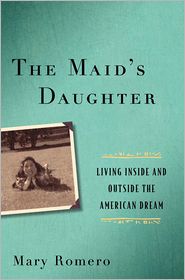
"I see that La Bloga features some great information and links of interest to the Latin community and I thought your readers might be interested in reading an excerpt from a new book about growing up Latina in America called The Maid’s Daughter. Library Journal calls the book, “A valuable case study and a dramatic life story, this oral history explores identity and illuminates race, class, and gender in America at a peculiarly intimate intersection between upper-middle-class white families and the women of color who provide domestic labor for them.”

The afterword is now available on scribd.com. Here’s the web address: http://www.scribd.com/doc/61057126/Crossing-the-Border."
____________________________

In this penetrating case study, Romero examines the life history of Olivia Salazar, a successful public relations professional who grew up in a wealthy Anglo household where her mother worked as a domestic servant.The author followed her subject for more than 20 years, gathering data through a series of in-depth interviews that began in 1986. She organizes her analysis around actual interview segments, which she explicates with a rare combination of rigor and sensitivity.

Olivia was the American-born daughter of a Mexican woman named Carmen who had originally come to the United States to find work that would allow her to support family members that lived south of the border. When Olivia was three, Carmen located a job in an exclusive Los Angeles gated community. It was here that Olivia would spend most of the next 15 years growing up as a "member" of the Smiths, the wealthy family that employed Carmen. While her mother worked within the defined—and frequently exploitative—parameters of domestic servitude, Olivia occupied an uneasy interpersonal, cultural and economic middle ground. As Romero writes, "the social boundaries between 'being like one of the family' and 'the maid's daughter' [were] blurred and in constant flux." Olivia's association with the Smiths gave her access to the schooling and social connections that allowed her to eventually enter the ranks of the professional middle class. At the same time, it put her at odds with a mother unable to provide complete nurture while forcing her into anguished questioning of who she was and where she ultimately belonged. A moving work that deconstructs the American Dream at the fraught intersection of race, class and gender. Kirkus Reviews
_____________________

Mary Romero is Professor of Justice Studies at Arizona University and a Carnegie Scholar with the Carnegie Academy for the Scholarship of Teaching and Learning. Her books include Challenging Fronteras: Structuring Latina and Latino Lives in the U.S.


Guantanamo Boy
Anna Perera
Albert Whitman & Company - July, 2011 (originally published in the UK in 2009)

Innocent until proven guilty? Not here you're not. Robbed of his childhood, this is one boy's fictional experience of the supposed war on terror. Khalid, a fifteen-year-old Muslim boy from England, is abducted from Pakistan while on holiday with is family. He is taken to Guantanamo Bay and held without charge, where his hopes and dreams are crushed under the cruellest of circumstances. An innocent denied his freedom at a time when most boys are finding theirs, Khalid tries and fails to understand what's happening to him.

Awards

Summer 2011 Children's Indie Next List

Reviews

"A chilling and horrifying story of an innocent 15-year-old London-born Pakistani boy who is captured by the U.S. government, taken to Guantanamo Prison and tortured until he collapses. The novel will raise important questions related to government profiling, human rights, and the use of 'torture.' This may well become one of the most important teen novels about social justice of the new century. It will be chewed up, debated, and hopefully digested." Pat Scales, Librarian, Author, and member, National Coalition Against Censorship Council of Advisors

"Readers will feel every ounce of Khalid's terror, frustration, and helplessness in this disturbing look at a sad, ongoing chapter in contemporary history."
Publishers Weekly

"...this gripping look at a poorly defined war's unintended consequences uniquely challenges readers to examine common beliefs and ask searching questions about means and ends."
Kirkus Reviews

"Set six months after 9/11, this unforgettable novel raises crucial headline issues through the story of teenage Khalid, born near Manchester, England in a secular Muslim family."
STARRED REVIEW, Booklist


American Night: the Ballad of Juan José

Oct 7, 2011-Nov 20, 2011
The Ricketson Theatre
Denver Center for the Performing Arts
Speer & Arapahoe, Denver, CO
Subscribe today at 303.893.6030
Single tickets on sale Aug 14

By Richard Montoya & Culture Clash

In this brash new comedy, Juan Jose pulls an all-nighter to take his U.S. citizenship exam so he can bring his family to America. Delirious and sleep-deprived, he is visited by a cast of crazy and diverse figures from U.S. history.

Created and developed by L.A.’s theatre collective, Culture Clash, American Night is a fresh, theatrical portrait of “Coming to America.”


LATINO PUBLIC BROADCASTING TO RECEIVE THE IMAGEN FOUNDATION’S PRESTIGIOUS NORMAN LEAR AWARD
AWARD TO BE PRESENTED AT IMAGEN AWARDS GALA ON AUGUST 12

Latino Public Broadcasting (LPB), a non-profit organization funded by the Corporation for Public Broadcasting, is pleased to announce that it will be honored with the prestigious Norman Lear Award at the 26th Annual Imagen Awards gala on Friday, August 12th, 2011 at the Beverly Hilton Hotel in Beverly Hills, CA. The Norman Lear Award is given each year to a Latino writer or entity that has excelled creatively to dispel negative stereotypes and perceptions of the Latino community. Latino Pubic Broadcasting Executive Director Sandie Viquez Pedlow and LPB founder and Chairman of the Board Edward James Olmos will be on hand to accept the award.

The Imagen Awards were created 26 years ago by The National Conference for Community and Justice (formerly The National Conference of Christians and Jews), based on a suggestion by television producer Norman Lear to improve media portrayals of the Latino community in feature films and television. Called “the Golden Globes of the Latino community,” the Imagen Awards are one of the most prestigious awards of its kind in the entertainment industry.

An excerpt of the award announcement follows: “Through the funding and supporting of Latino oriented programming for public television, Latino Public Broadcasting has made a significant contribution in creating a better understanding of Latinos and Latino cultures in the United States. LPB’s noncommercial educational and cultural programming has given a voice to our community and shared with the nation the beauty of our traditions and our contributions to the arts, culture and the humanities. In addition, LPB has provided numerous opportunities for Latino producers through their support and promotion of television projects as well as independent films. As Mr. Lear impacted the thoughts and perceptions of television viewers so has LPB. There is no one more deserving of this Norman Lear legacy award than Latino Public Broadcasting.”

LPB Founder and Chairman of the Board Edward James Olmos said, “These are exciting, dynamic as well as challenging times for public media and this award is a true honor and a wonderful validation of our work at LPB. As our Latino community increases in numbers, diversity and influence, we are more committed than ever to helping producers tell our stories and reaching ever broader audiences.”

LPB’s Sandie Viquez Pedlow assumed the role of Executive Director in July after a long career in public media and as an LPB board member. Pedlow said, “Since our inception thirteen years ago, Latino Public Broadcasting has strived to champion the Latino creative community. We’ve shepherded more than 200 projects, including several Imagen Award winners and nominees, including this year’s Best Documentary nominee The Longoria Affair. It’s an honor to be recognized by our community and we look plan to continue breaking new ground, breaking down barriers and creating programming that reflects our wonderfully rich and diverse experience.”

About Latino Public Broadcasting
LPB brings new audiences to public television with a recognizable impact on a broad range of viewers that complement and challenge existing public television offerings. LPB’s mission is to support the development, production, post-production, acquisition and distribution of non-commercial educational and cultural content that is representative of or addresses issues of particular interest to U.S. Latinos. Created in 1998 by Edward James Olmos and Marlene Dermer, LPB has provided more than 100 hours of programming to public television, funded more than 200 projects, and organized approximately 100 workshops, panels and screenings for the advancement of Latino producers to showcase the rich spectrum of Latino-American culture. LPB collaborates with other minority consortia, and works closely with the Public Broadcasting Service (PBS), American Public Television (APT), Independent Television Service (ITVS) and POV to maximize its presence on public television. Latino Public Broadcasting is funded by the Corporation for Public Broadcasting. For more information, go to www.lpbp.org.

About The Imagen Awards

The Imagen Awards program was established in 1985 from a suggestion by Linkveteran television producer Norman Lear to encourage and recognize the positive portrayals of Latinos in the media. Later, as The Imagen Foundation, it expanded its programs and initiatives to further its mission to serve as a bridge between the Latino community and the entertainment industry in providing access, education, and resources for Latinos in the industry, as well as those seeking careers in entertainment.


Final Bits

Don't forget that Melinda Palacio and Lucrecia Guerrero read from and sign their new books at the Tattered Cover here in Denver - tonight at 7:30 PM (Colfax store.) You all should check out the event and support these fine authors. You should also hop over to the Poets & Writers site where Melinda expounds on one of her secrets for becoming a better writer. Click here.

Later.

Thursday, August 11, 2011

Música y guerra

Concierto para Leah, de la escritora cubana Maira Landa, se ambienta en un capítulo negro de la historia de la humanidad: los horrores del Holocausto y la Segunda Guerra Mundial.

Una de las finalistas del prestigioso Premio Planeta en 2009, la novela está enmarcada en una historia real: la travesía del barco Saint Louis que partió en 1939 de Hamburgo, en Alemania, con casi mil judíos rumbo a La Habana.

La historia está dividida en movimientos, como un concierto, estructura que según la autora, se manifestó de manera orgánica.

"Fue muy natural para mí incorporarla a la historia; me sentí muy cómoda entre términos musicales", dijo en entrevista con Efe.

La música ha acompañado a Landa desde temprano, tanto en su natal Cuba como en Puerto Rico, donde radica desde 1965.

"Estudié piano durante años", dijo. "Voy mucho a conciertos y a la ópera".

A los pasajeros del Saint Louis se les negó la entrada al país y tuvieron que regresar a Europa donde la mayoría pereció en campos de concentración.

La conocida historia de esta trágica travesía encuentra en la novela de Landa personajes memorables cuyas penurias y pasiones la llenan de vitalidad para los lectores de hoy.

Al combinar sus dos pasiones, la música y la escritura, el proceso de creación le fue extremadamente difícil por el peso de las emociones.

"Lloré muchas veces al describir esas situaciones terribles, al imaginar lo que sufrían Leah y los otros personajes", expresó.

"Cuando no estaba escribiendo, no podía apartarlos de mi mente, me dolía profundamente la historia que tenía que contar", añadió.

Según Landa, el período de la Segunda Guerra Mundial siempre le había llamado la atención, ya que como ser humano no podía imaginarse que algo así hubiese podido suceder.

Durante un recorrido por el notorio campo de exterminio en Auschwitz, se dio cuenta que mediante la escritura podía dar vida a algunas de esas historias truncadas por la Shoá.

Fue allí que Landa escuchó sobre los músicos que eran forzados a interpretar piezas clásicas mientras se torturaba a otros prisioneros y se les llevaba a las cámaras de gas.

"Visité Auschwitz, recorrí las calles del campo, vi el paredón, la plaza donde hacían los recuentos, el laboratorio de Mengele, la cárcel y sus cámaras de tortura, entré a una cámara de gas y a un crematorio", dijo.

"Frente a esa cámara de gas, pude sentir el horror de tener que producir melodías hermosas mientras la gente desfilaba rumbo a la muerte. Desde ese momento la historia fluyó y no paré hasta terminar la novela", relató.

La historia se enfoca en la vida de una joven violinista que ambiciona convertirse en concertista.

La guerra, sin embargo, le arrebata cada uno de sus sueños al igual que a sus familiares.

Otra historia, la de un pianista que años más tarde descubre el secreto de su virtuosismo, se entrecruza con la de Leah, cada cual en sus respectivos movimientos.

Aunque no sea completamente una novela didáctica, son muchas las enseñanzas entre sus páginas.

"Considero que la literatura debe entretener, pero también debe enseñar", expresó la autora.

Al relatar la historia de Leah, Landa esperar crear conciencia sobre las lecciones del pasado para que no vuelvan a repetirse.

"Es interesante que muchos jóvenes ignoran lo que pasó, además de que hay grupos negando el Holocausto", dijo.

Como lectura asignada en colegios privados y universidades, "Concierto para Leah" está cumpliendo su misión.

Espera la autora que la combinación de literatura, historia y música en la novela "pueda abrir horizontes de entendimiento".

La novela ha recibido muy buena acogida en Puerto Rico, donde fue lanzada con un concierto a cargo del famoso pianista José Luis Cáceres y está en vías de traducción al inglés.

Mientras tanto, Landa está escribiendo una segunda novela sobre Leah.

"Leah seguirá su trayectoria, a ver hasta dónde llega", finalizó.

(CONCIERTO PARA LEAH. Maira Landa. Editorial Pasadizo. 171 páginas).EFE

INTERCAMBIO CULTURAL CUBA/EEUU

Fotógrafo-grabador cubano enseña a estudiantes de arte en la Universidad en el oeste de Massachussets. Legendarios artistas y fotógrafos cubanos en animadas conversaciones con la audiencia de Manhattan. Aclamado documental se estrena en los Angeles. Bailarines estadounidenses en La Habana, bailarines cubanos en Brooklyn. Orquesta estadounidense de jazz latino comparte el escenario con talentosos músicos cubanos en Matanzas.

Las primeras contribuciones de la Fundación Cuba Avant Garde, organización patrocinadora del sitio Noticias de Arte Cubano, incluyó un amplio espectro de disciplinas artísticas que van desde las artes visuales y la arquitectura hasta el cine, la música y la danza. “Esto era lo que estábamos buscando,” dijo Howard Farber, quien junto a su esposa Patricia fundó la organización el pasado año. “Estábamos interesados en todas las facetas de la cultura y arte cubanos, así como en promover el intercambio cultural entre las naciones.”

La fecha tope para la solicitud del financiamiento de la Fundación Cuba Avant Garde para el año 2011 es el 1 de noviembre de 2011. Para más información visitar el sitio web de la Fundación.

(De: Cuban Art News)

Wednesday, August 10, 2011

Second Festival- Talleres de Poesía


The Second  Festival Talleres de Poesía will take place in San Salvador, El Salvador this November 6-12.  Many events are taking place in different cities in order to raise funds for this event that will promote books and literature in El Salvador.


This wonderful project is being organized by children books' author, Jorge Argueta and the Talleres de Poesía committee in San Francisco and San Salvador, with the collaboration of the Director of the National Library of El Salvador, Manlio Argueta.

The Children's Poetry Festival will be held at the National Library in San Salvador in November 2011. Renowned poets will be conducting writing workshops to Salvadoran children and youth. 

The theme of the workshops will be the importance of reading and significance of peace for Salvadoran children and youth. They will also have the opportunity to enhance their writing skills and learn techniques on how to write their experiences through poetry. 

Please enjoy this short video of the 2010 1st Annual Children’s Poetry Festival hosted last year in San Salvador’s Main Library. We hope it will give you an idea of how the Poetry Festival empowered children in a wonderful and positive way.


A small donation will help Talleres de Poesía bring the 2nd Children’s Poetry Festival back to El Salvador in November 2011. Our goal for this year is to bring more books, more children’s authors, more poetry workshops and to take the festival to more cities.  Please help us make this dream come true and to continue building the habit of reading among young people throughout El Salvador.


Events for Talleres de Poesías


“LENGUA EN SALSA”: SUNRISE RESTAURANT
August 11th
3126 24th St. San Francisco, CA 94110   
5:00-9:00pm
Join us for a delicious dinner, where you can spend a little and give a lot!  Sunrise Restaurant will donate 20% of any carne asada, pupusas, shrimp, enchiladas, or any other flavorful dishes to our cause!
icTus gallery
August 24th
7PM
1769 15th St. @ Albion 
(Between Valencia and Guerrero) 
San Francisco CA, 94013
- Poetry Reading to benefit the 2011 Children’s Poetry Festival!
- Every child should have books!
- Donation Requested!
Caresen San Francisco 
September 8th,
7PM
3101 Mission Street
San Francisco CA, 94110
Join us at Caresen SF for an evening with cocktails, poetry readings, and ultimately an art auction! Please help us reach our goal, and bring poetry to the children in El Salvador!

Tuesday, August 09, 2011

A Final Mental Menudo. On-Line Floricanto.

Michael Sedano

Concepción Valadez, Magu

Magu, Gilbert Lujan, worked tirelessly over years, at times manically, to create and sustain a community dialog about art, cultura, and fun. His artwork aside, Magu’s legacy includes a notable activism for bringing disparate gente together to talk with one another about important ideas. Magu termed the discussion series--akin to salon, or tertulia--Mental Menudo.

Mental Menudo was a labor of love for Magu, of inestimable value to people who participated in one or more Mental Menudos over the years. Click here to read Mark Vallen’s eulogy for Magu and Vallen’s enchantment by Mental Menudo. Be sure to follow the links Vallen provides.


“I’m through with Mental Menudos,” Magu was wont to proclaim, “I’m retired. Someone else has to pick up the ball.”

Abelardo de la Peña and Mario Trillo picked up that ball in Magu’s memory Friday August 5, 2011. De la Peña opened the Mexican Cultural Institute’s doors to the morose gathering of artists and friends. The site is fitting; this Olvera Street gallery has been the host of numerous Mental Menudos.

Magu planted a seed with a community in the San Diego region that continues to hold Mental Menudos. Locally, numerous eastside gente declare their intentions to hold “mental cocidos” to continue the dialog and camaraderie Magu sowed among them.

Not that this is the last Mental Menudo, only the final one of the Magu era. Click an image for higher resolution foto; for best quality fotos visit http://readraza.com/mmfinal. Thank you, too, to Abelardo and Mario for help with names.


Abelardo de la Peña, editor of LatinoLA and host for the evening.


Mario Trillo is Magu's Mental Menudo co-organizer and the discussion "sergeant at arms". Mario is co-host tonight with Abelardo.

Mario relates one of Magu's final wishes was to take a ride in Mario's panel wagon. That would have been a wonderful trip, Magu and Mario cruising the streets of Aztlán.

Ricardo Silva, Magu's next door neighbor. Ironically, given Magu's popularization of low riders and car culture, the artist's own trokita did not run. Ricardo provided transportation and all manner of assistance to his neighbor. A good neighbor indeed.

Shandu, a grafitti artist, spoke about Magu's influence on Shandu's art and of wide-ranging discussions he and Magu enjoyed about art, aesthetics, culture.

Julie Soto reminisces as Oscar Magallanes and Raul Baltazar ponder. It's a night to remember silly little things, tokens of character, Magu's legacy of art and words.

Richard Montoya lets the talk sink in. Later he will talk about important connections across generations, from José Montoya to Magu to Montoya's own son.

Montoya and others remain infected by Magu's intensely joyous spirit. The somber mood breaks into warm smiles as Montoya recalls a Fresno proto-mental menudo that brought together José Montoya, Magu, the Royal Chicano Airforce, the Royal Chicano Navy, and all night antics by a bunch of young artists with all the time in the world.

Emilia Garcia smiles at happy memories, flanked by Ricardo Duffy and Rudy Cardona.

Anita Renker laughs through her tears.

Sergio Hernandez and Diana Duran crack up at one of numerous happy remarks.

Joe Bravo shows the Mental Menudo poster he and Magu designed. A joyous memory, Joe's emotions show through. Magu was proud of the poster and talked it up.

Alfredo Lascano and Diane Hernandez listen as Vanessa Acosta recounts Magu's gathering thousands of old film reels that became part of Magu's design for the Hollywood & Vine subway station.

Serge Hernandez has additional fotos of this Mental Menudo, and an earlier gatheriing, at Serge's Facebook page.


La Bloga On-Line Floricanto: August’s Second Tuesday 2011

Francisco Alarcón, the poet from UC Davis, is founder and one of the moderators of the Facebook group, Poets Responding to SB 1070. Francisco Alarcón. Last week I named Notre Dame poet, Francisco Aragón, in poet Alarcón's post. My apologies to both tocayos.

I allow myself three errors per year and that leaves me with two now.

At any rate, Francisco Alarcón and his co-moderators of the group nominate these five poems for this second Tuesday in August 2011 La Bloga On-Line Floricanto. With pleasure, La Bloga presents:

"Be Fearless: Choose Love" by Nina Serrano
"El Valor de Las Cosas / The Value of Things" by Javier B. Pacheco
"Marisela" by Nonankoatzin Chantiko (Mamacoatl)
"The Polish Boy" by Ralph Haskins
"La tierra bajo los muros" por Fernando Marti


Be Fearless: Choose Love
I am very excited as tomorrow (Saturday July 30, 2011) my grandson Camilo is getting married and I am the officiate for the ceremony. I have written a special poem for this blessed event.

by Nina Serrano

to Jessica Xiomar Garcia and Camilo Landau


Afraid of computer viruses
Afraid of terrorists
Afraid of the planetary extinction
of our current paths
of spreading diseases
of urban crime rates
drug lords owning governments
torture as a commonplace weapon
and humanless drones
with only a button to press
to explode life to smatters and splinters
Only a law to pass to steal it all

Fearless love is the only defense
to face the morning light
Greedy power in my face like in yours
wants to make us forget
But we cannot forget this nagging feeling hard wired in the bones
wanting to belong snugly
in the nest of our planet
be accepted fully because we exist
and not for our documents, licenses and wealth.
From that innate primordial desire comes our fearless love
peeking around the polluted rubble of destruction
the abandoned gas stations the poisoned waterways
We look beyond and see other heads bobbing up
and down
beaming the signal
calling to us to show our fearless love
in the face of everything
Fearless love the daily challenge
Ready or not
it is here.

© 2011 Nina Serrano


El Valor de Las Cosas

Dedicado a Gilbert "Magú" Luján
(16 de octubre de 1940 – 24 de julio de 2011)

por Javier B. Pacheco


Porque he decidido expresarme en español
porque las campanas que me suenan
destacan otro timbre
al olor de la humanidad
manos sudadas temblando
coordinadas por gente solidaria
porque la vida
se juega según las reglas
uno se comporta, comparte y conforma,
sin conocer el valor de las cosas
o su significado
y después ellos llegan a darse cuenta
lo que tiene sentido
lo que siempre tuvo sentido
las promesas que nunca tuvieron sentido
que todo esto es un engaño
las condiciones intolerables porque
éste es el juego que hemos decidido jugar.

El Magulandia celebraba el juego,
en la manera en que se jugaba,
en las horas compartidas;
Porque el maestro
que había forjado sus ánimos en
los grandes murales
regresó a la tierra simple:
juntando sus ramas y ramitos,
palos, vigas y colores
juntando y creando formas,
creó su propio valor
trazó su propio camino
mezclando los mundos arcoiris de su alma
de un pueblo animado y rico
un aprecio nuevo
culturas de nuevos apodos
y nuevas traducciones
espejos kármicos para el pueblo
materiales de la Tierra.
la vida en sus disfraces innumerables
la paciencia demostrada de un tolteca
buscando un lugar común para todos
un artista guerrero de gran corazón
hablando en voz calmada
su vida fue el ejemplo de uno
que razonaba antes de reaccionar
sus esperanzas y sueños eran los mismos
pero él vivió y creó su nuevo mundo
vivió el ensueño mutuo
también como lo viven sus piezas
porque su vida reflejaba el arte;
se le va a extrañar.
su voz gentil siempre nos sonará.

No tiene precio una sonrisa tuya
Ni tu voz silenciosa al recitar
Cosas fermentando desde hace años
sentimientos desde muy adentro
lo intercalado se vuelve a modelar
Algo a que tú le das nueva vida.

* * * * * * * * * * * * * * * * * * *

The Value of Things


Dedicated to Gilbert "Magú" Luján
(October 16, 1940 – July 24, 2011)

by Javier B. Pacheco


Because I’ve decided to use Spanish
because the bells that ring for me
highlight another timbre
to the smell of humanity
sweated hands trembling
melded by people in solidarity
because life
is played by rules,
one behaves, shares, and conforms,
without knowing the value of things
Or their significance
and later they finally realize
what makes sense
what always made sense
promises that never made sense
that this is all a lie.
the intolerable conditions because
this is the game we’ve decided to play.

Magulandia celebrated the game,
in the way it was played,
in the shared hours;
Because the master
who had forged his soul in
the great murals
returned to the simple earth
gathering his branches and twigs,
sticks, planks, and colors
gathering and creating forms,
created his own worth
charted his own path
mixing rainbow worlds of his soul
of a people animated and rich
a new appreciation
cultures with new surnames
and new translations,
karmic mirrors for the people
materials from the Earth.
life in its myriad disguises
demonstrated patience of a Toltec
seeking common ground for all
warrior artist of great heart
speaking in calm voice
his life was an example of one
who reasoned before reacting
his hopes and dreams were the same
but he lived and created his new world
he lived the mutual dream
as do also his objects
because his life reflected art;
he will be missed.
his gentle voice will always resound within.

A smile of yours has no price
nor your silent voice upon recital
things fermenting for many years
feelings from very deep
the re-dressed goes on display again
Something to which you provide new life.


Marisela

Brota cual la hiedra esta canción
Para Marisela
Una humilde ofrenda de amor
Y de luna llena...

Es que la recuerdo
Ampárandose con la viva piel de su verdad
Sí que la recuerdo
Desmayando de rabia ante semejante impunidad
Ante la impotencia general de una población enajenada
Ante el desgaste colosal de nuestra mirada acribillada
El aullido y el lamento de una fiera embravecida
Madre loba del desierto
De todas la muertas y las malheridas
Te recuerdo hoy de pie
Marisela

Ni tu cuerpo, ni tu llanto
Ni tu dedicación, ni tu lucha
Ni tu hija asesinada
¿Por qué mujer nadie te escucha?
Ni tu valor de ciudadana, ni tus derechos constitucionales
Ni las pruebas contundentes ante los tribunales
Ni la sociedad civil
No te permitieron vivir
Marisela

Y los ríos de sangre
Se desboradan y se secan en el ventarrón
La mano del exterminio -como a tantos, te atravezó el corazón
Y una bala del gobierno -como siempre, silencio aquel llanto
La magnitud del hecho -como nunca, oscureció mi canto

Y como punto estratégico de aquel proyecto de nación
-Vale notar
Se sacrifica un hijo, se glorifica a un padre
Y con la bendición de Dios
Se gesta otra promesa de paz
En nombre del hijo
Por el honor del padre
Tal y como está escrito
Por los magnos ingenieros
Del nuevo orden mundial
Marisela...

Pero crece y brota
Igual que la hiedra
Esta humilde ofrenda de amor
Y de luna llena
Crece y se fortalece por todos los rincones
Por patios y veredas
Y por los corazones
Indomable se propaga
Como la verdolaga
Verdecita y fresca
Por la madrugada
Por tu integridad
Y por esa gracia de ser gacela
Entrañable compañera Marisela.

MamaKoatl 2011
San Francisco CA


The Polish Boy
by Ralph Haskins

This poem honors the Polish boy depicted in the picture below as well as Jacob Lewin, Yitzak Lewin, and four year old Jdo (Ido) Levine, victims of the Holocaust.


I wish I knew your name.
Was it Ytzhak? Was it Jacob?
I shall call you Ido.
In your life's early spring
your hands were raised high,
trying desperately to pick
the fruits off the tree of safety,
but the tree was barren.
In this blizzard of history's winter
their bullets broke your body.
It has been seven decades down,
my dear Ido. You should be old today,
and yet your image holds,
frozen, in tones of grey,
and I the old man now, with chills
I gaze on your eternal frightened
childhood, the ice inside me melting,
and flowing down my face.


La tierra bajo los muros

por Fernando Marti


¿Lo sientes?
Aquí hay muros invisibles
entre azul y rojo,
entre blanco y bronce,
entre lenguas y vestires.

¿Has visto?
Un muro en Palestina que cerca vidas,
corta aguas y pueblos,
un muro en la frontera colgado
de cruces y huesos disecados.

¿Has oído?
Muros de los que ya nadie habla
de Marruecos a Berlín,
o estas carreteras que cuartean
mi ciudad, cortando sangre y
comunicación, partiendo barrios
entre el que llamamos “mío” y
el que llamamos “tuyo.”

¿Has puesto manos?
Muros en ruinas, piedras
trazando líneas sagradas
sobre las colinas. ¿Qué caciques,
qué esclavos con manos
rajadas, pusieron estas piedras?
Y ¿qué huracanes, qué
diluvios, qué guerras, qué
revoluciones las tumbaron?

Aquí, aquí, debajo de tus pies:
¿Sientes el terremoto que ya
se acumula, sientes los pulmones
de la tierra tomar su
respiración profunda?

Ya viene, ya viene…


~ fm
San Francisco, November 2009


BIOS
"Be Fearless: Choose Love" by Nina Serrano
"El Valor de Las Cosas / The Value of Things" by Javier B. Pacheco
"Marisela" by Nonankoatzin Chantiko (Mamacoatl)
"The Polish Boy" by Ralph Haskins
"La tierra bajo los muros" por Fernando Marti


Nina Serrano I am a poet, writer, arts educator and media producer, voted “best local poet “ by Oakland magazine in the July 2010 issue. I produce radio programs on KPFA-fm: LA RAZA CHRONICLES, a magazine program focusing on political and cultural issues in the Latino community, locally and globally and a monthly literature show OPEN BOOK presenting the works of local author and poets.

Javier B. PachecoJavier B. Pacheco was the only poet/pianist at the first Flor y Canto Festival at USC (1972). He is a S.F. Bay Area performance poet, pianist, composer, arranger, and ethnomusicologist. His poetic works have appeared in: Califas, Chismearte, Elektra, La Gente, Maize, Mestizo, Metamórfosis, Quarry West, RiverSedge, Saguaro, Tejidos, West End Press, and Puerto Del Sol.

MamaKoatlMamaKoatl, Barrio Poet, Songstress, Curandera, Artivist, works for the reconnection of the human soul with the living Earth through music prayer and political action.

Ralph HaskinsRalph Haskins was born and raised in Monterrey, Mexico. His family moved to South Texas during the social turmoil of the 60’s. The new cultural challenges he experienced led him to express himself through poetry. Many of his poems touch the cultural and political issues of our times. Today, Ralph lives in McAllen, Texas where he supplements his poet’s income by moonlighting as a science teacher at a local high school.

Monday, August 08, 2011

Things We Do Not Talk About


A short story by Daniel A. Olivas

Alma López stole six marbles from Joshua Braun, the boy who lived across the street and who secretly loved Alma. This is how it happened: Joshua had to pee so he stood and ran to the bathroom. Alma was now all alone sitting at the rug’s edge in Joshua’s den staring at the large Tupperware container in front of her. She guessed that it held hundreds or even thousands of marbles. The late afternoon sun shone through the French doors making the marbles’ reds, greens, yellows, purples and oranges glisten like hard candy. Alma listened to Joshua pee. She looked around, once, twice, a third time. Alma closed her eyes, reached into the container and grabbed six marbles. She didn’t want to choose: Alma craved the randomness of the process. She shoved the marbles into her jeans pocket just as Joshua flushed. Alma opened her eyes and offered Joshua a broad smile as he trotted back into the den. Before Joshua could settle back onto the rug, Alma stood and said she needed to get home because it was almost dinnertime and her father would be angry if she didn’t help set the table. In truth, her house was empty and she would have to heat up leftover chicken posole that her father had picked up from Grand Central Market the day before. Alma’s father never got home before eight o’clock because of a lousy commute from downtown to Canoga Park. She liked her lie. It was perfect.

The six marbles would follow Alma all her life even as she traveled to Cornell where she majored in English literature, back to California for graduate school at UCLA, and finally settling in a small but conveniently located Santa Monica apartment once she landed a job at the city college on Pico Boulevard where she taught “Literature of the Bible” and “Images of Women in Literature.”

Alma wondered what happened to Joshua and whether he ever knew about the stolen marbles. He must have. Joshua kept track of everything because, as Alma remembered, he was more intelligent than anyone she knew, at that time. But they’d lost contact after Joshua’s family moved to Phoenix at the end of sixth grade. He wrote three letters to Alma but she never wrote back. Joshua finally gave up, heartbroken. Her father found the first discarded letter in the kitchen trashcan, retrieved it, and put it on Alma’s little desk. She threw it away, this time in the large trash bin at the side of the house. The other two letters met the same fate, safely tucked under other rubbish so that her father would not discover and salvage either one.

Alma kept the six marbles on a bed of blue velvet in a small wooden box she bought in Mexico City that summer’s vacation with her father. She chose the box—a large grinning skull carved onto its top—despite her father’s attempt to steer Alma to something a little less morbid. But no, Alma wanted that box. Period. She loved skulls, if love is the right word. Alma remembered the trip as uneventful, even a bit boring. She had wished that her mother could be with her and her father. By this time, Alma could barely remember what her mother’s voice sounded like. Alma’s father kept pictures of his late wife throughout the house so that Alma would remember her face. But it was her mother’s voice she missed most.

After teaching for four years, and after her father passed away leaving her some money, Alma decided to buy a small house not too far from her college. It was time. Alma’s father would have been proud of her, making this very grown-up decision, no need for a man to make her life complete.

When the movers came, Alma had already packed everything. It wouldn’t take long especially because the company had sent two very large and efficient young men. They looked like her students—tattoos, ear gages, all-knowing smirks—except with more muscle. The move went smoothly. Alma tipped them generously, something her father taught her when exposed to good service.

Alma unpacked slowly, no need to rush because she had the entire weekend ahead of her. She opened the first box, the one holding her old den’s knickknacks. Alma found the box that held the six marbles. She opened it, half expecting them to be gone, perhaps stolen by one of the movers when she stepped away to the bathroom for a minute. That would be ironic, wouldn’t it? But the marbles sat in the blue velvet, safe as ever. Alma closed the box and put it on the mantle of her rustic brick fireplace. There the box would sit, unopened, and moved only when Alma dusted.

Alma eventually became a full professor in the English Department, popular with her colleagues and students, alike. One evening, after hosting a visiting novelist on campus, she came home to find the front door ajar. Alma immediately regretted not getting a home alarm system. Her father would have been disappointed. She walked over to her neighbor, Scott, who would be having dinner with his partner, Jorge. Alma did not like Jorge. She thought him stupid. But she appreciated Scott for his love of literature and art.

Scott escorted Alma to her house, saying that it was probably fine, perhaps she’d forgotten to lock her door, that’s all. Scott always stayed calm. Jorge stayed behind to continue eating dinner, never offering to come along. This reinforced Alma’s negative view of him and she wondered why Scott tolerated such brutishness.

At this point of the story, you are likely thinking: Oh, Alma and Scott will go into the house and see that it has been burgled. And of course, the box holding the six marbles would be missing. And this event could be read as some sort of metaphor for this or that or the other thing. Because that is the way you have been taught to read short stories. But I will not give you that satisfaction. I have better things to do with my time. I really do. For example, my son wants me to go with him to buy some Chinese food for dinner. My wife is upstairs on the phone with a friend and wants us to get her usual: broccoli beef and steamed rice. If you feel cheated, get over it. Worse things happen in life.

[“Things We Do Not Talk About” first appeared in Pinstripe Fedora and is the title story of an unpublished collection of stories, essays and interviews.]