Friday, February 21, 2014

Rich and Poor - Call for Fotos - Luis Leal Award

The Rich Get Richer, The Rest of Us Get The Shaft

The Colorado Center on Law and Policy today (February 19) released the following joint statement in partnership with The Bell Policy Center and the Colorado Fiscal Institute.

The gap between the wealthiest Coloradans and everyone else turned into a chasm following the Great Recession, according to a report released today. In that time, Colorado's top 1 percent accounted for all of the state's growth in income, while the other 99 percent saw a decline in income.

The report, The Increasingly Unequal States of America, is published by the Economic Policy Institute. EPI's Colorado partners include The Bell Policy Center, the Colorado Center on Law and Policy and the Colorado Fiscal Institute. 

The report found that in Colorado, between 2009 and 2011:
  • The wealthiest 1 percent accounted for all of the income growth - one of 17 states where that happened.
  • The top 1 percent saw income growth of 23.5 percent, while the other 99 percent of Coloradans saw income decline by 4 percent.
  • The average income for the top 1 percent in Colorado in 2011 was $1,098,682, while the average for the bottom 99 percent was $46,837.
In assessing a longer-term period of inequality, the report found that from 1979 to 2007, Colorado generally tracked national averages (all data is adjusted for inflation):
  • The top 1 percent income recipients in Colorado saw their income rise by 200.8 percent for the period. (For the U.S average, the comparable number is 200.5 percent.)
  • The bottom 99 percent saw their income rise by 21.2 percent. (U.S. average: 18.9 percent.)
  • The 1 percent in Colorado took home 48.3 percent of all income growth in the state in that period. (U.S.: 53.9 percent.)
  • Colorado ranks 15th for income growth for the top 1 percent. Connecticut led the way with 414.6 percent, while West Virginia was last, at 74.1 percent.
  • Among neighboring states, Colorado ranked behind only Wyoming and Utah in income growth for the 1 percent. Wyoming's 1 percenters saw their income rise by 354.3 percent (versus a loss of 0.8 percent for the 99 percenters). Utah's numbers were 214.9 percent and 15.4 percent.
  • In 1928, the previous high-water mark for inequality, Colorado's 1 percenters took home 19.3 percent of state income. In 1979, it was 9 percent, and in 2007, it was 19.7 percent.
  • From 1928 to 1979, the 1 percent's share of all state income declined by 10.3 percent. From 1979 to 2007, the 1 percenters' share of state income increased by 10.7 percent. 
The authors of The Increasingly Unequal States of America compiled data from the Internal Revenue Service for every state - the amount of income and the number of taxpayers in different income ranges - from 1928 to 2011. In tracking the recent prolonged period of inequality, the authors started with 1979 because that was the peak of a business cycle and because that year is seen as a starting point for rising income inequality. It ends with 2007 because it was the peak of the most recent business cycle.


 ________________________________________________________


Annual Juried Photography Exhibition
The Focused Eye

Call For Entries

March 7-29, 2014

Chac Art Gallery
772 Santa Fe Drive, Denver, CO 80204

Judges: Hal Gould, Loretta Young-Gautier

Chac curators:
Judy Miranda and Charlie Walter

Prizes:
Best of Show -$100.00
Judges Award -$50.00
Most Unique $25.00

Important Dates
All delivery and pick up times must be met. Consider dates carefully before entering.
If you are interested email: Judy Miranda, fotojudy@comcast.net or Charlie Walter, chalee9533@gmail.com - subject line: Photography Exhibition.

February 28, 12-5 p.m.
Deliver art work to Chac Gallery

March 4
Jury date

March 5, 12-4 p.m.
Work not accepted must be picked up

March 7, 6-9 p.m.
Opening

March 21, 7-9 p.m.
Awards presentation

March 29,12-4 p.m.
All works must be picked up.

 ________________________________________________________


John Rechy
John Rechy Receives Luis Leal Award for Distinction in Chicano/Latino Literature
 [from the press release]

John Rechy is this year’s recipient of the UC Santa Barbara’s Luis Leal Award for Distinction in Chicano/Latino Literature. The award was presented February 6.

Rechy is the author of several highly acclaimed novels, including “City of Night,” which celebrated its 50th anniversary in 2013; “Numbers”; and “The Miraculous Day of Amalia Gomez.” In addition, his essays have appeared in The Nation, The New York Review of Books, the Los Angeles Times, L.A. Weekly, The Village Voice, The New York Times and Saturday Review. He is the first novelist to receive PEN-USA’s Lifetime Achievement Award and is the first recipient of ONE Magazine’s Culture Hero Award.

Rechy has been nominated twice for the Los Angeles Times Book Awards Body of Work designation, and he has been named a fellow of the National Endowment for the Arts. In addition, he has received fiction awards from Phi Kappa Phi and the Longview Foundation.

See more at this link.


Later.
Novelist John Rechy is this year’s recipient of the UC Santa Barbara’s Luis Leal Award for Distinction in Chicano/Latino Literature. The award will be presented during a ceremony at 4 p.m. Thursday, Feb. 6, in the University Center’s Corwin Pavilion at UCSB. The event is free and open to the public.
Rechy is the author of several highly acclaimed novels, including “City of Night,” which celebrated its 50th anniversary in 2013; “Numbers”; and “The Miraculous Day of Amalia Gomez.” In addition, his essays have appeared in The Nation, The New York Review of Books, the Los Angeles Times, L.A. Weekly, The Village Voice, The New York Times and Saturday Review. He is the first novelist to receive PEN-USA’s Lifetime Achievement Award and is the first recipient of ONE Magazine’s Culture Hero Award.
Rechy has been nominated twice for the Los Angeles Times Book Awards Body of Work designation, and he has been named a fellow of the National Endowment for the Arts. In addition, he has received fiction awards from Phi Kappa Phi and the Longview Foundation.
“John Rechy is one of the most productive and courageous American writers of Mexican ancestry in the United States,” said Mario T. García, professor of Chicana and Chicano studies and of history at UCSB, and the organizer of the annual Leal Award. “In his many novels and other writings, beginning with his classic ‘City of Night’ of the early 1960s, Rechy has always pushed the envelope. Like all great writers, his work is artistic but also a commentary on social mores. He honors UCSB by receiving the Leal Award.”
Born in El Paso, Texas, of Mexican and Scottish ancestry, Rechy graduated from the University of Texas at El Paso. He has lectured at Harvard, Yale, Duke, UCLA, Occidental College and the University of Northern Illinois, among others. He currently teaches graduate courses in film and literature at the University of Southern California.
The Leal Award is named in honor of Luis Leal, a professor emeritus of Chicana and Chicano Studies at UCSB, who was internationally recognized as a leading scholar of Chicano and Latino literature. Previous award recipients of the award include Demetria Martínez, Jimmy Santiago Baca, Graciela Limón, Pat Mora, Alejandro Morales, Helena Maria Viramontes, Oscar Hijuelos, Rudolfo Anaya, Denise Chávez and Hector Tobar.
- See more at: http://www.news.ucsb.edu/node/013926/ucsb-honor-city-night-author#sthash.gOg8AB4t.dpuf

Thursday, February 20, 2014

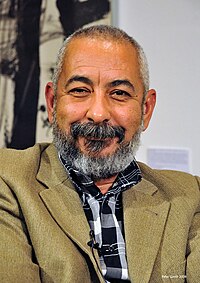
Padura in NYC

A Conversation with Leonardo Padura


Leonardo Padura 
Cuban Novelist and Journalist

Leonardo Padura is perhaps the most successful and internationally-acclaimed writer in today’s Cuba. A novelist, journalist, and critic, he is the author of several novels, one collection of essays, and a volume of short stories. He is responsible for renovating the Cuban detective narrative in the 1990s following the collapse of the Soviet Union. His Havana series crime novels featuring detective Mario Conde, published in English by Bitter Lemon Press, have been translated into many languages and have won literary prizes around the world. His latest novel Herejes, was just published by Tusquets (2013, Spanish). Padura's critically acclaimed historical novel about Trotsky's assassin, The Man Who Loved Dogs, has just been published in English in January 2014.

Interviewers: 
Jaime Manrique 
Distinguished Lecturer, The City College of New York, CUNY

Mauricio Font 
Bildner Center for Western Hemisphere Studies

Wednesday, February 26, 2014, 12:15 PM
The Graduate Center, Skylight Room
365 Fifth Avenue (@ 34th Street)

This event will be in Spanish.
TO RESERVE please send an email to bildner@gc.cuny.edu


Wednesday, February 19, 2014

My very own room


Review by Ariadna Sánchez

Abraham Lincoln was a great man with a strong spirit. On January 1, 1863, President Lincoln issued the Emancipation Proclamation that declared forever free those slaves within the Confederacy. Lincoln was the 16th President of the United States. His legacy will last forever, and it will be an inspiration to new generations of Americans. To learn more about Lincoln and the rest of the US presidents visit 

Speaking of freedom, today’s book review presents a very unique experience where a little girl wants to have a special place where she can be herself.

My very own room is a fascinating story written by Amada Irma Pérez and with attractive illustrations by Maya Christina Gonzalez.

The book is a beautiful childhood memoir of Amada Irma Pérez. By sharing her adventures through her book, the author allows us to learn about her family’s struggles and her love for books. The story portrays a nine year old Mexican American girl who is tired of sharing a room with her five little brothers. The girl wants to have her very own room. She wishes for a place where she could let her imagination fly.

The house has 2 bedrooms and one bath, and it’s always noisy and crowded.  Relatives and friends coming from Mexico to look for a job in the United States are always coming in and out. One day, the girl discovers a storage closet and decides to use it as her own place. However, her mother did not agree with the idea of using the storage closet as her own room. The girl was determined to have her own room, so she convinced her mother to allow her to use the storage room as her own room. The entire family helped to empty the storage closet and convert it into a nice and cozy bedroom.

Visit your local library this afternoon and check out more stories by Amada Irma Pérez and Maya Christina Gonzalez.  Remember reading give

Tuesday, February 18, 2014

Review: Hanigan's Tumba. Birthday Floricanto.


Review: Tom Miller. La Tumba de Hanigan. Translated by Federico Patán, Sandra Engoron-March, and Christina Guerrero Harmon. Madrid: eCícero, 2013.
ISBN 978-84-941700-3-4

“Hanigan’s Grave” is collected in Miller’s On the border : portraits of America's southwestern frontier, NY: Harper & Row, 1981. ISBN 9780060130398


Michael Sedano

A trio of young men find themselves held at gunpoint somewhere on el otro lado.
The estadunidense holding the gun speaks their language, but in English with his two henchmen. The gringos strip the three Mexicanos naked, burn their clothes, torture their flesh, and send them scurrying into the desert while the laughing kidnapers cap off rounds at their fleeing backs.

The assault is how Tom Miller begins La Tumba de Hanigan, his report on the aftermath of those events near Douglas, Arizona, chronicled in Miller’s 1981 “Hanigan’s Grave”. Newly-translated by a team led by Federico Patán, Sandra Engoron-March, and Christina Guerrero Harmon, Miller’s account appears in ebook format from Spain’s eCícero. 

The release of this gem of southwestern nonfiction comes as the world learns of the Jacksonville FL jury who refuses to endorse charges of murder against the man who murdered 17-year old Jordan Davis over music. La Tumba de Hanigan shows how that kind of justice is a regular occurrence in some US courts.

The grave in the title belongs to paterfamilas George Hanigan, who, with his two sons, are set to stand trial for the torture and assault on the three Mexicans. Some say the pressure got to him, the charges evidence of his ilk's deteriorating stature. Ni modo why, it was his time so Dad dies before he goes to trial, and doesn't get to see the boys set free by a local Jury. He would have celebrated a second time when, after the Feds file obscure charges, one walks. It's Arizona.

The way Miller tells the facts, all three Hanigans deserved extreme unction but La Tumba de Hanigan isn’t fiction, it’s journalism. They get off for all the reasons "it's Arizona" is a self-fulfilling prophecy guaranteeing perverted democracy.

Local sentiment justifies killing a few Mexicans because all Mexicans who sneak across the border are here to rob and steal. Hunting them down and doing just-us passes as reasonable doubt in 1980s Arizona. Jimmy Carter was president when the Hanigan case hit the headlines. In Obama's presidency, migrants crossing into Arizona traverse Hanigan’s grave, so what sense did anything make?

Miller’s account covers less than a hundred pages, filling the narrative with facts and views derived from observation, conversation, and reading. Miller’s shoe leather research helps add details providing historical context, local color, and illuminating character. George Hanigan, for example, was known as “Mr. Republican of Cochise County,” back when Barry Goldwater was running for president.

The Hanigans were among the first anglo immigrants to the region, setting claim on lands at the turn of the 20th century. George grows up thinking Mexicans are thieves when as a boy he witnesses gente scavenging scrap from Phelps Dodge foundry. Reading between Miller's lines, this finite heritage on the land explains the Hanigan infinite sense of entitlement that motivates their violence.

The Mexicans have names and histories, but this isn't their story. Manuel, Eleazar y Bernabé's lives converge, intersect, diverge from the rape in the desert, three lives turned desmadres told in part--there are lots. It's Arizona.

The Spanish translation reads smoothly with a succinct and sharp-eyed style that sounds like Miller when he writes in English. That’s a good thing. Miller’s distinct voice comes with a keen ear and an attitude that suggests a good phrase is as good as a sharp stick in the eye. Recounting what locals used to think about George Hanigan, Miller’s narrator observes:
–Si Adolfo Hitler viviera todavía –dijo el
decano de los estudiantes en Douglas High
School, amigo de los Hanigan durante 20
años–, George sería su sombra.
Another good thing is students of ambos idiomas can pick up a copy of Tumba for Apple or Amazon devices for €2.99 or $4.10 via the book's publisher web site. US libraries across the continent shelve Miller’s On the Border anthology, and Worldcat lists an ePub.

I hope Spanish teachers and students zero in on this golden opportunity to read a simultaneously translated work, especially one with such cultural impact. An added benefit of a bilingual reading is the rest of Miller's On the Border anthology, like "Rosa's Cantina," his visit to the site of the Marty Robbins song, "El Paso."

Some diplomats might wonder if releasing this story right now in Europe, or anywhere gente read Spanish, is a good thing? Is it good to illustrate how wildly US justice miscarries for los de abajo, because, according to local custom, those Mexicans had it coming? Then again, it’s Arizona. And it's Florida, and Florida again. It's we, the people whose communities work out of a mindset like los Hanigan's apologists, finding acts unsavory but understandable. Así es.

Miller doesn’t say that. Miller’s narrator keeps a professional distance from the emotions that inhere in the experiences. The writer seems to know readers will come to the sickening realization that the communities who freed the Hanigans haven't changed much.

La Tumba de Hanigan would be banned in Arizona. That the facts are inflammatory is a function of the events. You can look up the Hanigan torture case on the internet and get the Joe Friday effect. La Tumba de Hanigan is a lot more fun than a million and a half Google hits, and the best hour you’ve spent in a long time.


La Bloga On-line Floricanto
Dual Happy Birthday For Francisco X. Alarcon
2011 National Latino Writers Conference friends include Tim Z. Hernandez,
Francisco X. Alarcón, Michael Sedano. iPhone foto Monica Brown.

La Bloga friend Francisco X. Alarcón and his mother share a birthdate this month. Son celebrates his 60th birthday and mother counts her 90th birthday. 

This year Francisco's mother welcomes Francisco and friends to her Long Beach home where friends and familia, and friends of friends and familia, and assorted random poets and friends of random poets, feast on delectables and enjoy a taste of poetry.

La Bloga's On-line Floricanto is pleased to share Francisco's poem on his mother's 90th birthday, which the poet posts on his Facebook page

Francisco X. Alarcón and Michael Sedano originated the idea of an On-line Floricanto during the months leading to the 2010 Festival de Flor y Canto • Yesterday • Today • Tomorrow held at USC commemorating and reuniting poets and writers from the original 1973 Festival de Flor y Canto. 

Francisco founded the Facebook group Poets Responding to SB 1070, Poetry of Resistance, whose moderators nominate a handful of poems for a monthly on-line celebration of current poetry of resistance.

It's a pleasure wishing il miglior fabbro and his wonderful mother the happiest felices dias yesterday, today, tomorrow.


90 AÑOS DE MAMÁ
por Francisco X. Alarcón

mi madre cumple
noventa años alerta
e igual de sabia
junto a su gran familia
este mes de febrero

mi madre y yo
nacimos unos pocos
días aparte —
compartimos no solo
el mismo signo zodiáco

querida mamá
nada nos pudo hundir
tú fuiste ejemplo —
anduviste sobre aguas
turbias del mar de la vida

desembocado
como caballo galopo
para renacer
sesenta años después
este nuevo año lunar

© Francisco X. Alarcón
February 6, 2014

* * * * * * * * * * * * * * * *

90 YEARS OF MAMÁ
by Francisco X. Alarcón

Mamá celebrates
her ninetieth birthday
witty and wise as ever
together with her big family
on this February month

Mamá and I were
born few days apart
on the same month
and we share more
than a zodiacal sign

oh dearest Mamá
nothing could get us down
you’re a role model —
you walked over turbid waters
on the stormy sea of life

wild and free
as a horse, I gallop
to be born again
sixty years later
on this new lunar year

©Francisco X. Alarcón
February6, 2014


*********** UPDATE ***********

Dear Em, Thank you for posting this wonderful photo and the poem. I gad a great time at my mom's 90th birthday celebration in Long Beach and also at the Luis Rodriguez Poetry Locomotive earlier in the day in Los Angeles. I felt so blessed that I wrote a poem:

BLESSED DAY
by Francisco X. Alarcón

what a luminous
special and blessed day
in Los Angeles

first joining a train
ride with fellow poets
activists, dreamers

with children, youth
adults and elders reading
poems, sharing dreams

putting into action
poetics and politics
at their best

boarding a poetry
locomotive whose real
final destination

is to change our state
our nation, the world
for the better

yes, the New Era is
upon us, the Flower Sun
is blooming in our hearts

“monarch butterflies
would vote for El Poeta
as the people’s governor”

what a luminous
special and blessed day
in Los Angeles

listening to poets,
inspired by them and
by the poet candidate

at Quetzal Boutique
in East Los Angeles —
moved by Quetzalcoatl

invoking the ancient
call “Tahui” to the four
winds, the four directions

calling the ancestors
and all present to bless
our brother poet candidate

what a luminous
special and blessed day
in Los Angeles

being part of another
special occasion, my mom’s
90th birthday celebration

now in Long Beach
in company of brothers,
sisters, relatives, friends

and being able to recite
a poem dedicated to her
as a big ceiba mother tree

and also being able to call
the four directions
the four winds

feeing blessed by all present
blessed by the ancestors
blessed by mi madre

o what a luminous
special and blessed day
in Los Angeles!

© Francisco X. Alarcón
February 16, 2014

This was written after participating in the LUIS J. RODRIGUEZ POETRY LOCOMOTIVE organized by poets Abel Salas and Iris de Anda in Los Angeles on February 16. Other poets who participated: Gloria Enedina Álvarez, Leon Arellano, Jessica Ceballos, Bus Stop Prophet Francisco Escamilla, Janet González, Peter J. Harris, John Martinez. Luivette Resto, David Romero, Matt Sedillo, Mario Angel Escobar’s daughters, award-winning high school poetry students and the poet candidate for Governor of California Luis J. Rodríguez,

Monday, February 17, 2014

Los Highlights para La 2014 Pachanga: AWP Seattle


Xánath Caraza

For the 2014  PACHANGA in Seattle, WA,  the Advisory Circle of Con Tinta, a collective of Chican@/Latin@ Activist Writers, and los Norteños Writers group are honoring Jesús “El Flaco” Maldonado and Kathleen Alcalá, in addition to the celebration of the five year anniversary of CantoMundo.  On Thursday, February 27, 2014, 5:30-7:30 p.m., we will have La Pachanga at Mexico Cantina y Cocina at Pacific Place-Level 4, 600 Pine St. (or 1611 6th Ave.), Seattle, WA 98101. Ph #: (206) 405-3400.  Please be our guest and join La Pachanga for our hors d’oeuvre & cash bar celebration and more.  
Kathleen Alcalá


"El Flaco" Maldonado

Let’s all be sure to thank Los Norteños Writers Group who have been diligently planning this year’s Pachanga.  Here is a photo of Los Norteños in action followed by the names of the volunteers of Los Norteños Writers Group.

Los Norteños Writers Group


Volunteers:

Venue:
Catalina Cantu
Gabriella Gutierrez y Muhs
Donna Miscolta

Award selection committee:
Lauro Flores
Gabriella Gutierrez y Muhs

Liaison with Mexican Consulate
Maria Victoria

Entertainment Committee
Carmen Carrion
Kathleen Alcala

Rose Cano of eSe Theatre
Leon Reines as Don Quixote

Greeters:
Joseph DeLeon
Raul Sanchez

As an important part of La Pachanga’s program, we will have readings by “El Flaco” Maldonado and Kathleen Alcalá. 

What is more for our Pachanga, Los Norteños considered three proposals of events before choosing eSe Theatro to present a short excerpt of their play, "Don Quixote – Homeless in Seattle” at La Pachanga.  Enjoy the following short video from eSe Theatro.


In addition to the play, CantoMundo’s five year anniversary will be also celebrated at La Pachanga. We’ll have the opportunity to hear some poesía by a handful of the CantoMundo  poets, Barbara Curiel, David Tomas Martinez, and Juan Morales among others.


Lastly for our event, Words on aWire, Daniel Chacón, will be en La Pachanga to be part of this historical momento. 

Con Tinta would like to thank some of our sponsors for this year’s Pachanga.  Gracias a Los Norteños Writers Group, el Consulado de México en Seattle, WA, La Bloga, Francisco X. Alarcón, Words on a Wire, Latina/Latino StudiesProgram at the University of Missouri-Kansas City, BorderSenses Literary Journal, CantoMundo, Celeste Mendoza and Norma Cantú.

Be our guests and be ready to enjoy el teatro, la poesía y la buena compañía.  Hasta entonces. 
El Poster de la 2014 Pachanga: AWP Seattle


Sunday, February 16, 2014

Ethnic Studies: Some Thoughts From Behind the Academic Curtain


For the past six years, I have been the Director of Ethnic Studies at The University of Nebraska-Lincoln.  After this semester, I will be able to return full-time to a life of research, writing, and teaching.  Since 2008, I have had the challenge of balancing teaching, researching, and writing along with leading an Institute that houses three programs (African American and African Studies, U.S. Latina/Latino and Latin American Studies, and Native American Studies) with twenty-one faculty who are appointed in Ethnic Studies and also in what’s called a “home” department (example would be 60% in English and 40% in Ethnic Studies).  The twenty-one faculty in our Institute represent seven departments in the college.

Life in administration is complex.  On the one hand, you become aware (and fascinated and/or appalled) by the workings of the university and the college.  You get to go “behind the curtain” and observe/witness the many issues occurring on a daily basis. You also become more aware of cultural, racial, sexual, gendered, class differences in either subtle or overt ways. You also notice how individuals cross those lines respectfully or not. 

The first time I walked into a Dean’s meeting with all the Chairs and Directors, I was struck by the majority of white men.  The Dean and Associate Deans also were primarily white and male.  Today, there is not much improvement and people of color are vastly under represented in these ranks. Because of this under representation, the few who are “of color,” “female,” “queer,” “come from working class backgrounds,” may easily feel isolated because the “majority” often do not understand how a person’s background and identity play into discussions and perspectives. The unwritten expectation is that the individual must fit into the majority code of conduct.  These points of “diversity” make for interesting moments of tension. 

Here are some examples:  The person of color “chair” who talks with her hands, who is loud, who needs to make her point with a lengthy narrative, is shunned because she refuses to (1) remain quiet (2) negotiate the way “they” discuss.  And how do “they” discuss?  The term “presenting your point elegantly,” is code for speaking in a linear and minimalist narrative. Do not reveal your emotions.  Keep your hands by your sides or on your lap. I have also unfortunately seen the following too many times.  A person of color will be speaking and after she (it’s more often a woman) makes her case, a white person will then say to the group:  “So let me explain to everyone what you were trying to say here..." Agency is taken away over and over again.  The individual can reply with this possible example:  “What I said does not need any further explanation, and if any of you are not clear, please ask me.” 

In the book, Presumed Incompetent: The Intersections of Race and Class for Women in Academia, Margalynne J. Armstrong and Stephanie M. Wildman discuss using “Color Insight” to help individuals see each other instead of seeing the stereotype.  “Color Insight” dismantles the idea of “Color Blindness” by focusing on each person’s background and perspective. They write: 

One step to develop color insight is for the parties in the conversation to reflect upon and discuss whether their understanding of race has changed over their lifetimes.  Race is a moving target that evolves and is rarely static ... 

Eliminating the operation of the presumption of incompetence in academic institutions requires individual and institutional good faith.  A first step is to reflect on past incidents where women or people of color have been subjected to a presumption of incompetence.  Consider times when candidates or new teachers have inexplicably struggled at the outset in your school or other workplace.  Were these colleagues accorded a presumption fo competence?  Individuals must honestly assess their own attitudes and perceptions.  Ask yourself these questions:  Have you ever applied a presumption of incompetence to a member of some group?  Reflect on your role in faculty decisions about tenure or hiring.  Have you been willing to point out the operation of privilege (for example, when a colleague makes a statement such as “all it takes to be a good teacher is preparation and hard work”)? 

Margalynne J. Armstrong
Institutional good faith requires a diverse faculty and administration as well as an honest and respectful environment in which people of different races, genders, sexual orientation, and politics can disagree without fear of reprisal.  Individual and institutional good faith promotes the ability to work across racial lines that is necessary to challenge the presumption of incompetence.  To work across racial lines requires recognizing that in the United States, people continue to face racialization in many aspects of their lives.  An individual’s racial identity or perceived one affects that person’s experience and social interactions.  In its aspiration to achieve a color-blind society, contemporary culture downplays or even denies this racialized reality. But acknowledging a racialized reality and its impact on perception and reaction is an important element of transracial cooperation.  (233-4)
Stephanie M. Wildman
This is key to creating a more equitable community among faculty and administration.  If we are not modeling “color insight” (instead of “color blindness”), we are not providing our students with the tools the will need to negotiate a diverse transnational world in which they seek to work. 

Carmen R. Lugo-Lugo discusses the importance of Ethnic Studies.  She writes: 
Carmen R. Lugo-Lugo
[E]thnic Studies is different from disciplines like sociology, political science, and anthropology, which tend to hide behind the curtain of scientific objectivity and present issues by discussing numbers and an array of calculated theories designed to provide some explanation for the numbers.  In fact, listening to my colleagues and friends in those disciplines discuss their student evaluations, it appears that if professors in any of these (and related) disciplines try to move beyond mere presentation of facts, they are told to “shut up and teach.”  Because of its transdisciplinary methodology, ethnic studies is not a shut-up-and-teach kind of discipline.  Ethnic studies does not hide behind the veil of objectivity, and in fact, to be effective, it has to advocate and strive for a fundamental transformation of race relations.  Stating that there is inequality is not enough.  And here is where I come in:  I am a Latina telling my mostly white students that racism, discrimination, and inequality still exist and affect all our lives (theirs included), both in ways that can be measured and ones that cannot.  I also tell them that they are implicated in those things, that they must do something about them, and that their comforts come at the expense of others.  And, of course, they do not want to hear that.  Especially not from me.

I can relate to what Professor Lugo-Lugo describes in her classroom.  However, imagine trying to explain these concepts to other administrators and faculty—to ask them to consider their own implications, and further—to request that they do something about this so that they will consider “color insight” best practices at the level of faculty reappointments and tenure reviews.  Like Professor Lugo-Lugo’s students, many do not want to hear it.  They want to hold fast to their numerical metric systems of evaluations because no explanations are needed, no room for discussion, it is easy. 

It has been an interesting kind of education—looking behind the administrative curtain and seeing what occurs at these levels.  We have a long way to go.  A few days ago on Facebook, someone posted a message about deciding against graduate school because of hearing horrible stories of racism, sexism, homophobia, etc. in academia.  This individual had seen his academic friends become isolated and quite demoralized. I can understand, at the same time that I feel we must be here, we must be present, we must stand up and be counted.  We must do the work while also supporting each other.  We have to learn to take care of ourselves within academia while we do the work.  I have a colleague who is also my gym buddy. We make sure we get to the gym and we make sure we talk through our own research work, our difficult and stressful moments. Having supportive friends and partners is key because academia is not going to change overnight.  A strong support system makes a big difference. 

I always want to encourage our Chicana and Chicano students to consider graduate school, to consider an academic career even though at this time we are continuing to experience financial constraints.  We still need to be here to then contribute to budget discussions in order to keep our ethnic studies programs and departments vibrant and growing.  There are important organizations to help graduate students stay on track and focused: 

1. National Association for Chicana and Chicano Studies (NACCS)
2. Mujeres Activas en Letras y Cambio Social (MALCS)
3. Society for the Study of Gloria Anzaldúa (SSGA)
4. The Society for the Study of the Multi-Ethnic Literature of the United States (MELUS)
5. American Studies Association (ASA)