Showing posts with label comida. Show all posts

Tuesday, January 23, 2024

Soup For A Cold Day: Gluten-free Menudo

Editor's note: Soup, and how can I get some right now? And, if it's not Sunday, how can I get some menudo right now? You might be in the sierra searching for its treasure, you might be sitting around the chante with antoja. There's always the same answer: make some. This recipe con chiste orignally appears in La Bloga January 21, 2013. 

The Gluten-free Chicano Makes Menudo - A Naturally GF Food

I had been collecting güiros in the remote barranca near my grandfather’s birthplace. The old indio who makes my güiros was showing me new designs and I lost track of time. I would not reach the highway before darkness so I faced being trapped along the trail and at the mercy of wild peccaries, random cucuy, and the critters of remote darkness.

I knew better than to stay with the old curandero güiro artisan, whose conecta to cucuy had given me night sweats for a month the previous visita, so I made for a settlement deeper into the barranca, the güiro maker shaking his canas telling me I'd be better off spending a sleepless night halfway up the cañon than risk what awaited me further down the barranca. I reached the small village just after sundown.

Already gente were streaming to the tiny zocalo. Señoritas done up in their finest hand-embroidered blusas, the whirling colors of their full loose skirts and faldas mixed with their bright excited laughter. Their mothers gave me el malojo but I had a talisman from el viejo.

Small clusters of men laughed in the shadows, as men will, at some off-color remark or a prediction about the night's prospects. I kept a wary eye on one vato who had taken a dislike to me on an earlier visit.

A trio of musicos, a violin, a guitar, and a güiro, on the kiosko segued from a warming up cacophony to a sweet rhythmic version of Agustin Lara's Solamente Una Vez. There was a magic to the song I'd never sensed before, especially the long sweeping raspas of the güiro. Romance swept the plaza until everything became a blur of passion. De repente, I was whirled into the light to find myself waltzing with the most beautiful woman I had ever seen.

Candlelight caught her pupils and shone through her lustrous reddish black hair. The music drowned out everything but her eyes. The softness of her ample waist and soft sheen of sweat on her lightly pimpled brown forehead took my breath, and I whirled her across the dirt faster and faster as the güiro roared above the evening's magic. I was so intoxicated by her allure I thought I'd been enchanted and I was in a ghost story when someone pushed me into my partner and the music abruptly stopped.

"Hijo de la chingada madre, suelta a mi hermana, cabron pinche gringo." 

A glint caught the edge of the machete the vato brandished at his chest, pointed at mine. The shadows stirred, the dance floor rapidly emptied. I stared into the vato's eyes without blinking. Then I smiled. "¿Y tu, que vas hacer con esa navajita, mi'jo, rasparte las uñas?" 

I still have not decided what surprised the vato more, the reductio ad absurdum, my diction, or the fearless glint of my ojos hinchados and ruthless half-smile.

Outrage surrounded me. Vatos had bunched up around us thinking to see blood shed--mine. But in a flash of an eye I had disarmed their local champion and twirled his machete like a juggler with a chain saw. Much as the crowd wanted blood, they wanted it to be my blood, not the local chingón. As I gently pushed my dance partner out of harm's way, she reached her lips to brush her hot breath across my cheek. I turned to quiet the murmuring crowd...

To make a long, long story short, I convinced the mob to let me treat them to a bowl of homemade menudo. I was pleased that, so far from anywhere, the village had a Wolfe stove.


Here is the recipe that earned me a dance with every woman in the ville, and the hearts of all the mothers. Flirting Abuelitas hinted I should come calling on their nietas, pressing me with photographs whose subjects were avatars for every panaderia calendar I'd ever seen except without the arrow in a breast.

The admiration of all the caballeros reflected in the abrazos I got and all the tequilazos I downed. At dawn, after they'd tasted my menudo, the cheering crowd carried me and the güiro-playing musicos around the plaza on their shoulders.


Ingredients

5 lbs honeycomb tripe. (The fuzzy tripe is OK, too.) Put in freezer until half frozen.
1 head garlic.
1 large onion.
2 cans hominy.
Pata Optional: 2 6" lengths of beef leg bone or 2 pig knuckles.

Red chile sauce (boil dried Anaheim, Negro, New Mexico, Guajillo, and Arbol chile pods with an onion and a head of garlic, purée, strain) or, 1 jar Gebhardt's chile powder, or 2 cans La Palma chile sauce (puro chile, no tomato)

Six or more sprigs dried oregano (a Tbs or so crushed leaves)


Preparation

1/2 fill large pot with cold water.

Strip fat from underside of tripe, get it all!

Cut half-frozen tripe into 2" x 2" pieces (it cuts really easily when half-frozen).

Put the panza into the pan and add the chile, unpeeled head of garlic ditto the onion, (you'll remove these later), oregano, tbs salt. optional a bay leaf.

You can make a chicano bouquet garni by wrapping the ajo, cebolla, sprigs of oregano, in cheesecloth and tying into a bag. When using fresh bay, dip the bay leaf into the boiling broth then take it out in 5 minutes. 


Turn up the heat. When the pot begins boiling, lower the flame to a medium simmer, cover, 3-4 hours. If you are in a hurry, boil the hell out of it for an hour and a half, (or pressure cook it for 1 minute after the vapor cap starts rocking).

Monitor to ensure you don't reduce the tripe to soft squishy unpalatable gunk. The meat is done when, with a bit of effort, you can cut it with the edge of a fork

I add the hominy when the tripe is nearly done. Dump the cans of hominy, water and all, into the menudo and add more water if you need more soup. Adjust the flavor: more salt, more chile for flavor or for picoso.

Serving Menudo

Garnishes are critically important. Diced onion, cilantro leaves, crushed chile de arbol or chile piquin, oregano leaves. 

Halved Lemon or Lime--do not use this recipe and serve quartered limón, or a cucuy will haunt you. Never offer bottled lemon juice or the cucuy of fine Menudo will never forgive you.

Serve with hot tortilla de maíz. Wheat-eaters sharing your table will enjoy bolillos or tortilla de harina.

For an authentic touch, put a peeled onion cut in half and a knife on the table so you can score the onion then slice the diced cebolla directly into the bowl without cutting themselves. People will look at you and declare you're eating like a Chicano or a Mexican.

Así es.

Provecho.


Tuesday, July 11, 2023

Masa for Tamales: Cinco Puntos

Michael Sedano

Quince libras de masa preparada, I told her. She nodded, turned, walked to the mixer and began preparando my masa. I wait.

Cinco Puntos. Thirty minute detour, plus a stop at a panaderia because Cinco Puntos specializes in hand made tortillas de maiz and tamales-making necessities.


Cabezas de chivo, the ten-year old sister informs two younger kids following her. Chilango vowels expressing enough asco to make her point, syllables unfurling to present a striking music to the overheard moment. Her siblings nod assent, turning to stare seriously upon the racks of roasted goat and beef heads.


The two tortilla-makers work steadily. The one nearest smiles briefly when I catch her eye then resumes work. Lean in to pinch some masa, roll it on the lip of the metate, pulling away a palmful, pauses, pat-pat, swivelling to face her corner of the stainless steel comal, where a new tort bubbles its readiness as she turns to lay the next one to take its place. 

She pat-pats four more times then leans toward her hot spot while her fingertips finish rounding out the tortilla. She sees a spot and plops down the shaped masa. She keeps a dozen cooking constantly.


Ten feet across the comal at the far corner, her partner doesn't look up. Her comal's fully covered with roasting tortillas, eighteen or more. My friend's burners are inefficient, the woman's comal showing only a few hot spots, one in particular where she puts the fresh ones to start them. Her partner looks to have a six- or eight- tort hot spot in front of her, allowing her to have so many more tortillas. The nearby tortilla maker's output will never surpass her comadre's, the comadre will always hold title of better tortilla maker. It's OK, my friend is young. In ten years, she'll have that spot, and she'll be the best.


Preparando masa takes the right amount of time, allowing a wandering mind's making eye contact with a staring cabeza de chivo. Or the roasted molars smiling under oily tender-cooked lips. Offal eaters we are, judging by the hot case. Cabezas; tripas -- braided and cooked solid, crispy. Look like tripas de leche. Kidneys. Organs roasting on an open fire.

Offal sausage. Fatly bulging membranes of sangre. The sign doesn't say morcilla or any euphemism; Sangre it is. Bolitas chorizo, the best you can find; an unusual chorizo in a short chub. Chorizo -- heart meat, cheeks, trimmings, fat, anything you can chop up and cook tender with lots of red chile and spices.


Chicharrones. Thick chicharrones, saturated, sporting one thin crispy toasted layer. Fried Skin. Fried fat. Crispy chicharrones. No chicharrones de carne here, too bad; deep fat fried lomo, rich and soft. Pull the meat apart with your fingers and eat with your hands. Pickled pork skin, not as much fun eating as a pata.

I pick out two bags of chile negro but: no carne seca , no carnitas, nor chicarrones -- cholesterol, salt, no beef or offal today.

A dozen tortillas de maiz.

Four streets from my home, Food4Less sells 10 lb bags of masa preparada, all the chile, and more, for a tamalada. Even raw cabezas. Cinco Puntos masa may be LA's best. Masa preparada'd while you wait holds its fluffiness still fresh off the beater so the tamales come out moist, light, tender.

A stop at the panaderia to pick out fluffy conchas, soft helotes, and crunchy glistening campechanas. Mission accomplished: masa, chile negro, pan. The entire drive home across stop-and-go surface street congestion I can't get offal off my mind, and those serious faces heeding the voice of that little indian girl, Cabezas de chivo.

Welcome to the Land of Plenty, kids.


Tuesday, October 12, 2021

Antepenultimate Tuesdays In Octobers

Michael Sedano, The Gluten-free Chicano

California's on-again, off-again Fall hits with a vengeance like clockwork every October. That was true back on October's antepenultimate Tuesday in 2016, and, with global warming, I hope it's not truer this year, the vengeance part. 

Here, in Pasadena, most people put on a sweater or sweatshirt until the sun burns through the overcast, then it's afternoons of playeras and chanclas. Coverup again around sundown, when it's time for a hearty dinner. Something savory, not heavy, good for you. And, of course, gluten-free.

A savory fish soup is just what the calendar and el tiempo and el clima and El Gluten-free Chicano call for. Here's an updated recipe for Caldo de Pescado from October 11, 2016. Back then, el Gluten-free Chicas Patas enjoyed Frito Lascano's annual La Pelada and stocked-up on roasted rajas. Social isolation put the kibosh on peladas. Hatch chiles, however, have found a niche in local grocery stores. Truth be told, any "large green chile" will be just right. Some people, and restaurants, serve a bell pepper-only caldo.


The Gluten-free Chicano Cooks 
Caldo de Pescado: Naturally Gluten-free


Skies darken earlier as Fall wanes into Winter, and with dropping temperatures, a steaming bowl of caldo de pescado hits all the right spots for dinner or lunch. In fact, if you make a big pot, you can have dinner and lunch, maybe even breakfast of this richly seasoned hearty preparation. 

Ingredients 
Cabbage 
Carrots 
Red potatoes 
Celery 
Onion 
Garlic - 3 dientes 
Bell pepper
Hatch chile
Helotes or corn kernels 
Canned tomatoes 
Tomato juice
Frozen cod filets 
Limones 
Cilantro, Salt, pepper, powdered coriander, bay leaves, olive oil, water. 

My kitchen stocks these ingredients in partially used quantities. I had the nub end of a celery, half a cabbage, most of a big red onion, and half a red bell pepper. I used another whole bell pepper because half isn't enough. 

The Gluten-free Chicano seeks value and finds it in bulk frozen cod at the grocer. One filet per person, let it defrost for a couple hours until soft enough to cut into spoon-size chunks. A partially-frozen filet slices into easily spooned cubes.

I like the cabbage cocido style, so slice half a head into four wedges. 

If using fresh corn, clean and break in half. For this preparation I had a jar of Niblets Corn (half a can) in the icebox and used that to good advantage. 

Get an edge on your knife with a steel, then carefully chop everything except the cabbage into spoon-size pieces. 

Add the root of the celery, the top of carrots, the tops of bell peppers. After cooking their flavor into the broth, pull them out and feed to the hens. La Chickenada loves them.
Pour a scant helping of olive oil into your soup pot and get it hot. 

Add the chopped vegetables and cook on medium heat for a few minutes. 

Add the fish and stir it into the cooking vegetables. 

Add as much chopped Hatch rajas as you need, based upon the hotness of the flesh and your diners' palates. You want the soup to be lip-smacking picoso but not so much that those of a different palate won’t enjoy the meal. You can offer powdered cayenne or dried chilitos, along with the lemons and onions and cilantro as the standard condiments.
I had half a mason jar of whole peeled tomatoes, so I added them—the equivalent of 3/4 of a 28 oz can of whole peeled tomatoes. I rinsed the jar and added the water. 

Add a cup and a half of tomato juice then enough water to fill the pot ¾ full. The vegetables exude liquid, too, so leave room. 

Add the dry spices and cilantro. I didn't have fresh cilantro so used some dried coriander. Stir in three small bay leaves, scantly generous salt, several pinches of coarsely ground black peppercorns.
Place the cabbage and helotes on top, bring to a happy boil, then cover and lower the flame to small simmer. Leave it on the fire for an hour or until the cabbage is soft enough to pierce easily with a fork. 

As this caldo slowly simmers your entire home fills with the aroma of puro love. Preparing this caldo is a lot of work, and all those ingredients combine to form a lusciously enticing perfume that reflects your labor. 

Speaking of love, The Gluten-free Chicano is using his mother's 1941 cocido/menudo pot.
Scoop heaping mounds of the vegetable and fish into a bowl, add as much liquid as you want. In the fotos below, I doubled the liquid before serving.
Serve with fresh lime or lemon halves to squeeze into the savory broth. This is excitingly filling without being heavy. That means you don't have to serve quesadillas, nor tortillas, for that matter. A tort, however, is useful to push food onto the soup spoon. 

¡Provecho!

Tuesday, April 09, 2019

Talking With Your Mouth Full. Reichle Reviews LATC Show. News'nNotes.

Review: Paloma Martinez-Cruz. Food Fight! Millennial Mestizaje Meets the Culinary Marketplace. Tucson: University of Arizona Press, 2019.
ISBN: PAPERBACK (9780816536061) EBOOK (9780816539789)

Michael Sedano

What a compelling title, Food Fight! Millennial Mestizaje Meets the Culinary Marketplace. Compelling turns out to be a perfect descriptor of this battle protreptic whose audience constitutes anyone who eats food.


Raza, “millennial mestizos” or garden-variety Chicanos like me, will find Food Fight! extra-spicy and authentic. A word of advice: buy the paperback because this is a book readers want to dog-ear, underline, respond to, and share with fellow grocery-shoppers. Here's a wonderful proposal: read parts aloud on your final-ever visit to Starbucks.


Paloma Martinez-Cruz is a food warrior who doesn’t want to be alone on the front lines, that’s why she’s recruiting you. Her final word to readers of Food Fight! is “knuckles up” when it comes to inimical elements she describes in these four scintillating chapters. The phrase means give the author a fist bump and a gluten-free knuckle sandwich to purveyors of brownface “authenticity.”

If Food Fight!’s TOC were a restaurant, salivating diners would look over the menu and know not where to start:

1. Farmworker-to-Table Mexican: Decolonizing Haute Cuisine
2. On Cinco de Drinko and Jimmiechangas: Culinary Brownface In The Rust Belt Midwest.
3. Home girl Café: La Conciencia Mestiza as Culinary Counterstory.
4. From Juan Valdez to Third Wave Cafés: Lattes and Latinidad in the Marketplace.

No te dejes, might be the sub-title of the book, and as with most other Spanish in this text, it won’t be translated, because, no te dejes. Martinez-Cruz is a warrior-scholar holding your attention with literary expression and clearly delineated structure. Food Fight! Millennial Mestizaje Meets the Culinary Marketplace needs to be widely shared, as an example of quality academic writing, inveiglingly good structure, and obviously, as an important documentary on food communication in United States American culture.

The author explains what she means by key words, Latinidad, and Millennium, Mestizo of the title, in event some readers aren’t entirely clear. The words form the rhetorical strategies of the text, identification and affirmation. Pointing out the gachismos of marketing--what would appear to be a subversive motive--instead must be understood as purification discourse about marketing practices.

Haute cuisine isn’t just frenchified expensive food, not since Alice Waters launched a farm-to-fork movimiento in Berkeley. Across the nation, diners and chefs featured the notion of local ingredients as a way to dine well and to help the environment and their self-respect all on one plate.

Organic food comes at a premium diners eagerly cough up. Along comes a Mexicana chef in next-door Oakland, Cosecha, with the same ingredients philosophy as Chez Panisse, and diners whine about the Chez Panisse-level prices for Mexican vernacular food. Then, when fancy chefs from Frisco spot Cosecha’s owner buying veggies in “their” farmer’s market, those chefs express amazement to see her there all so out of place among the enlightened victualizers.

No te dejes ignore the laborers who produce that comida, especially while you’re patting yourself on the back for being an organic consumer saving the earth. Discussing the gap between diners and pickers, Martinez-Cruz cites a zen gardening book whose “readership is coded as White and privileged: agricultural employment is exotic, unpaid, recreational, and leads to the aggrandizement of the self.”

Gente with dirt under their uñas hear Martinez-Cruz loud and clear when she concludes, “for farmworkers the ugliness and pain of their working lives erode the spiritual connectivity and dignity that elite and recreational conservationists insist is their right to enjoy.”

Every essay will be thrilling to raza readers who share the scholar’s comprehension of the status quo of farming, and appreciate her articulate expression. No te dejes be fed brownface authenticity in theme restaurants nor fine dining “found Mexican” food:

“This is where Anglo cooks narrate a traveler’s tale about their interactions with Mexican cooking and carefully construct a 'romantic crusader' image of the intrepid entrepreneur. Positional superiority is naturalized via the discourse of discovery. The most famous example is Rick Bayless, who is credited as the first to bring Mexican cuisine into the realm of fine dining in the United States.”

Bayless isn’t the only outsider getting rich and comfortable in the role of culinary Christopher Columbus. There are Susan Feniger and Mary Sue Milliken whose Border Grill narrative of discovery makes a foundation myth of heroic proportions. 

A kandy-colored tangerine flake streamlined VW bug (I made that up, the color), travelling dusty roads deep in the heart of Mexico, a pair of foodie vagabonds. That the women steal recipes and techniques from market vendors along the way, taco stands, family barbacoa in el patio, is spun by the computer-driven rhapsode as praiseworthy. “When they returned,” Border Grill’s webpage exults, citing an article in Los Angeles magazine, “they opened Border Grill and ‘applied the same intelligence…to green corn tamales and cactus-paddle tacos that other chefs might to a lobe of foie gras'.” Without torturing the nopales, of course.

The author, not content to let that stick in one’s craw, makes her point clearly and forcefully:

“The ‘intelligence’ is not attributed to the Oaxacans and Yucatecans in the back of the house, but to the French-trained Millikan and Feniger for capitalizing on their [raza] traditions. Once again, Mexican knowledge is made to appear as though it pertained to the public domain.”

Every essay will fill a reader—millennial mestizo or just plain old Chicano—with joyous smiles at the zingers. Advertencia! This book is not one for idle consumption, it’s not fast food. Food Fight! is a head-spinning read to me, accustomed to the subtlety and implicit structure of novels. Paloma Martinez-Cruz dishes up a scholarly dissertation of substantial complexity with a heaping portion of humor, verbal sleight-of-hand, and barely-restrained ire.

The publisher, University of Arizona Press, tags the book as “Latinx Pop Culture.” It’s a series. Call me outdated, but I didn’t realize “pop culture” was still a thing. When I think of pop culture I think non-Mestizos like Marshall McLuhan or Irving J. Rein. Those guys, and tipos like them, ruled the roost for pop culture when I was in grad school, ya hace muchos años. Delving into deadly serious topics with a satirist’s pen and a scholar’s ken, that pop culture writing was good stuff, admirable scholarship if unconventional at the time.

High school readers will improve their SAT score after reading Food Fight! College readers will take pleasure at being forced to enjoy this textbook. All will understand the book's contribution of diversity and access. Scholars will be jealous. Chicanx will applaud.

Pop culture, the Latinx variety evidently, is seriously scholarly and similarly good stuff. Each essay comes redolent, in a good way, with the smell of the lamp—lots of footnotes, an extensive bibliography, excellent diversity in her primary/research sources. For example, Martinez-Cruz cites the most outstanding raza pop culture treatise extant until now, William Anthony Nericcio’s Text(t)Mex. Seductive Hallucinations of the "Mexican" in America. In fact, Food Fight! and Text(t)Mex constitute the two best works about Chicana Chicano Pop Culture communication.

Students learning to write scholarly articles will be well served observing how this author structures her work—classic strategy of introduction, preview, transition, point one, transition, point two, transition, conclusion. But she weaves intricate pathways through contentions and evidence. Take the Homegirl chapter apart, kids. An historical overview locates cholas as outsiders and objects of fear. Investigate that claim, dig into the deeply-held prejudice against raza, e.g. the wingnut television headline about “three Mexican countries”. Fox teevee and its antecedent marketing agency ilk, have little substance, yet their semiotics plant roots in the public mind.

Institutional culture, Martinez-Cruz points out, needn’t hold sway over public opinion nor pop culture imagery. Homegirl Café converts the subversive chola into a life-affirming role, la chola as a provider, a person who brings nourishment. When visitors arrive at Los Angeles International Airport, they can dine at Homegirl Café. Welcome to LA, Chola town, have some sprouts. And that’s a good thing.

Professor Martinez-Cruz hits a high mark with the homegirl chapter then delights further with her views on Chiquita Banana and Juan Valdez, “the fetish of the agricultural Other”. Here is a bit of exposé, needful given the self-congratulating claims of “Fair Trade” plastered on Starbucks’ windows. It’s a ruse.

International and U.S.-based “fair trade” certifications aren’t inventory strategies, it's marketing. Starbucks and others can be certified as “fair trade” by blending as little as 11% of Fair Trade products with 89% non-Fair Trade. It's "fair-washing". 

Martinez-Cruz’ protrepsis is most clearly spoken with reference to coffee and fair trade, noting “For multinationals and their shareholders who try to skirt fair trade movement demands, the only force that can compel practices toward more just and equitable partnerships with growers inevitably comes from consumer pressure, but the problem is that consumers do not ask for what they believe they already have.” As a Wendy's commercial says (link),  "you get what you pay for." No te dejes, millennials. 

The author has done battle as a food warrior in the corporate trenches. Joining with workers from the Coalition of Immokalee Workers at a Wendy’s corporate meeting, the professor wore her white girl traje while the brown-faced CIW workers just did their thing. After the first CIW portavoz spoke at the beginning of a shareholder confab, Wendy’s board chair ignored the brown hands raised for a public comment.  Martinez-Cruz was chosen to ask the last question, which is a minor slip-up from the big shots. 

“After hearing from Reyes, Wendy’s Chairman of the board Nelson Peltz refused to call on any other members of the CIW. It was evident that there were many other representatives with their hands up, but they were excluded from the conversation. It appears that my dark suit had been the right choice…I used the opportunity to explain that, as a professor at the Ohio State University, I was joined by colleagues and students to oppose the university’s contract with Wendy’s while they remain connected to the abuse of workers rights. But I felt shame in having been granted the opportunity to speak while important fair food program organizers had not, owing to the color and class lines drawn throughout the room, and across our faces, bodies, and life chances.”

Much as I enjoyed the heck out of these nonfiction essays, I struggled to make sense of the author’s concession to custom where she passes up a rhetorical opportunity to enhance identification between some readers and this scholarship. She explains,

“At its most useful, and in spite of its homogenizing implications, Latinidad provides a descriptor for the Pan-Latino experience of institutional racism, stereotyping, and shared cultural knowledge of hemispheric domination by the United States. My use of Latinidad here seeks to call attention to the ways that Latinx audiences are impacted by a discrete set of political vulnerabilities that are silenced and effaced by the performativity of coffee in second and third wave marketing campaigns.”

Good stuff. I bet Paloma Martinez-Cruz struggled for hours over the next paragraph. It’s the “battle of the name” that post-war mestizos fought, all over again for millennials. I wonder its provenance, her or the editor? I wish she’d not conceded the point to majoritarian values, particularly galling given this book-length objection to forces that promulgate images like Chiquita and Juan, Speedy and Frito Bandito, and the little dog, too:

“While terms mestizo, Latinx, and Latino are employed throughout my study, here, the terms 'Hispanic' and 'Latin' make an appearance, as these are the census- and marketing-sanctioned designations used most frequently in the business and government sources I discuss.” I don't buy it.

It’s a significant error. The author attacks the credibility and validity of absurdly broken marketing-sanctioned conceptualizations of raza peoplehood butchered in the abbatoir of contemporary food culture. And yet, she asks the reader to capitulate because it's their media. Chimichingao!

Don’t call me “Hispanic,” esa. In Lak’ech.

Buy Food Fight! Millennial Mestizaje Meets the Culinary Marketplace. Write the author a letter, tell her the next edition we, nosotras nosotros nosotrxs, expect a better fight on the "H" front from our millennials. Here's where to order: (link)


Transformative Theater: Activism and Art in Los Angeles Theater


In 1995-96, my final year as a UCLA undergrad, I took History of Chicano Theater with José Luis Valenzuela and in the subsequent quarter, Contemporary Chicano Theater. With the production of Luminarias and August 29, a seed was planted.

My fiction writing has grown with a focus on strong women, historic injustice, and raising social consciousness. My characters are planted in the places I’ve called home: Imperial Valley, California; Hatch, New Mexico; Blythe, California; and Los Angeles. The stories I write reflect the diversity of my lived experience. I remain rooted in familia y comunidad, celebrating our contributions to the cultural landscape.


José Luis Valenzuela, Artistic Director LATC
Almost 25 years later, I walked downstairs at Los Angeles Theater Center to watch The Mother of Henry and Profesor Valenzuela was standing at the entrance to the theater looking the same as he had in front of that classroom. 

He welcomed me and my friends, excited we were there for the preview. Playwright Evelina Fernández (Luminarias 2000, How Else Am I Supposed to Know I’m Still Alive 1996) sat inside the theater as regal and dignified as she was 25 years ago. After the performance, I was so moved I could barely thank her for her words.

Their powerful language and direction came to life on that stage. Through projections of news reports, I was transported to 1968, where characters engaged with the Vietnam War and related protests in varied ways, given their social location. 

A time when women in the workplace faced sexual harassment without recourse and before the movement for change that we have today. A time when different class and cultural beliefs clashed before they could ever unite against a common social ill. 

The exploration of gender/sexuality dynamics in the context of political turmoil makes this play relevant across cultures and time periods.


Reichle and Valenzuela

The focal point of this world is Concepción/Connie, a newly separated mother who aspires to financial independence. Even though I’m not a mother, I felt her joy and pain. I cried – not something I do easily – and felt loss deep within my gut. 

The comedic interactions between colleagues and family members were relatable and carried the necessary political weight for the play’s purpose. 

While religion plays a role in Connie’s life, the apparitions she has of the Virgin Mary seem more like casual interactions with a friend and provide the necessary levity to serious moments of emotional struggle. 

And while the play focuses on the mother of Henry, her mother is also a significant force when she rolls on stage, offering consejos and representing the impact of profound historical events from the perspective of a different generation. 

Every character does the work necessary to create a transformative theatrical experience.
Local writers with Reichle


For about 25 years that seed that José Luis Valenzuela and Evelina Fernández planted in my young psyche has been growing and blooming, withering and blooming again. 

As a graduate student now, I’ve had the opportunity to take play writing classes and strive to infuse the same level of humanity and social consciousness into my writing for the stage. 

Watching The Mother of Henry has provided inspiration for visualizing my own work and reinforced my desire to have a profound impact on diverse audiences.

Extended Run! Through 20 April!
The Los Angeles Theatre Center, 
514 S. Spring St., Downtown L.A. 
Wednesday, 8 p.m. (4/17 only); 
Thursday-Saturday, 8 p.m.; 
Sunday, 4 p.m.

On Saturday, April 13, 2019 at 8:00 PM stay for the Talkback with playwright Evelina Fernández. 

Running time: 90 minutes with one intermission. 

Get your tickets: (866) 811-4111 or www.thelatc.org.


News'nNotes


We are doing it all over again this year. Our chapbook series submission period will be open until June 15. There is a $10 reading fee which will go towards book production expenses. If you are a student or in financial need, we will waive the fee. Send an email request to editor@diggingthroughthefat.com for instructions on how to submit your chapbook with no fee.

Submit via this link.


Master of Arts Candidacy In Mind?


Alburquerque Reading
How beauteous that I know several of the poets en propria persona as a result of the late, bitterly lamented National Latino Writers Conference. Orale, NHCC, bring back the NLWC!

Tuesday, January 15, 2019

Don Felipe Presente! Anaya Chupacabra Billy Kid. Boatyard Gluten-free Chile. Miller in Bisbee.

QEPD Don Felipe Ortego


Don Felipe-A Remembrance from Latinopia.com on Vimeo.


Expanding Limits, Making New Rules, Setting History Straight

Review: Rudolfo Anaya. Chupacabra Meets Billy The Kid. Norman:UOklahoma Press, 2018.
ISBN 9780806160726
Michael Sedano

Rudolfo Anaya continues expanding the horizons of Chicano Literature in his newest work, Chupacabra Meets Billy The Kid in so many ways. First off, the title is sleight-of-hand. While folklorists might come looking for some Chupacabra, a sci-fi platonic romance breaks out. Beyond that, let me count the ways Anaya is busting Chicano Literature loose from conventionality and celebrating himself. And if I’m wrong, I trust I’m not alone in celebrating Rudolfo Anaya’s ongoing enrichment of literatura Chicana with this exploration of the speculative muse.
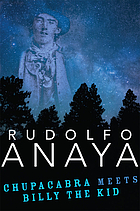
For one, Chupacabra Meets Billy the Kid is a valedictory-in-progress for Anaya’s oeuvre by the author himself. For another, the author, a descendant of the New Mexico legend, sets the record straight about his forebearer. Then there’s the novel of the title, a science fiction plot knitting together the goat-sucker with la llorona, Big Foot, space aliens, an infested office of the U.S. president. There’s a meta-novel unraveling in the process. From University of Oklahoma Press, Chupacabra Meets Billy the Kid arrives as the year’s most entertaining title. Anaya sets the bar for 2019 U.S. Spec-Fic.

In one hundred seventy-two pages, the author weaves threads drawn from the fabric of his literary output. Curandera and mystic Ultima hovers on the outskirts of the action, these settlements are her haunts, the whole llano, is her tierra. As the story draws the character Rosa home, the author reminds readers of her origins, it carries her home:

The golden carp from a story told by the man who had told Ultima’s story. She had seen the boys fishing at the river when they left Puerto de Luna. Now the carp had appeared, a miracle. 

Other tokens of the Author’s career step forth aside from that magical carp; those muchachos from young Mares’ boyhood; place names; Anaya’s familia, even Roberto Cantu makes an appearance. These allusions offer metynomic cameos concatenating all the words and characters who’ve come before in Anaya’s life, culminating for the moment, here. It's not that this title stands alone, it belongs to this long-lived familia of created truths.

Chupacabra’s science fiction angle has its origins in Anaya’s Sonny Baca series that begins with Alburquerque and follows the seasons, Zia Summer, Rio Grande Fall, Shaman Winter. The detective’s nemesis, Raven, brings mysticism and time travel to Sonny’s world in that final title, in a bit of a fictive stretch then. Time travel is the central motive of today’s plot, and it works.

Unchanging and unchangeable, time travel makes for one long bitter irony for Rosa. She knows how the stories end. The girls she hugs farewell, they’ll be dead from disease a few years after Rosa’s hugged them and wished them long lives. Billy, too, is headed for his death.

People who read history get it. Pat Garrett was a hero. People who read more history, and fiction, get it, too. People related to Billy, like Rudolfo Anaya, and country gente, think of a cowardly blast, a kid singled out by double-crossing land barons, not the only killer in town. That's the story Rosa tells here.

Don Rudy adopts a female persona for Chupacabra’s lead character. She’s a novelist frustrated because, writing yet another Billy the Kid story, she feels its absence of authentic, of things and people not known anymore. All those women of the llano, the ones Bilito romanced, the ones who endured and gave succor after drunken gunfights to men with names. Research carries one only so far. Seeing is believing and the ultimate research. It's like Rosa makes a deal with the forces of nature.

The novel itself contains no surprises. The kid lives a short, violent life and gets gunned down and buried. End of story. What was his name, this Billy the Kid? Anglin? Bonney? Henry McCarty? The characters are what give the novel its fresh life. Rosa the researcher keeps novelist’s notes that leap from date to event to person. Rosa the storyteller seeks out the women whose stories didn’t get told, who lived in between those facts.

Rosa recorded the names of the families she met in the Pecos River villages. They always welcomed her into their homes, gave her a place to sleep, shared their meals. The women were the strength of the family and community. Work was strenuous and difficult for the men outdoors, and just as hard for the women. Raising families, preparing meals, canning for winter, making soap from lard and lye, washing, sewing, gardening, sometimes riding to the range to help with shearing sheep or branding cattle, bringing in water from cisterns or the river, chopping wood, cooking three meals on a wood-burning stove, attending church, raising chickens, having babies, curing every conceivable illness that struck family or neighbors, helping their comadres: the list was endless and exhausting.

For me, what I call the meta-novel offers the best moments of Chupacabra Meets Billy The Kid. Like a Shakespearean dramatic monologue, the author steps outside the narrative to offer writerly consejos about the creative process, an historian’s gloss on a particular detail, something the author needs to tell his readers at this juncture. For example, expounding on evil, Anaya has Rosa ask “What does this have to do with me?” and the reader should take that “me” as themselves.

“For starters, we know that most Advanced technological civilizations destroy themselves in their infancy. Nations create weapons, and once each country has its nuclear arsenal, political forces keep adding to the stockpile. No one wants to disarm. When we acquired nuclear weapons, we fit the rule. You only have to look at the proliferation that’s taking place, loose nukes being sold to terrorists. A crazy president with his finger on the nuclear button.”

The voice is Marcy, a disembodied character from an earlier novel, a voice in the machine who guides Rosa’s travels through space and time. Marcy is also Anaya’s voice, the omniscient metaphysical narrator hanging--perhaps impaled-- on the point of the Arrow Of Time.

Time, travel, space, the critters, these elements make up the whole cloth of the meta-novel. Anaya devotes some explanation to how Rosa gets to nineteenth century New Mexico. It’s not clear why Billy isn’t freaked out that he understands Rosa’s presence, but he’s of his time and of the future, multidimensional, as in this scene:

Billy forced a nervous laugh. “Maybe that’s why I don’t trust the written word. Most written about me is lies. You tell ‘em the truth, Rosa.”
Billy could not look into the future. Many books had already been written about him. lies and truths. Each reader had to come to his or her own conclusion about where the truth lay.
Rosa nodded. “I’ll try, Billy.” 

After two years in Billy’s time, Rosa rides a horse upriver and into her own time. Do the people in Billy’s time think Rosa stole Mancita, the horse she rode into the sunset on? Why doesn’t Rosa’s laptop run out of juice? Is it because in her own time, she's been gone just a few hours?

Readers need to sit back and enjoy the ride. Sci-fi is supposed to make sense, but only up to a willing suspension of the rules. After all, the imagination’s the limit, and Anaya’s muse lets loose a todo dar page after page. For example, a classic scene borrowed from the stopped clock showdown scene in a movie.

Rosa’s helplessly worked up seeing a jailer bully pounding Billy’s face with the butt of a rifle. Rosa gets kicked out of the jailhouse and comes face to face with the devil, a creature named “Saytir.” This is a formidable enemy, only a hidden derringer saved Rosa the last time she was alone with the alien spawn from her own time.

Saytir wore purple bell-bottom pants with silver rosettes sewed down the sides of the legs, a bright red shirt, and a dazzling blue satin vest. His neckerchief was pink, his hat a poor excuse for a large mariachi sombrero. His boots were obviously from a Juárez Mercado. On his gun belt he sported two silver pistols, one on each hip.
“Rosa,” he whispered in his best imitation of Gary Cooper in the movie High Noon. “We meet again.”

The ridicule is Anaya's most trenchant indictment of daily events. Much as the evil is a clownish buffoon, Saytir's power can destroy the world and only Rosa has the answer, it's tied up in the inevitability of Billy's legend, in the writer's power to suspend time and write events to fit their outcome.

Filling in Billy’s story demands mas o menos straight history, or in this narrative, fashioning creative non-fiction heavy on the fiction element, as Anaya develops the facts of the Lincoln County war. For readers with an historical bent, there’s a set of research notes at the end that links plot events to history. In other words, this stuff really happened, the names have been supplied to tell the fuller story.

Ultimately, Billy’s story is satisfying because of its fantasy—the time trip, the monsters, are supposed to be fun. And they magnify the horror of the truth. Big Foot and cyborgs aren’t real but that evil is. Marcy and Rosa step away from Billy’s narrative to address, engage, a writer’s ethical responsibility to record, document, reveal, explain. Marcy talks:

Write Billy’s history. Let people know we have this self-destructive instinct in us. It’s what led to the violent times in Lincoln. But there was some good in Billy. If you can find some goodness in Billy’s life, that’s the lesson to be learned and taught to the young. Otherwise, we’re lost. Your story can save the world.”
“ I didn’t set out to save the world!”
“Few writers do, and yet that’s your mission.”

At this juncture the transmission fades and Rosa and the reader are on their own. Billy gets buried. Rosa rides home with Josefa’s blue taffeta dress. Time returns to normal. None of this happened. Evil abounds. The

Order Chupacabra Meets Billy The Kid  publisher-direct at this link. Independent booksellers can order it for you.


The Gluten-free Chicano Cooks
Kathy and Jim Build a Boat. Boatyard chile verde.

Durf marveled at his teammate, a javelin thrower who lived in the Goleta monte. A born storyteller, my roommate spun a fanciful tale of a man I knew only by sight from track meets. I sought what germ of truth must lie at the heart of Durfee’s account.

Jim Clark back to camers
“Jim Clark goes takes his javelin to hunt deer in the mountains.” The story was Jim lived for free on a remote ranch and survived mostly off the land, running down deer in the chaparral. I loved the image my roommate conjured, a wild man living at the edge of civilization because he chose to live like that, free and unencumbered. I imagined Jim Clark went hungry a lot.

Jim Clark’s girlfriend, Kathy, loved him with immense dissonance. Jim’s life was impossible to share with a woman studying to make a career teaching high school English. It was during one of their off-again separations that Kathy and I were hanging around together.

Kathy filled whatever space she occupied. Not many people chose to occupy space with her, however, because Kathy spoke her mind. A woman of wit and brains, Kathy was a formidable personality who fit perfectly into my world, especially as we both were single and not looking. An ideal end-of-college-summer partnership.

Four years have ways of changing a person’s life and attitudes. I was back from overseas and learned from the locals that Kathy and Jim lived in the boatyard along the railroad tracks. They were building a boat and needed help. I called the boatyard. I hadn’t heard Kathy’s voice in four years but I recognized her “hello?” instantly and she mine. Old friends are good friends, separations are meaningless.

I asked him about the javelin story. “I tried it one time,” Jim Clark laughed. That was the day we laid the keel for the cement boat.

Kathy looks out while Jim and friend cement the deck.
Jim had identified a pile of rotted railroad ties where some steel rails lay by the rail side. He had already picked out his keel and pulled the rail to clear ground. All he needed was someone with a truck or car to transport the rail to the boatyard.

I drove the car into the weeds where Jim directed me to stop with the rail underneath. Jim and another fellow lifted the front end and I lashed it to the front bumper. We did the same on the other end.

The nose of the rail extended a few feet from both ends of the Buick Skylark. Slowly and not spotted by cruising cops or railroad dicks, we drove the back streets to the boatyard and dropped the keel in place. In the boatyard shack’s two-burner propane stove, Kathy made her famous dumpster soup and we feasted friendship, old times, the cement boat to be.

A few months after, the boatyard shack has gained a dining table, an outdoor couch and several makeshift seats. Where we’d dropped the keel now stood a rebar and steel wire superstructure of a 40-foot boat. Jim worked on that boat with the intensity that led him to think he could chase down a deer and kill it with his javelin. The deer was certainly out of reach but Jim had built a boat. All it needed now was a skin of cement.


Months passed as Jim constructed the hull, deck, interior spaces and hidden recesses. The work took the time required. Ugency arrived with cementing. The work must be completed in one weekend so the boat dries and cures as a single mass of cement and steel that floats on the open sea. Friday after work, Barbara and I drove up from Temple City. The work was well underway by our arrival late afternoon. Jim and Kathy had lots of friends.
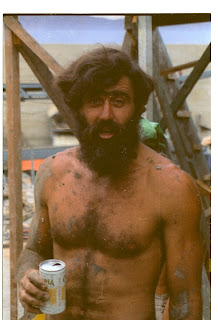
Jim Clark. qepd.

The third day the hull looked like a boat. Only a few people fit inside so workers took shifts pounding cement into the interior walls. Others touched up the exterior. By noon Sunday, the cement boat was done. Most of the crew had left, exulting in knowing they’d joined the culmination of an incredible feat. Jim had read books and talked to old salts, he and Kathy moved into the boatyard, and they built that boat by hand.

I volunteered to make the celebratory feast, a one-dish meal I call Boatyard Chile Verde. After Jim and the cement boat were taken by pirates in southeast Asia, Kathy sailed those waters in hopes of word. She cooked Boatyard Chile Verde for merchant mariners the world over, it was the crew’s favorite dish.


You can make this on a one-burner propane stove, or in a sartén over an open fire. Ingredients, improvisation, and preparation are the keys to making Boatyard Chile Verde.

INGREDIENTS
Pork. Sub beef or chicken.
Gf flour.
Tomatillos.
Green chile – hatch, California, mild new mexico, canned whole are fine.
El pato hot sauce.
comino
Onions
Garlic.
Cilantro
Cast iron frying pan and lid.
Paper or plastic bag.
Sharp knife.
Salt
Pepper
Chile powder
Olive oil

Into the bag, put a ¼ cup of gluten-free flour, a pinch of salt, pepper, and chile powder.

Wash and dry the (pork) meat.
Cut the meat into ½” cubes.
Dust the meat with seasoned flour in the bag.

Dice a large onion and six or eight garlic segments.
Chop cilantro to make 1/8 cup.
Chop 6-8 large tomatillos

Get 1/8” of olive oil hot in the pan. High flame.
Wilt the onion and garlic, stir don’t burn.
Toss the meat cubes with the wilted onions and garlic.
Season with salt, pepper, ground comino or a pinch of seed.
Brown.
Add the chopped tomatillos and chopped fresh/canned chiles, and the can or two of el pato.
Stir and cover.
Lower heat to medium and bring to a boil.
Lower heat to lowest simmer setting and cook for an hour, stirring now and again.

This is ready to serve right away. The objective to fork-tender bits of meat that look like meat, not a paste. Cook vegetable longer before adding chicken, then simmer raw chicken fifteen or twenty minutes until firm. Chicken is fast. Cook beef an hour and a quarter, maybe longer.


Bisbee Late-breaking News!


Bisbee Friday evening January 18 at 7:30 pm.
Title: "1968: From Yellow Submarine to the My Lai Massacre."
Place: Bisbee, at The Royale on Main street.
Make a Cochise County weekend of it!