Showing posts with label guest writer. Show all posts

Monday, September 02, 2024

Labor (of Love) Day: Special Edition

The Things We Missed

michael sedano

Last week, La Bloga-Tuesday shared a foto essay of a pair of extraordinary events. Any community can expand its literary horizons while discovering a hidden well of poets and gente who write. Here's a link to last week's La Bloga-Tuesday. Please enjoy it, as well as these vital additions to that week's celebration of cultura, poesía, and good people all around


 Altadena Laureates: The Fotos We Missed


Altadena Library Staff, far left and far right.
Altadena Poets Laureate
front: Teresa Mae Chuc, Thelma T. Reyna
back: Nikki Winslow, Library. Hazel Clayton Harrison. Carla R. Sameth. Linda Dove. Morgan Gaskell (special guest poet). Sehba Sarwar and Lester Graves Lennon, Poets Laureate 2024-2026. Ashley Watts, Library.

The unidentified library staff member won praise from the grateful poets for her wonderful assistance in everything from moving chairs to adjusting microphones. Mi'ja, we'll get your name. Note: Ashley Watts, Assistant Library Director.


Women Who Submit: The Essay We Missed

Editor's Note: La Bloga-Tuesday last week shared portraits of the WWS writers reading their own stuff at historic Campo de Cahuenga located at the back range of the Hollywood Hills. Independent writer, Paula Arechiga, attended the reading. La Bloga is happy to share Archiga's report of the event.


CHICANA WRITERS & COMMUNITY BEARERS

By Paula Arechiga


Gathered near the anniversary of the Chicano Moratorium - Aug. 29, 1970. It’s going to be 54 years this Thursday. Even at 36 years of age and having been raised throughout LA my whole life, this history, this lineage, is still only a handful of facts. Cherríe Moraga, Gloria Anzaldúa, Ruben Salazar, Walk Outs, Chicano Power, Brown Berets. Maybe my mind collapses the Chicano Movement with the Chicano Moratorium. This is why events like this are so important. They help us root ourselves into our collective memory and help us orient ourselves on how we got here.


Miranda McCord

We were greeted by the Director of the museum, Miranda McCord who thanks us for attending and the panelists. Xochitl opens us up with a land acknowledgement and does not shy away from the truth of how this land came under US possession. The whole event is a harmonious song of remembering, facing, embracing, reclaiming. 


Tisha Marie Reichle-Aguilera is our first Chicana writer at the podium and we’re transported to the home of 5 young primas who “for the first time in never”, their spring breaks land on the same week - from her book “STORIES ALL OUR OWN”. But their plans for Disneyland, movies and adventures are changed when chicken pox infects the clan. The story of the chicken-pox covered primas puts the biggest smile on my face, it’s so wholesome, silly and familiar.


Annalicia Aguilar


Roberta Martinez, Mona Alvarado, Xochitl-Julisa Bermejo


Xochitl introduces the next Chicana writer, the youngest among them, Annalicia Aguilar. She reads us works from her upcoming book “Broken but Holding” and her deliveries are felt deeply. One of her pieces she reads to us is “Weapons in the Womb”, the image of pregnant dolphins self aborting when captured comes to mind. 


The next Chicana writer Xochitl introduces is Mona Alvardo Frazier and she reads us two sections from her 2nd book “A Bridge Home”. We’re transported to a classroom where young latine students are watching a film of the Chicano Moratorium and they’re shaken to their core at how the event ends in violence at the hands of the Los Angeles Sheriff’s Department. I feel the anger in my body activate as a new perspective of that fateful day weaves itself into my psyche. The internal mantra goes, “Our stories are so powerful.” The next thought, “No wonder the majority of shows for us and about us get canceled - Gentefied, This Foo and Gordita Chronicles come to mind.


If my memory serves me correct, Tisha Marie Reichle-Aguilera comes up and introduces her Writer Wife, Xochitl who reads from her 2nd book “INCANTATION: LOVE POEMS FOR BATTLE SITES”. One of the last poems she reads to us is dedicated to the children of Gaza and all the children. There’s a heaviness in realizing while we are gathered in community, others around the world fight for their existence, their humanity.


Xochitl introduces the last of the Chicana writers, Roberta H. Martinez and she read us a number of shorter pieces. Before she starts though, she tells us one word “Vote” and begins to read a piece about the 4th of July. I loved the way she embodied the different voices of her pieces. 


Sometimes when I’m immersed in an experience, it’s hard to commit all the details to memory but what never fails me are the feelings. This gathering left me feeling  full, muy contenda, like I had just sat with tias, primas y hermanas for the last two hours and they shared their full selves with us. It felt like a returning home, to a remembering. It only strengthens my belief that more gatherings such as this need to happen. I’m grateful to a fellow community organizer who shared about this event or else I would’ve missed it and what a loss that would’ve been.


Tuesday, October 17, 2023

Guest Essay: Listening to Voices; Hay Otra Voz

Editor's Note (Michael Sedano): 
Nicki De Necochea contributed her first La Bloga Guest Column in 2021 (link), as a Caregiver of someone living with Alzheimer's dementia, Nicki's mother. La Bloga-Tuesday welcomes this essay on self-talk. Nicki lives After Alzheimer's and it's hopeful that this essay has no obvious connection to those years of living with dementia.

Some psycholinguists claim the limits of one's language are the limits of one's world. That might be so, of spoken, linear speech. Inner conversations occur at the speed of memory, everything all at once and better than a movie. De Necochea identifies the phenomenon as a tool for personal good. Because some readers may find the subject ambiguous, De Necochea offers what I call an apologia by way of prologue, offering context and disambiguation.


Nightfall
By  B. Nicki De Necochea

Apologia by way of Prologue

Quietly Loud. Since childhood, I’ve been aware of my brain’s gift of personal power to use my inner voice to survive and flourish. Without permission, a choice presents itself, quietly. But loud, an inner voice that directs, redirects, uses, or discards, my innermost thoughts. 

I remain in awe that “the voice” provides a running daily monologue and unsolicited commentary throughout my day. It’s an opinionated mini-me in my head, insistent on giving perspective or critique. 

My self-talk can be optimistic and supportive, or negative and self-defeating. I focus my innermost silent conversations, self-talking about the beneficial and positive, calming fears and bolstering confidence. 

I’m aware my inner-talk can be a personal tool for good, or a weapon of self-punishment. My thoughts can encourage, discourage, or keep me safe from stupid compulsions, and even teach me to listen to hidden messages for self-soothing. It’s a voice I take for granted and can silence or ignore – as needed. Humans have been empowered with this powerful mind-trick. It’s a miracle of evolution. 

It's a choice to give this noiseless voice its strength or embolden or scold it into submission. This inner voice, my self-talk, combines conscious thoughts and likely some involuntary beliefs and biases to encourage me to interpret and process daily experiences. It can save or destroy, reassure, or nurture. 

That said, I use it in my writing as well. Nightfall is a short conversation about acknowledging this quietly loud voice exists. 

NIGHTFALL 

At nightfall when the day has been exhausted and my mind and body its mirror, my voice is stilled, and I give in to restful acceptance of my inner thoughts. 

They begin like a diagnostic imaging on my state of mind, stopping to better assess the tender places of confusion, turmoil, or chaos. 

What an intriguing human gift to be able to talk in silence to oneself. This is when the conversations are formed that are only for me to hear, and they are none that I can share for fear of the dark shadow’s misinterpretation. 

These words whispered on the vapor of each breath held-in, are protected in silence from their being carelessly scattered by any unworthy breeze. 

There are the painful ones, and the truthful ones, although some can be vengeful and misguided. They are the feelings and thoughts that allow me to be authentic in my disappointment, or in sadness and self-doubt, without any need to apologize or protect myself from being revealed. 

Resolute, although sometimes like a living mosaic; broken, crushed, mended, and reinforced. These are my mind’s whispered truths, laid bare for mending when night falls. 

What feels broken is gathered up and soothed by a night stream of calm. By breathing-in perspective and breathing-out serenity I am stronger and more courageous in the night’s assessment and inventory of my state of mind, with no distractions or busy denial. Then, after gathering the good shards of wisdom, my thoughts and self-talk transform into a mental photomosaic of hope and healing-pain, cauterized by gratitude. 

I’m transformed again. 

After nightfall, there is better discernment, a clearer path and another more useful manner of mental discourse and presence. The creation resulting from my mind-talk is a new frame of awareness, and acceptance. 

In nightfall, words are the quietest they’ve ever been -- transformed into a healing dream and if I’m blessed, the same ones are not recalled when the night goes down on my soul once again. We are at rest. 

B. Nicki De Necochea
〰
Swallowtail Foto Gallery
Michael Sedano

When I was living with Alzheimer's Dementia, my camera took on a role like B. Nicki De Necochea's use of her inner self, except I used the viewfinder to empty my thoughts and concentrate on framing and focusing something interesting occupying a small portion of the landscape and nothing else.

After Alzheimer's means change, lots and lots of changes. One thing that doesn't change is respite found at the end of a chunk of optical glass. Nowadays, of course, I'm no longer working to ignore or forget. Alzheimer's offers little room for hopeful stuff. Now, I'm working to memorialize sightings of Swallowtail butterflies. Memory is futurism, sabes?

Swallowtails are "commonly seen" in certain locales, as if seeing a swallowtail is a ho-hum routine event. I hope never to become so jaded a swallowtail won't give me a bit of healthy tachycardia. 
 

Tuesday, August 23, 2022

GOPlague-time, Galardonado In Silence, Roblest Impressions

 Michael Sedano

As if caregiving isn't enough challenge for a semi-old man (in two weeks I'll be 77), now I'm dealing with the GOPlague. Barbara has tested positive twice for the virus. She's got it, but it's not going to get her.

Me, I test negative. My claim to temporary invincibility comes as no idle boast. After all, I survived the cold war high above the frozen Korean DMZ, and back in July 2014, I died. 

The Ancestors sent me back so I wouldn't miss all those life events that flashed before my eyes as I was departing. My one regret was I wouldn't get to share my granddaughter's milestones. "Burn Sage," the ancestors told me. I do, every morning. The Ancestors are in the smoke, powerful medicine.

Provenance? I was overjoyed that Barbara had built strength and had energy to come into the grocery store and push the cart. My negligence allowed her to complete the aislesweeps unmasked. The only time she's gone into public without masking, the GOPlague gets her.

And that's the view from the coast, Tuesday, August 22, 2022. The only penultimate Tuesday of August in 2022 you're ever going to see, for the rest of your life. Make it great, gente. Read, raza, and GOTV. Never vote R.


Silence of the Latino Book Awards


The weekend of August 19-20 brought raza writers from across the continent to receive an International Latino Book Award. Almost 600 titles won a prize, if not a Medal, an honorable mention. The awards structure offers 208 categories, accounting for two full days of meetings at L.A. City College.


I searched the Google for news of "International Latino Book Awards" to disappointing results. The dearth of news about the awards fills me with frustration at lack of effort, somewhere. 


Essentially, the only news promotions the Awards get is from the organizers. Running the show is Empowering Latino Futures, renamed  from "Latino Literacy Now", whose dubious history of poorly-attended Edward James Olmos Book & Family Festivals are good cause to change identity, while pursuing the same business plan.


I don't know if the abysmal publicity about the Awards owes itself to poor promotion out of the Empowering Latino Futures' office, or deliberate erasure by newspaper culture editors. Raza literature doesn't get ink, just as raza actors don't get roles, raza directors don't get gigs, raza books don't get awards. So we have to do it ourselves.


Next year's Award campaign evidently keeps the same $90 entry fee per title. Authors, Agents, and Publishers interested in next year's awards can click this link. But do note, ELF staff have not updated the company webpage in detail.


Most Galardonadas Galardonados receive a dust jacket sticker, and authority to call oneself Prize-winning Author. Empowering Latino Futures promises some Award-winners $1000 cash and a marketing campaign. ELF places a $2500 value on the  marketing package that sends press releases and stories to 625 "Latino media outlets." 


Wouldn't it be something if ELF were to share that 625-name list with the Galardonadx? The only news I get about the Awards comes from happy Award-winning Authors on the MetaFace, so distributing proven leads to the writers genuinely has value.


It would be something if those 625 Latino media outlets ran the story big, with fotos and a local spin? A local writer's P.R. release has a better chance with a small-town editor, me parece, but the writer needs a name and number/email.

La Bloga congratulates all the participants in the International Latino Book Awards, and encourages participation in this, or similar, programs, with a caveat:

This Award is a sticker on a book. You gotta put that book and sticker onto bookshelves, you gotta send out your own press releases, don't restrict yourself to local Latino media outlets. You gotta toot your own horn. 

Learn to pronounce "Indefatigable" when people ask about your marketing campaign.


Guest Writer: Hugo Garcia

A guest at CasaSedano asked if I had read anything interesting, lately? I had just the answer for him sitting on my TBR pile, Against the Wall, in Spanish, as Contra la muralla, from Arte Publico Press.

The guest, retired newspaper editor and Spanish-language newspaper journalist, Hugo García, devoured the volume and enthusiastically sketched a few notes. The collection is available from the publisher (link).

In Alberto Roblest's Contra la Muralla's 17 short stories, reality and perception mix, even in the same sentence. The dramatic effect is not always clear to the reader.

When Roblest succeeds, like in El Dia Anterior al Anterior he skillfully describes its protagonists:
To date Grace hated her job...Sometimes she dreamt the plane was crushed by God's hand slamming it against the clouds; The Scorpions got off the limousine at the airport entrance astonished there were no fans anywhere; Pedro Martinez Ocaña aka Tigrillo was born without talent for politics or investments. To be honest he lacked talent to do anything; Cristal was worried her only support could die any moment leaving her destitute. She knew she had to hurry before his children and his two ex wives beat her to it. (García's translation) 
Roblest intrigues the reader as to how his people will intersect and how this will affect the story's end? Other times, the reader is left wondering what the stories were really about.

Throughout the stories Roblest shows a mastery  of character description and deep awareness of current political and economic corruption in the U.S., for example, in Obelisco Ennegrecido  Roblest covers the Washington Monument in cockroaches. 

Some of the Cuentos are only a couple of pages long like Laberinto in which its protagonist is chased by a fat being called la Chingada and Una Vez Abajo no se olviden de Encomendarse a Dios where the narrator is intrigued that a man in a suit and slippers stands in New York's Times Square looking up at the sky calling God.

Some stories are several pages long like El Dia anterior al Dia anterior and Lost and Found. Longer works allow the writer to present a traditional linear narrative until he gives the story a suprising end. 

In all, there is something for every one in its 17 short stories.

Tuesday, June 28, 2022

Life In These United States: Poetry Is Our Medicine


June 24,2022
Planet Earth
The United States of Fucking Ignorance
by Iris De Anda

This morning they came for my rights
Took them under cover of midnight & black robes
Proclaiming a law over my bones
Ignoring my body once again
Beat the breath from my skin
Judging my choice for sin
Ripping justice from within
Puppet politicians policing with tricks
This matrix is fixed
Making me sick
Making me woke
Cause the system lost control
They want to patrol our womb
Creation is the Goddess choice
If I want to give life or live my true voice
There is no wrong way to love
Radical self awareness
Radical self care
Radical bliss
Our ancestors gave us gifts
Gave us allies
Gave us movements
This morning they came for my rights
And I won’t let them in
We won’t let them win
My body, my blood, my choice


Iris De Anda a Guanaca Tapatia poet, speaker & musician who has been featured with KPFK & KPFA Pacifica Radio, organized with Academy of American Poets, performed at Los Angeles Latino Book Festival, Feria del Libro Tijuana, Casa de las Americas in Havana, Cuba and is named one of Today's Revolutionary Women of Color. Author of Codeswitch: Fires from Mi Corazon & Roots of Redemption: You have No Right to Remain Silent.


Tuesday, June 15, 2021

MAMA LOVE: She's almost there. She's there.

Editor: Alzheimer’s Dementia is a terminal disease that takes its toll on the Personhood of someone living with the increasingly dismaying progressions of the disease. A family member, either a spouse or an adult child, becomes despairing caregiver to the disappearing personality. At the End, dementia overcomes the organism so it abandons its shell. 

Caregivers have final obligations over time: deciding when to begin in-home hospice and palliative care, then watching the body leave the caregiver’s home for the last time. 

Time. That’s all we have after that neurologist fills out that form “dementia of the Alzheimer’s type.” Time is what we have. 

Today’s Guest Columnist, Nicki De Necochea, updates her February 16, 2021 column (link). That was a time three months and 27 days past. Every minute of every day, caregivers live with the disease. Before today, De Necochea was able to end her column recalling a sparkling moment lucidity:
My favorite thing she still does when hugging me is when she says, “you’re beautiful mija”.  My mother not only is communicating, expressing her love, but she knows at moment who I am to her.  Gratitude; I take nothing for granted.  


MAMA LOVE: She's almost there. 
Nicki De Necochea 

My viejita has for a time maintained her status, as stable as we could possibly expect, for where she is in in her Alzheimer's disease and trajectory. This has included hospice care for the last two months. 

Weaker and thinner, but still sitting up, standing for long enough to sit her in her transport chair, responding to simple questions and hugs and I-love-Yous as recent as this Thursday, and amazingly, remaining part of her daily "being," until this last Friday. 

Something changed and it was dramatic. A seizure of sorts, glazed eyes and she is in another realm, and no longer responsive. No muscle tone, and her body now just weight. Taking nourishment and hydrating has been consistently less, and has now, as of two days ago been replaced with inability to do these as well. 

Her transition is noisy, part of the Alzheimer’s which includes involuntary groaning and moans, distressing because that's what we as humans do when we're in pain. I've used an eyedropper to give her her anti anxiety med/and pain med, just so I feel better in case she does have pain or discomfort, and she's not "drinking" so the drops make it more able for her to swallow. 

I'll let the nurses take over tomorrow should she need something stronger. Some of the stuff we do is so we feel better as caregivers, right? 

I lie next to her and speak to her just to tell her I love her, that I’m here, that she’s not alone. I’ve read our hearing is the last sense to go, so I reassure her as best I can that I am right here, we are together and she can rest. That I'm not going anywhere. She quiets when I do that. Music is on, Pandora sweet stuff. 

Yesterday was the marked big change, and a sign that she's working hard to make that transition. This is the hardest part, for her; but also, for us. It’s hard to feel powerless. 

I’m list making, cleaning, fidgeting and doing all the keep-me-busy things, I can think of. Lists…like I'll Up the nursing visits to daily starting tomorrow. Place the order for the hospital bed not needed until now. 

Figure out what to dress her in when she passes; ask for hospice to have someone come to help me bathe and dress her when she does pass; be sure I know who to call if she does; because my brother is out of town as of Wednesday and I'll be on my own if that happens sooner…shit like that. All the just in case/just in time stuff. 

And my expectation is that these hospice “angels” will help us with the acceptance part, with less anxiety, and a better idea of what my gut says is the reality, and imminent. 

Why am I sharing this? Well, because it helps me process, and face the truth; and maybe one day will help one of you know what to expect in a similar circumstance. And because I think discussing such a huge family milestone should not be a quiet thing. Just as important as the births, birthdays, Mothers Days, anniversaries; family celebrations and the lot....maybe more so. It should be spoken, felt, shared and laid down. 

I am so grateful for these past 7 years with her under the same roof; both of us helping each other adjust to the coming of this very time, this exit, this reality that she has given us her all, and we too have given her all we have been able to, and willingly gave to make these years just the absolute best. Thank you to each of you who have given me so much strength, support, encouragement and shown your humanity in your caring. 

She was a force! 

We are also fortunate to have that force of family and community caring and the openly shared concern and affection. Thank you from my heart. 06.12.21


6.14.21 There

My mamacita passed this morning with me at her side, peacefully in her sleep. 

We stayed up together until about 2 a.m., me doing all the talking, and listening to music. She was gone by 5 a.m. So a very heavy day, with a lead weight for heart. 

Just now, my first chance to get to take a deep breath, the house too quiet, the bed empty and not a thing that needs doing. What now. She's gone....and her body too. Too much reality is so painful. I'm calling up the chingona in me to get me to keep me moving into the next steps. 

The hardest, hardest part of this journey was not the work, or the selflessness, or the sadness of watching the disapearance of who she was. The hardest part was watching strangers roll her body. All zipped up and removing her physically from me. Cabrones! 

Then, a gutteral wail from the depths; oh, and then I threw up. So indelicate.

Interestingly, when she passed, I opened every window, the bedroom door to the outside patio, and I saged her and my house. The open door and windows symbolic of allowing her soul to take flight. 

I couldn't believe how calm I was. I went out to the patio, to call my niece and as we were talking, a hummingbird came within 2 feet of my face, and just hovered for what seemed a message. Symbolic and reassuring. 


Tuesday, February 16, 2021

Guest Columnist: Running Out Of Time, Caregiver, Mi'Ja

Editor's Note: La Bloga welcomes guest columnists. Today's guest writer, San Diego artist Nicki De Necochea, continues La Bloga's explorations (link) of Memory, loss, and health. De Necochea writes out of personal experience. Families similarly stricken recognize the universality of such experiences. La Bloga welcomes questions, observations, personal stories. Use the "Post A Comment" link below.

We’re running out of time together.  

Nicki De Necochea 


We’re running out of time together.  

92 birthdays in and she has no idea that we’re running out of time.  My mother, perhaps the fortunate one, has no idea of loss, nor of her full scope of living, which her brain once processed for her, as naturally as breathing.  Her brain can no longer be relied upon.   

This exacting mechanism that allowed her instantaneous recall as easily as if pulling a book out of a bookcase has a corrupted hard drive, like a cranial computer in a state of crashing.  There are so many little things (and bigger more important things) she no longer grasps, sorts through, makes sense of.   The heartbreaking loss of everyday brain functions that we all take for granted, is not fathomable nor worrisome to her.   No cognition means no ability to grasp loss. 

This brain thief, Alzheimer’s, persistently invading her ability to be whole, wreaks losses that rob the whole family.  Each year, my mother and I face with lament how this disease leaves her with fewer physical and mental skills. Skills like talking on the telephone, picking a good apple in the produce section, handwriting as basic as signing her name, reading or even watching a television program with full awareness, now vanished. She doesn’t lament their loss. She no longer recalls these as part of everyday living skills.  

My mother’s brain power once gave her ability to remember countless phone numbers.  As recent as six years ago, she could walk up to an ATM and punch in her pin number. She could remember her social security number.   The family are the ones left to catalogue what she can no longer remember or do.   She has an unwelcome freedom from looking for things she has misplaced, of fretting over what she cannot recall. 

We’re running out of time together, and losing her completely is so very near.  The signs are physical too.  Her lovely strong, and some years ago robust frame is thinning. Absent muscle mass has gone for good.  

Most dear is her current solid awareness of love, and her ability to feel gratitude and connection.  The “I love you mija.”  “Thank you mija." "You’re a good girl, mija.” She still expresses her ability to love. Her brain still gives her permission to feel, to say. These will one day be buried, or too tangled with no outlet in those disintegrating brain synapses.   

My coping skills as her daughter (labeled caregiver by a society that has trouble grasping the strength of our cultura and the genetic obligation of our love), take form as resolute patience, loving appreciation for who she is, and foremost, Gratitude, from Spanish, apreciar. I am my mother’s daughter, and I am grateful for all this means. 

Being loving is still her forte.  She reaches out to me, to be a mother by finding my arm and caresses it as if trying to warm and comfort, or perhaps healing like a naturalist healer, a sobadora. Gratitude abounds when I focus on the things she still has, and still is.  The hugs, and affectionate kisses when I grab on for a gentle rock, a hug, or a dance in place. Her love of ice cream, and candy, and ability to delight in them, with a gracious thank you to boot--always offering me a bite of what she is eating, generous to a fault.   Grateful for her enjoyment of music, showing her delight by tapping her hand on her leg in time with the beats.  

My mother doesn’t remember my name, but knows who I am. I am her mi’ja.

I remind myself, we are running out of time together, and acknowledge that now is now.   I find the patience to just let her do, as long as she wants, because doing something is what’s left to her of her “mother” skills, not yet gone.

I lament all the subtle changes in her in the last six years; all forfeitures, the gains are almost nonexistent.  Capacities fall away, dependencies inch in and take over more of my time leaving her with even less.   The odd behaviors that seemed frustrating when they started are now missed when she can no longer do them.   The annoyances, like her need to pack and empty her dresser drawers almost daily became something I finally acknowledged as an activity that kept her focused on a task, and I let go of thinking of it as a negative I’d just let her do it, because she could.   She no longer does that, and I miss her mischief.   

Still verbal, somedays she makes some incredible, wise astounding statements.   She has given me surprising advice, and insights as if some extraordinary force possessed her for a few minutes to give her moments of lucid wisdom.   Other times less so, like she’s channeling and speaking for someone else and the messages are in code 

So, as my viejita turns 92 the Annie Lennox song is in my head rings true more often, these days, “No More I Love Yous.”  It’s the soundtrack of my dread and fear of the day when there are none of those left for her to share, because we’ve run out of time.   

There’s still a place for lots of joy, laughter and gratitude in our lives. She is so very sweet, and affectionate.   She says I love you and thank you often, such simple human courtesy that many don’t say often enough. I can still make her laugh, and help her feel joy with music or affection and silly talk.   

My favorite thing she still does when hugging me is when she says, “you’re beautiful mija”.  My mother not only is communicating, expressing her love, but she knows at moment who I am to her.  Gratitude; I take nothing for granted.  


B. Nicki De Necochea is a So Cal artist, residing in San Diego who embraces her art and writing as a form of creative self-expression.   She is a painter in oils, acrylic and mixed media.   Her writing addresses personal themes and experiences as another vehicle for using art for growth, human awareness, and for her own self-discovery.

Tuesday, July 23, 2019

Report from the Camps, on the border, on the stage. Working in clay.

Today's La Bloga-Tuesday welcomes Guest Columnist Juanita Salazar Lamb in the first of a 2-part report from the U.S. border between Mexico and Texas. Saturday, La Bloga continues Salazar Lamb's report and will have continuing insights as the mystery writer returns to this manda at la frontera.

Juanita is working with gente on the first days they're not in a concentration camp. They're immediately free, no practice to go through, no Group W bench, welcome and you're on your own. Imagine back to 1944 when the Japanese came back to Boyle Heights from Manzanar--the ones who didn't go to Europe--and the transitions they went through, back into Boyle Heights and Issei-Nisei jazz versus be-bop, Nihonjin or pachuco...that's what playwrights Dan Kwong and Rubén Funkahuatl Guevara explore in an important drama developing out of Boyle Height's Casa 0101 cultural centro.

Little Joe and Masao are really old tipos nowadays if they're still around, and their kids are senior citizens, too. Senior citizens will find arts and crafts engagement worth the travel across town to a  CAFAM senior activity. La Bloga-Tuesday recently did just that, to do some pots with clay maestro Wayne Perry.


Juanita Salazar Lamb is an author who lives in Northwest Arkansas. Geographically removed from the Rio Grande Valley where she was born and raised, Juanita keeps her pulse on happenings in the Valley, on immigration issues, and other topics that affect the Latino community. She continues to work on her mystery series featuring Yara Garcia.

BORDER VOLUNTEER: I SPENT 3 DAYS AT THE BORDER AND THIS IS WHAT I SAW AND HEARD

Juanita Salazar Lamb

For months and months there has been so much back and forth about the crisis at the border, with each side of the debate (sometimes it seems less of a debate and more a round of name-calling and finger-pointing by both sides), presenting images and advocacy to support their position. You can find a news outlet to support your opinion, and if you haven’t formed an opinion, you’ll possibly find yourself lost in the plethora of images and words published by news outlets and social media.

One image by Reuters depicted immigrants held outdoors in cage-like enclosures, some people lying on the ground with mylar blankets spread out. Other images showed children in conditions seemingly so crowded that there was not enough space for them to rest comfortably. 

Defenders of current policies called foul! and soon there was another round of finger-pointing and blame-laying by all sides.

Disagreements were not limited only to politicians and news reporters. Many of my friends on social media joined in the melee when images and memes were published. Discussions drew closer to home as some of my friends contested mine and each other’s veracity. When I decried the conditions depicted in a specific Reuters photograph, a friend said that those were not the real conditions the immigrants are held in. This friend knew of an immigrant center that had their own dentist for the immigrants, where children were taught English, and they were treated better than our own children citizens are.

Now more than ever I was determined to find out the truth. Finally, on June 25 feeling more confused than ever I decided it was time to find out for myself and posted the following on my social media page (misspelled words and lack of capital letters are all mine).

I want to find out for myself whether the conditions at the migrant detention centers are as portrayed in the news. Some friends say no, that it is fake news. I want to see for myself and then continue spreading the word or stop posting fake news. I'm willing to volunteer at a center in Texas or Oklahoma. I speak fluent Spanish and English and have free time. Pass on my post if you have contacts that can connect me.

I received a couple of leads and several promises for prayers for me. As I searched for organizations that could use my skills, I learned of Angry Tias and Abuelas of the RGV (Angry Tias)(link). Their Facebook page states: “The Angry Tias and Abuelas’ mission is to advocate for dignity and justice for individuals and families seeking asylum at our borders. As they embark on their journeys to destinations across the U.S., our aim is to assure their basic health and safety needs are met.”

I followed the link on their website and completed a volunteer application. After only a few days I was contacted by a Susan, one of the founding members and the volunteer coordinator at the Greyhound Bus Station in McAllen, Texas.

Susan told me about several volunteer opportunities with Angry Tias and we agreed that I would come to McAllen and start volunteering at the bus station. In talking to Susan, I also learned that the Humanitarian Respite Center, operated by Catholic Charities, is the first stop for the people after they are dropped off at the bus station upon their release by ICE. She added that the Respite Center needed certain items and sent me a list.

My husband and I left NW Arkansas on Sunday, July 7, and after spending the night in Seguin, Texas, we continued the next day and arrived in the Rio Grande Valley on July 8. I grew up in Harlingen, only 20 miles from McAllen, and so we stayed in Harlingen. I noted in my journal on July 8:  Made it to the Valley Monday afternoon after driving more than 900 miles from NWA. (We left home) with a nice temp of 68 degrees and fog. Harlingen greeted us with 95 degrees and a heat index of 107.

We had a full trunk of donated items for the Respite Center: diapers, baby formula, wipes; underwear, socks, and t shirts for men, women, children; snacks, and tote bags. After we checked into our hotel, we drove to the Respite Center and made our deliveries.


DAY 1

I arrive at the Greyhound Bus Station in McAllen shortly after 9:00 am and Susan greets me and gives me a short orientation. My work there is to review the passengers’ tickets and verify that the itinerary matches their destination and confirm that each traveler has a ticket. I highlight their route on a US map and point out cities where the passengers will change to another bus. I confirm that someone is aware of their arrival and that someone will pick them up. Then I review their immigration documentation and clarify that they understand the next steps in their immigration process. I answer any questions they may have and find an answer if I don’t know the answer. All this I do in Spanish as all the passengers I assisted are from Honduras, Guatemala, or El Salvador.

The passengers I meet on my first day have all been to the Respite Center prior. They appear rested, well-groomed, and they are all wearing clean clothes. And their sneakers have shoelaces. I explain to one man and his teen-aged son that they will have a 24-hour bus ride to reach their destination. The man shrugs his shoulders, and says “What’s another twenty-four hours? I’ve been on the road for three months. We would get rides when we could; walk when we couldn’t; until we got here.”

One father, traveling with his 8-year old daughter, was grateful that he and his daughter were not separated during the four days they were in the processing center. He said they were held in cage-like enclosures, and meals consisted of a sandwich, or maybe an apple.

One young girl traveling with her father was lovely and engaging and obviously proud of the ankle-length organza and satin party dress she wore. I thought it odd that she would wear such a dress for the long bus ride ahead of them, and in my mind chalked it up to the fact that daddy must have dressed her. And then it hit me that she was wearing a dress that she had been given at the Respite Center.

Most of the passengers waiting at the McAllen bus station are families, mostly one-parent families; accompanying children range in age from infants to toddlers, to children, and adolescents. One father and son were memorable because the teen boy was so engaged in my discussion with his father. The boy was following along with everything I said, and every question his father asked and the response I gave. I asked the boy is he would go to school, and he said “Yes. I hope so. I want to study.”

A young pregnant woman traveling alone told me she and her husband traveled together, but when they were detained by ICE they were separated. She was released and issued documentation to travel; her husband was held as a single male and not allowed to travel with her. She said that he will appeal his detention but that the process may take five to six months. When she asks, I verify that he will remain in detention for the entire time of his appeal process. She told me that she is not allowed to communicate with him while he is detained. (Side note: current policy is to allow family units (parent(s) and child(ren) to proceed. Single males are detained and not readily allowed in).

None of the passengers I assisted mentioned seeing a dentist.
I worked six hours on day 1 and will be back tomorrow.


DAY 2

Day 2 of volunteering started at the Humanitarian Respite Center run by Catholic Charities of the Rio Grande Valley. The Respite Center is situated catty corner from the bus station and is in what was previously a night club. While the Center operates 24 hours a day, the entry doors are locked and can be opened only by a security guard who is stationed immediately inside the door.

On entering the Center, I was first struck by the smell. The smell of hundreds of bodies who are in the Center at any one time; and the lingering smell of thousands of others who have passed through. Keep in mind that the Center is the destination for every person who has been delivered to the Greyhound bus station by ICE at the end of their detention. They come to the Center for their first shower and change of clothes in days, if not weeks. The second thing I noticed was the chaos, with people standing in lines that inched along in various directions. I would soon learn this is choreographed chaos and each line has a purpose and an end.

The front room is cavernous, with walls painted a dark blue. What served as the bar is now an extensive counter where travelers line up to pick up personal hygiene items, diapers, and formula. What was once the dance floor now holds a few tables and stools. 

A counter at the back of this area seats several customer service reps who assist the travelers in making their travel arrangements, and in contacting their US-based sponsor for travel funds. The lines for this service are several deep. To the right of these stations is another area defined by blue plastic chairs arranged in crooked rows. Travelers wait in this area to hear from a second set of volunteers that their travel funds have been confirmed, and so can proceed to the bus station to purchase their ticket and wait to board.
The deeper parts of the former night club house dining area, where I saw cereal and milk served at breakfast. 

One end of this area serves as the clothing distribution area, where donated clothes have been sorted by size and gender. Travelers stand in line to request needed sizes and hope that those items are available. On the day I was there, the Center needed women’s size small and medium pants, leggings, and slacks. Also in demand were men’s size small and medium shirts.

To the left of the dining area the kitchen and pantry are accessible to volunteers only. On Day 2 I assisted in packing sack lunches for travelers. The lunch bags designated for air travelers received one bottle of water, four small snack packs (chips, cookies, granola bars, crackers) and a package of two ham and cheese sandwiches on white bread. Lunch bags for those traveling by bus were packed double of each of item. 

 The day I was there the sandwiches were made by a group of religious Sisters Ellen, Joyce, Caroline and Judy from the Sisters of Notre Dame of Namur and other volunteers. I assisted Michelle, a novice from a different religious order, to pack the lunches. As soon as we packed the bags and placed them in groups of 20 in a grocery-style cart, they were wheeled off to be distributed to travelers preparing to leave.

After packing lunches for about one hour I went to the Greyhound station to begin assisting travelers as I had done the day before. Today among the most memorable travelers were a father and daughter from Guatemala who along with Spanish, also speak Queche Maya. The teen daughter dreams of becoming a doctor. She was among the teens who was engaged and followed along with my explanation of their itinerary and their responsibilities to report to the Immigration Court on their assigned date.

One young man I assisted had been held in a cell for 40 days, in isolation with only one other male. He told me he had access to a private toilet area but did not have shower or bathing facilities. He cleaned up as best he could with wipes or towels. He was a young man with great faith and was so appreciative of everything he had been given and how he was treated. He stated that on the 40th day an officer came to this cell and asked, “are you so-and-so?” When this young man answered that he was, the officer told him he was free to go and opened the cell. He does not know what happened prior to that, or how that day was different from any other day. He was just thankful to be free and now about to be on his way to join his family. “I want to live a good life, a quiet life. I want to have a good life. I thank God above all else for bringing me to this point.”

A mother traveling with a baby said she and her baby were held by ICE for four days. They slept on mats on the floor in cages with many other people and the place where they were held was very cold. She tried to keep her baby warm, especially during the night, but she was cold the entire time. 

The officers would come in and turn the lights on and off at all hours. They were all awakened several times during the night, sometimes to be offered food, sometimes told to get up for no apparent reason. She said that the night she slept at the Respite Center was the first time in days that she got a good night’s sleep.

Again, none of the travelers I assisted who shared their stories with me mentioned seeing a dentist.

DAY 3

Day 3 was a slow day at the bus station.  By 9:30 on other mornings most of the seats in the waiting area of the Greyhound station...
THIS Saturday at La Bloga, read the conclusion of Juanita Salazar Lamb's report from the processing stations at the border.


HOW CAN YOU HELP?

Humanitarian Respite Center gift registry on Walmart.com. This registry is up and ready for orders. I’ve included the items listed on the most recent list from the Respite Center, and they will ship directly to the Respite Center’s warehouse.

Direct Donations – Mail or ship your direct donation to
Catholic Charities Respite Center
700 N. Virgen de SJ Blvd
San Juan, TX 78589

In addition to the items listed on the gift registry, the Center is always in need of travel size toiletries for men and women.

Volunteer – Volunteers are always needed. You don’t have to speak Spanish as there are many tasks that need to be done. Volunteers are welcome to serve for as little or as long you can. Contact the respite center at 956.702.4088.

Angry Tias and Abuelas of the RGV – This is the group that coordinates the volunteers at the bus station. Contact the through their Facebook page, link.


On the Stage, Aftermath of a Concentration Camp at Casa 0101
Michael Sedano


Kwong anxious to get the show on the road, acknowledges Guevara's story as the inspiration for the play tonight.

A roster of United States playwrights giving Asian, Black, and Raza presence on the United States American stage must include August Wilson, Luis Valdez, Ntozake Shangé, Philip Kan Gotanda. Theirs is no small accomplishment, given restricted opportunities our culture affords any artist, much less “minority” work, on the live drama stage. Wilson, Valdez, Shangé, Gotanda have seen their writing hit main stages in LA and New York, a couple of movies. They’ve won Obies, Tonys, Pulitzers, an Oscar nomination, fat checks.

That’s also the roster of Asian, Black, and Raza dramatists of note.


Guevara deflects praise for the evening's entertainment to his colleague.

That’s why “Masao And The Bronze Nightingale” at Boyle Heights' Casa 0101 Theatre, a play by Dan Kwong out of a story by Rubén Funkahuatl Guevara, marks an important and necessary addition to the roster of United States American theater and playwrights. This particular work, “Masao And The Bronze Nightingale," will emerge from readings and try-outs to stand as an essential work of 21st century drama.


The playwright and a Casa 0101 sponsor
This isn't a review but a foto essay of an enchanting affair with history, performers, Japanese, raza, and black lives recreated on paper, an ungreat time no one wants to make happen again even though, as the play illustrates, our gente are always great.


The reader held her emotions in character, quietly demurely read in the
constrained voice on a 20th century immigrant old-world Japanese woman.
A few seconds later the actor tears up and pulls herself together.
A Japanese family is home from Manzanar. Not Tule Lake where trouble-makers went, so crusty Dad’s anger isn’t exceptional. He simmers with rage, at the concentration camp, at red-tape to resettle his own home, at his son’s exit from Issei to Nisei life with a large helping of Chicano, all the black people who've occupied J-town. Little Tokyo won't ever be the same. As it was, the Issei were losing ground.

Masao absorbed Chicano pachuco cultura when he was back on the block, jammed in a be-bop band with Little Joe, and has trouble being Japanese. That really pisses off his dad and others take note of it as well. They love Masao the person, not some cultural identity.


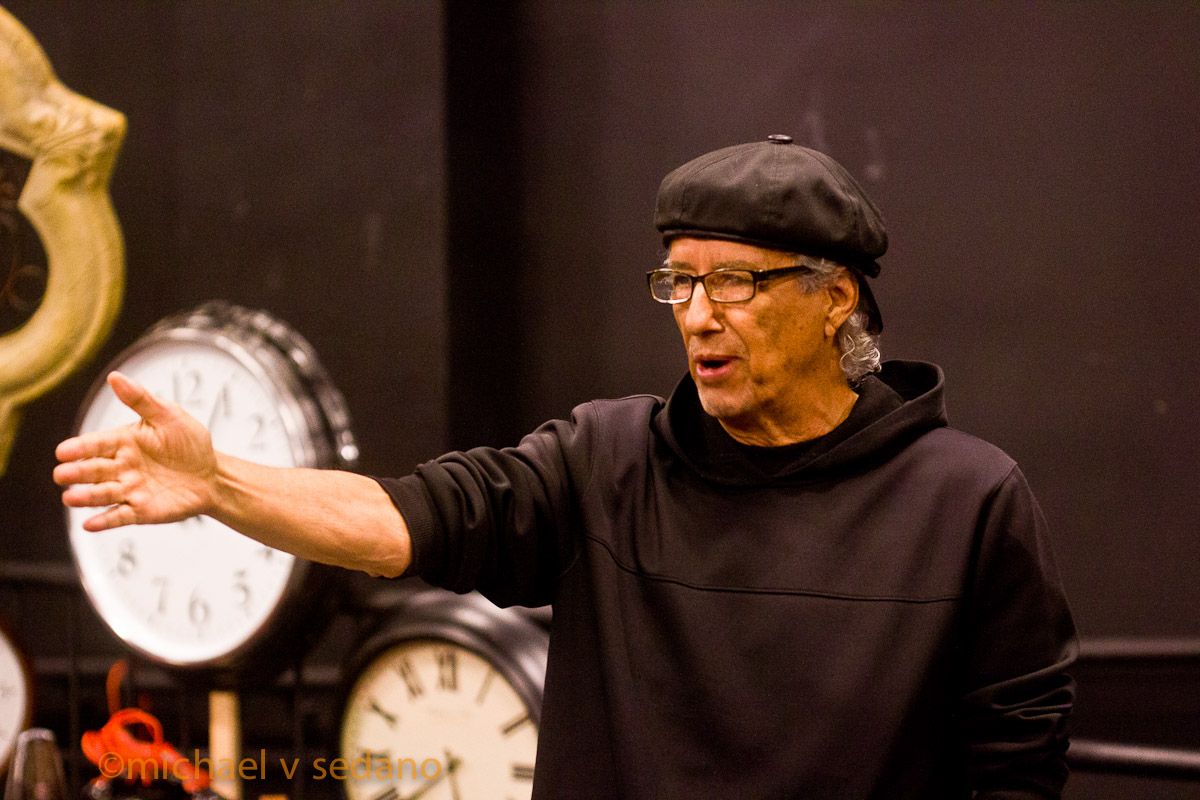
Dan Kwong listens, doesn't often show how it's hitting him Takes a note now.
No such thing as a small part and Roberta Martinez proves it as the wise Mamá.
Carnalismo activates the characters' relationship, it's the magic elixir that fights the poison of alcohol. At first, their connection holds almost like it was yesterday except two years have passed since soldiers marched Masao at the point of a rifle. 

It’s also several years past the hysteria of zoot suit riots. The plot can use the symbol without having to defend it--that's the power of one play!

The readers include Scott Takeda, Samantha Lawrence, Greg Watanabe, Yoko Ibuki, Jose Garcia, Roberta Martinez, Ronnie Alvarez, Troy Williams, Miya Kodama, Eddie Padilla. I'm going to single out the best as Scott Takeda, Samantha Lawrence, Greg Watanabe, Yoko Ibuki, Jose Garcia, Roberta Martinez, Ronnie Alvarez, Troy Williams, Miya Kodama, Eddie Padilla. A couple of them have the best roles, of course.


When this period play gets staged, Masao’s opening scene drapes are going to set fashion trends all over LA and Japan! Reet pleats and drape shapes dai ichi firme ese.

Little Joe’s papa, a warm understanding embracing soul, just like the two mamas are mamas, is a tailor whose reputation comes from his zoot suit creations. Papa's clothing is one of the nice touches that will enliven the action for eager ticket-buyers, as will the musical component to develop. 


Consider the amalgam of things happening on stage: Jazz, zoot suits, torch singing hot chanteuse, Miles Davis, love, separation, reconciliation, Chicanismo, Carnalismo, universal fatherly love, pendejo sons can be baka. But in the end, love and hybridity work.

Don’t say ho-hum, MOS, LCD, same old themes and characters on every hip sitcom played down to a vapid couch papa. Mentiroso! These characters with these feelings and experiences so explicitly felt out loud, do not make it to the main stages of subscription houses. Places like Los Angeles County-subsidized Bunker Hill, where diversity is mostly confined to a six dollar taco, demand an elevated product. Here it is, East, across the river in Boyle Heights. 


You know they're going to fall in love, but just how...he's supplicant to her imperiousness. He wants to meet
her in shadows so they won't be seen. He's happy when he owns up to it.

Jump off the Gold Line at Mariachi Plaza. A short stroll down First Street to Casa 0101 (link). Free parking behind City Hall on the corner across the street from the police station. There’s another reading coming August 25.

There’s no lowest common denominator in the story of identity and identification in flux. The first-generation father holds onto the past that drives him into deep conflict with his future. His next generation son already moved on and he's helplessly further enraged. Thankfully, the wise tailor has a sharp needle. And Mama knows her way to another mother's heart.


Rubén Funkahuatl Guevara wrote the short story Kwong has turned into dialog
and some lucky Director will turn into a career-maker.

OK, so some of the plot will work around to doing stuff a bit differently in the next edition. The three woman roles suggest hidden power, so it'll burst out. A ver. Can Kwong do it without a "she'd never do that" deus-ex-mama?

The caló-speaking Nisei jazz musician in love with a black club singer is maybe akin to a Walter Mosely plot, but Easy speaks only English like the Bronze Nightingale, who breaks up scene after scene with well-planted humor based on fun elements of language and speech. Kwong and Guevara are masters at this talk. When they get the timing and stage business installed, wrap your sides in Ace bandages. Masao says something yearning. Nightingale says something encouraging. Masao goes ¡Órale! Nightingale goes English, please. Masao goes, All Reet!

It's a subtle echo and tribute to a scene in Valdéz' Zoot Suit and it goes off without a hitch, summoning all that pent up good feeling from the long-ago musical, installing it right here in Scene 3 or 2.


The actor is a baseball fan. Litle Joe would be too cool to dress like a payaso. The actor's role and nonverbal appearance jar an observer's comfort zone. He plays Little Joe with heart and soul, this vato. Ignore his look today, can you?

You had to have been there. And you can be at the next one. Boyle Heights has been in the crosshairs of gentrification for a while now, hasta the story made the NY Times. This play delves into enduring elements inside the heart of the city. On the outside, wow, Boyle Heights is on the move. One former local, returning after years, just to attend the reading, remarked how different and changed the old neighborhood has become. He was alienated by his old stomping grounds.

There’s still a lot of Boyle Heights out there, take a walk or cruise it low and slow with the speed limits and safe driving practices because there’s a lot of heat around and pedestrians who need to get across more than you need to be unaware. 

On First Street driving from the river, you’ll see a classic burger stand, Casa de Musica where mariachi buy their strings, dead storefronts that beckon gentrifiers with surprisingly high rents, storefront churches that can afford the rent, a pretty good restaurant in Casa Fina (sister establishment to Casa 0101), Eastside Luv Wine Bar y Queso, nightlife for the local cognoscenti, or so I hear.

Home Girl Café used to be here, but they moved up by Terminal Annex. Boyle Heights is always changing, from the time Masao got home from the camp, to the next table reading in August. 

Dan Kwong and Rubén Funkahuatl Guevara keep fine-tuning "Masao and the Bronze Nightingale," so whatever changes from this second table reading will amaze people at the third reading. 

Once "Masao and the Bronze Nightingale" get to the big main stages, polish up the Tonys and Pulitzers and be among those who said, “I saw it when this phenomenon barely started.” The play has joy, drama, anger, resolution, and there'll be music. Ay, the music! Think “Hamilton” six years ago, but with stuff you already know from Miles, the Headhunters, Little Joe--can you imagine Hiroshima with that eight foot Taiko? That’s Masao and the Bronze Nightingale.


Chairman of the Board at Casa 0101 and reads his parts superbly.


Bravi!


Clay in my Hands
Michael Sedano
These are the assistant's hands cutting clay chubs that will become hand-pressed pots.
What does a Senior Citizen with time on his hands do when there's a hands-on clay demonstration with artist Wayne Perry (link)? When Los Angeles' venerable Craft and Folk Art Museum CAFAM (link) is sponsoring a free half-day event, this Senior Citizen gets moving. Venerable! When I was first out of the Army, my wife and I would drive across town from Temple City to The Egg and the Eye, a café with an art gallery. The place is still there, now grown into a full-fledged professional art space. It's wonderfully original, e.g. yarn bombers wrapped the place in a knitted skin.

Writer Marisela Norte staffs CAFAMs portals, observing and today, making a pot.
Several of my tablemates talked about being shut out of several paid-admission
clay classes. CAFAM maintains a busily active schedule of membership and
at-large activities. 

CAFAM is generous with materials. Perry fashions a coiled pot with big fat
salchichas and encouraged crafters to take more mud.

CAFAM brought in a full house for today's program. One of the museum's initiatives to support aging people through craft inspiration, today worked. The explosion of creativity at a table multiplied by a whole patio full of mud workers yielded tall, flat, two-piece, smooth, scarified, eccentric, wildly imperfect yet there's something to point at and say "I did that!" CAFAM will dry and fire the vessels, holding a culminating exhibition later in summer.

Perry's an Eastsider. We touch bases on gente we know and we share a number
of friends and acquaintances. I'm working on a speculative project involving a
photographic mural. I asked Perry about creating photo stencils with ceramic paint and covering a huge architectural façade with Chicano writers, poets, artists?
Stencils are old tech, he explains. If that project ever gets going, I know a professional.