Showing posts with label interviews. Show all posts

Tuesday, August 24, 2021

Novelist's Poetry Estreno. In Season: Boatyard Chile Verde

Editor's Note:
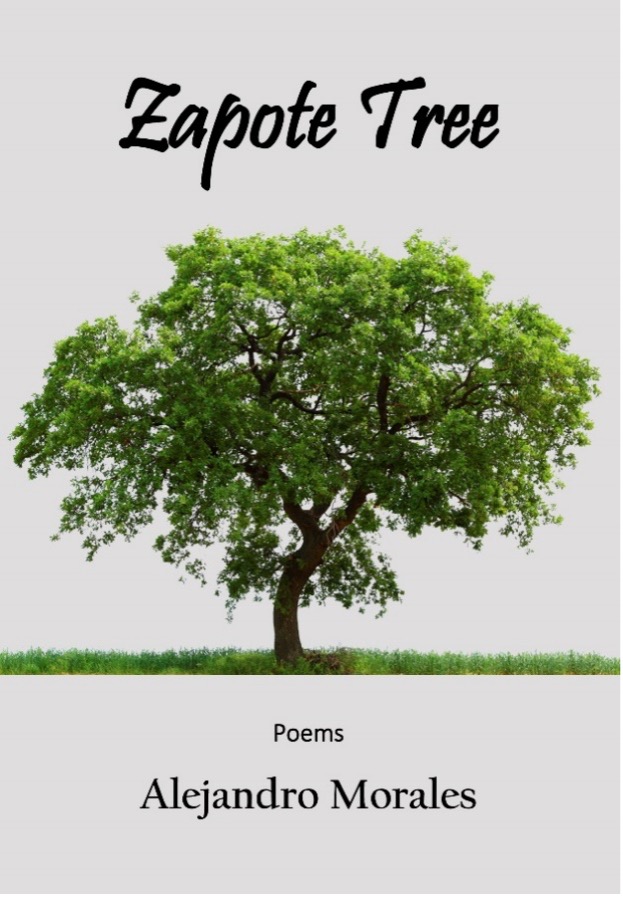
La Bloga teamed with Latinopia in 2019 to spotlight one of the finest writers of Chicano United States fiction, Alejandro Morales. Here's a link to La Bloga's review of Morales' book on the plague of TB. The novelist has a debut poetry collection from Pasadena/Altadena's Golden Foothills Press. Morales note, small presses have resilience and flexibility to bring material to market in timely fashion, months not years.

Golden Foothills Press markets the publication through the dominant internet bookseller. You can order directly from the Press (link), or ask your local independent bookseller to order Zapote Tree
--Michael Sedano
 

From the Publisher: Alejandro Morales debut collection, Zapote Tree, includes 34 poems reflecting upon childhood, family, friends, colleagues, neighbors, historical figures, mythical beings, metaphysical entities, serpents, ghosts, heroes, villains, and the dispossessed. Weighty topics, like autocracy, racial injustice, and artificial intelligence, mix with good-humored, witty portraits of his wine-drinking dog, overachievers, and slacker repairmen. Zapote Tree's pathos and gritty depictions of social outcasts are balanced by Morales' joyful celebrations of loyalty, love, and resilience.


Q: You are the acclaimed author of about 20 books-- novels, short fiction, and nonfiction—written over a decades-long career. Why did it take so long for you to decide to write a book of poetry?  


I have been writing poetry since middle school, high school, and college, through the present. At first, I wrote short paragraphs or verses about what I saw, felt, experienced.  As I learned more about poetry, my poems became grounded, structured, and guided by my experiences and what I learned about the craft. This book is a compilation of poems that I wrote throughout 60-plus years of my life. 


The idea to put together a collection for publication came a few years ago when I met with an author friend and book publisher and asked her to take a look at some of my poems. After a while she said, “You have enough for 3 or 4 books of poems here.”  I felt the time had finally come to put my writings into my first poetry book!


Q: Why did you choose Zapote Tree as the title of your debut poetry book? 


Because the zapote tree was always there, watching over me as I grew up, during good and bad times: physically there in my neighbor’s yard in my childhood with me greeting the giant, lush tree each morning when I walked out the back door of my house. As the years passed, I imagined the zapote tree “observing” my physical, intellectual, spiritual, and creative development. The power of its nurturing memory became a kind of spiritual touchstone, an inspiration, in my life.  


Q:  Women comprise a sizable portion of the characters in your book. Why is that, and how do you think readers will react to these varied individuals?


The women in this book all have something special about them and perhaps readers, women and men, will see at least an aspect of themselves in these women who are wives, daughters, mothers, celebrities, heroes. The poems embody their suffering, their joys, achievements, ingenuity, spirituality, bravery, and triumphs. In my family and community, I always saw women as intelligent, powerful, mystical, and inherently beautiful.


Q:  The son of immigrants, you are still very close to your Latino roots, especially your native language. Several of your poems have lines or stanzas in Spanish and a few bilingual renditions of poems. How does bilingualism affect your poems and writings in general?


I don’t consider myself traditionally bilingual. Yes, I speak Spanish; but, I’m English-dominant.  The first language I heard was Spanish, and I didn’t start learning English until kindergarten. My entire education was in English. Throughout my schooling, as I learned more English words, I sadly lost Spanish words. 


But this created a coalescence of both languages that ultimately became the language that I speak and write in now. If you listen to the way I speak and if you read my books, you will find a strange syntax, word usage that is neither Spanish nor English but a combination of both. I consider this coalescence unique and feel that this combining gives my works an unconventional view of the world.


Q:  What was your biggest challenge generally in writing the 34 poems that comprise this volume?  


Editing the poems to fewer words. A main quality of poetry is to say more with less. The process of editing is iterative and cumulatively improves the work. No matter the genre of your writing, editors help you see what you don’t see as the creator, and I was able to work with three excellent editors at three stages of development. 


It took more than a year of editing to get this book ready for publication, from idea, research, first draft, multiple drafts with significant restructuring,  multiple galley proofs, and finally the release of the book. This book creation process usually takes me 4 to 5 years. What I find amazing about Zapote Tree’s production is that all this was accomplished in less time. 


Q:  How can Latinx authors gain more widespread recognition for their work, more mainstream exposure?


First, I hope readers are aware that Latinx writers are often considered one-theme authors and are expected to write only from their racialized identities. However, Latinx writers are highly diverse and explore universal themes, just as authors from any ethnic background. Latinx writers—in fact, all Latinx people— are not monolithic. Yet editors, publishers, others responsible for producing books, might “pigeonhole” us more than they think.


 For example, I once wrote a speculative story for an anthology of Latinx speculative stories. My narrative, which the selections committee for that book praised, was based on memory theories and was scientifically grounded. Eventually it was rejected because, I was told, “it was not Chicano enough” and the characters “didn’t have Chicano names.” These editors had put Latinx writers in an ethnic cubbyhole instead of letting us be free to write about whatever interests us. Don’t let editors like these stifle our identities and versatility.


Alejandro Morales earned his B.A. from California State University, Los Angeles, and a M.A. and Ph.D. from Rutgers University. 


Morales is an Emeritus Professor in the Department of Chicano/Latino Studies at the University of California, Irvine. His 20 published books include: The Brick People (1988); The Rag Doll Plagues (1992); River of Angels (2014); and Little Nation & Other Stories (2014). Morales received the prestigious “Luis Leal Award for Distinction in Chicano/Latino Literature” in 2007 from the University of California, Santa Barbara.  He lives in Santa Ana, California and is now working on three projects: a biographical novel, a collection ofshort stories, and another book of poetry. Morales is considered a pioneer in American Latino literature, being one of the first authors in the 1970s to depict harsh socioeconomic conditions of barrios and to create Chicano cultural testimonies and metanarratives.


𝜴
The Gluten-free Chicano Cooks
Strike while the chile is hot, goes an old saying, casí. And it's chile harvest time this month. What could be more seasonal, then, than a re-run of a column that ran in the dead of Winter, January 15, 2019. The Gluten-free Chicano puts away 15 pounds of roasted rajas and can prepare this delicious meal year-round. That's a gentle suggestion to buy and bag your year's supply. Chile harvest time comes but once a  year.


Kathy and Jim Build a Boat. Boatyard chile verde.

Durf marveled at his teammate, a javelin thrower who lived in the Goleta monte. A born storyteller, my roommate spun a fanciful tale of a man I knew only by sight from track meets. I sought what germ of truth must lie at the heart of Durfee’s account.

Jim Clark back to camera. Barbara Sedano at right.
“Jim Clark takes his javelin to hunt deer in the mountains.” Durf's story was Jim lived for free on a remote ranch and survived mostly off the land, running down deer in the chaparral. I loved the image my roommate conjured, a wild man living at the edge of civilization because he chose to live like that, free and unencumbered. I imagined Jim Clark went hungry a lot.

Jim Clark’s girlfriend, Kathy, loved him with immense dissonance. Jim’s life was impossible to share with a woman studying to make a career teaching high school English. It was during one of their off-again separations that Kathy and I were hanging around together.

Kathy filled whatever space she occupied. Not many people chose to occupy space with her, however, because Kathy spoke her mind. A woman of wit and brains, Kathy was a formidable personality who fit perfectly into my world, especially as we both were single and not looking. An ideal end-of-college-summer partnership.

Four years have ways of changing a person’s life and attitudes. I was back from overseas and learned from the locals that Kathy and Jim lived in the boatyard along the railroad tracks. They were building a boat and needed help. I called the boatyard. I hadn’t heard Kathy’s voice in four years but I recognized her “hello?” instantly and she mine. Old friends are good friends, separations are meaningless.

I asked him about the javelin story. “I tried it one time,” Jim Clark laughed. That was the day we laid the keel for the cement boat.

Kathy looks out while Jim and friend cement the deck.

Jim had identified a pile of rotted railroad ties where some steel rails lay by the rail side. He had already picked out his keel and pulled the rail to clear ground. All he needed was someone with a truck or car to transport the rail to the boatyard.

I drove the car into the weeds where Jim directed me to stop with the rail underneath. Jim and another fellow lifted the front end and I lashed it to the front bumper. We did the same on the other end.

The nose of the rail extended a few feet from both ends of the Buick Skylark. Slowly and not spotted by cruising cops or railroad dicks, we drove the back streets to the boatyard and dropped the keel in place. In the boatyard shack’s two-burner propane stove, Kathy made her famous dumpster soup and we feasted friendship, old times, the cement boat to be.

A few months after, the boatyard shack has gained a dining table, an outdoor couch and several makeshift seats. Where we’d dropped the keel now stood a rebar and steel wire superstructure of a 40-foot boat. Jim worked on that boat with the intensity that led him to think he could chase down a deer and kill it with his javelin. The deer was certainly out of reach but Jim had built a boat. All it needed now was a skin of cement.


Months passed as Jim constructed the hull, deck, interior spaces and hidden recesses. The work took the time required. Ugency arrived with cementing. The work must be completed in one weekend so the boat dries and cures as a single mass of cement and steel that floats on the open sea. Friday after work, Barbara and I drove up from Temple City. The work was well underway by our arrival late afternoon. Jim and Kathy had lots of friends.
Jim Clark. qepd.

The third day the hull looked like a boat. Only a few people fit inside so workers took shifts pounding cement into the interior walls. Others touched up the exterior. By noon Sunday, the cement boat was done. Most of the crew had left, exulting in knowing they’d joined the culmination of an incredible feat. Jim had read books and talked to old salts, he and Kathy moved into the boatyard, and they built that boat by hand.

I volunteered to make the celebratory feast, a one-dish meal I call Boatyard Chile Verde. After Jim and the cement boat were taken by pirates in southeast Asia, Kathy sailed those waters in hopes of word. She cooked Boatyard Chile Verde for merchant mariners the world over, it was the crew’s favorite dish.

You can make this on a one-burner propane stove, or in a sartén over an open fire. Ingredients, improvisation, and preparation are the keys to making Boatyard Chile Verde.


Michael Sedano's BOATYARD CHILE VERDE
INGREDIENTS
Pork. Sub beef or chicken. 
Gf flour.
Tomatillos.
Green chile – hatch, California, mild new mexico, canned whole are fine.
El pato hot sauce.
comino
Onions
Garlic.
Cilantro
Cast iron frying pan and lid.
Paper or plastic bag.
Sharp knife.
Salt
Pepper
Chile powder
Olive oil

Into the bag, put a ¼ cup of gluten-free flour, a pinch of salt, pepper, and chile powder.

Wash and dry the (pork) meat.
Cut the meat into ½” cubes.
Dust the meat with seasoned flour in the bag.

Dice a large onion and six or eight garlic segments.
Chop cilantro to make 1/8 cup.
Chop 6-8 large tomatillos

Get 1/8” of olive oil hot in the pan. High flame.
Wilt the onion and garlic, stir don’t burn.
Toss the meat cubes with the wilted onions and garlic.
Season with salt, pepper, ground comino or a pinch of seed.
Brown.
Add the chopped tomatillos and chopped fresh/canned chiles, and the can or two of el pato.
Stir and cover.
Lower heat to medium and bring to a boil.
Lower heat to lowest simmer setting and cook for an hour, stirring now and again.

This is ready to serve right away. The objective to fork-tender bits of meat that look like meat, not a paste. Cook vegetable longer before adding chicken, then simmer raw chicken fifteen or twenty minutes until firm. Chicken is fast. Cook beef an hour and a quarter, maybe longer.


Wednesday, April 20, 2016

Interview With Illustrator Rafael López


La  Bloga posted interviews with F. Isabel Campoy and Theresa Howell, authors of Maybe Something BEAUTIFUL.

Visit the book's website http://maybesomethingbeautiful.com

Join the hashtag #maybesomethingbeautiful and send photos of what makes yours neighborhood beautiful.


Today La Bloga interviews the illustrator of Maybe Something BEAUTIFUL, the award-winning illustrator Rafael López.


-Hola Rafael, it must feel amazing to know that your real story was going to become a book. What was your first reaction?

Stupefied! There is a Mexican dicho that goes “No hay mal que por bien no venga.” This translates to for everything bad that happens there is also something good. When my wife Candice and I bought an old warehouse in an edgy part of town her mother cried. After transforming that space into our home we realized the importance of changing what we experienced once we opened the door. I also believe that children’s literature has the power to impact change.


-As an illustrator, you must think about your characters before you turn them into beautiful art. Is this case you illustrated yourself. How was the process to illustrate the man surrounded by cans of colors?

I search for my characters and try to imagine how they move through the world. Closing my eyes, I think about their personality and try to put myself in their shoes. Then I sketch intuitively and keep working over previous drawings till I clearly see them. For Maybe Something Beautiful, I didn’t want to put myself in my own shoes. Instead, I saw the muralist as a mysterious force of affirming energy, like a magician with paintbrushes. He was a catalyst in the story but the real alchemy was Mira’s spirit of hope and the community who worked together to transform their neighborhood.


-Tell our readers what is the main impact in transforming a neighborhood and how they can do it.

It strengthens relationships among diverse neighbors who might not otherwise get to know or understand each other. This generates a feeling of ownership, belonging, and awareness that together you can create a sense of place. Everyone has strengths to bring to the collective process and by sharing ideas and skills you learn, grow mentors and leaders. If you don’t know how to do something there is always someone who does so find them and don’t quit. It’s about solving real problems and opening doors to the playground of possibility.


-What was the first image that you sketched for the book? Do you illustrate following the sequence of the story from page to page or do you skip around?

Images are powerful storytellers. I like to think of a children’s picture book like a movie with a story that unfolds. I start from the beginning and work to create a visual ebb and flow punctuated in parts that makes sense to young readers. This story began with the gray city juxtaposed with Mira’s small, bright corner of potential.


-I like how you change the page orientation on your double spreads through the book. You have done this technique in other books. How do you decide when to change the page orientation from landscape to portrait?

When you were a kid did you ever stand on your head? The world suddenly looks distinct and gets your attention when you see it in a different direction. For me it all comes down to engaging young readers and encouraging them to think about and get involved in the text. New generations of children grow up interacting with toys and computers so why not a book? I look for clues in the story, moments that could be punctuated by changing the orientation. Reading to kids around the country and speaking to enthusiastic librarians and storytellers has encouraged me to use this technique. It’s all about that dialogue with the reader.


-Mira in the story dreams of a colorful neighborhood. What did you dream as a child?

Dalí once said “No way I’m returning to Mexico. I can’t stand being in a place more surreal than my paintings.” My childhood dreams were incredibly surreal. My uncle worked at a paper mill and gave me a big roll of bright white paper destined for the dumpster. I drew one of my dreams there, a parade of over 100 skeletons including dog, cat and bird calaveras playing trumpets, accordions and guitarrones.


-What is your message for all those children who want to transform our world?
Children are wise and instinctively come up with ideas to make a difference. I would encourage them to be fearless to the possibilities of creating change.


Rafael López grew up in Mexico City, where he was immersed in the rich cultural heritage and color of street life. He is the illustrator of many vibrant picture books, including the acclaimed Drum Dream Girl: How One Girl's Courage Changed Music by Margarita Engle and Maybe Something Beautiful: How Art Transformed a Neighborhood by F. Isabel Campoy and Theresa Howell. He has received the Pura Belpré and Américas awards multiple times. Rafael Lopez also designs and creates community-based murals nationwide. He divides his time between San Miguel de Allende, Mexico, and San Diego, California. 


Tuesday, January 18, 2011

Latinopia: New arte and cultura website ready for prime time. On-Line Floricanto.

Review: Latinopia. A website dedicated to chicana chicano latina latino arts and culture. http://latinopia.com/

Michael Sedano


Combining the best of broadcasting and glossy magazine layout, Latinopia brings visitors a trinity of appealing features. The site is: visually accessible, content driven, resonates culturally. These values will draw visitors into the site repeatedly, to explore a subject more fully, to browse for new knowledge, to revisit a happy link.


Latinopia’s Home page features a slide show of Latinopia topics. Positioned against a background of neutral brown and deep blue, the slide show’s text-heavy images are easy on the eyes.

Home is a launching pad into Latinopia’s extensive array of written and videographed interviews with an ever-growing lineup of noted artists. Find the thumbnail and click. The text menu in the header bar features drop-down lists for shortcuts to Latinopia’s content index pages.

First-time visitors to Latinopia will find the Home page provides a grand introduction to Latinopia’s omnibus of interests that include Art, Cinema/TV, Food, History, Literature, Music, Theater. After enjoying Latinopia’s panoply of selected features, a visitor will want to choose a field, spend time consuming Latinopia's offerings, left to right and top to bottom.

Latinopia’s creator, Jesus Treviño, adds content weekly, making keeping current with the site something of a memory challenge. There’s a signup ritual that puts registrants on a newsletter maillist, making staying current a matter of checking the inbox.

Treviño, a lifelong documentarian and chronicler of la cultura chicana, is drawing from his archives as well as conducting ongoing interviews and videography to provide quality content. In Art, for example, Latinopia’s interview lineup features a who’s who of artists from Magú to the venerable Museo del Barrio.

One of the best reasons to become a Latinopia regular is the site’s dedication to younger writers and artists. In music, for example, Latinopia introduces Los Angeles’ conjunto Los Pochos, singing a toe-tapping original number. In literature, Latinopia showcases youthful Austin poet Mónica Teresa Ortíz, from Mónica’s reading at Festival de Flor y Canto Yesterday • Today • Tomorrow.

But the best reason to spend time at Latinopia is its invariably informative and entertaining approach. Because of that, one visit will never be enough.


On-Line Floricanto

Last week’s assassination of a little girl and several other Arizonans sent tremors of rage and despair throughout Unitedstatesian media.

“Vitriol” became a polite word for hate speech. One politician denied she had put cross hairs on anyone. Still, gente know exactly what tea baggers like her stir up among their birther crackpot and knucklehead ilk. Latinopia is probably illegal in Arizona classrooms.

The Facebook group Poets Responding to SB 1070 received a flood of contributions, as if the week’s upswelling of despair and outrage found release in poetry. Thus, this week, La Bloga’s On-Line Floricanto doubles its offering, presenting the work of ten poets responding to all the crud that is the worst of Arizona the worst of our nation, on this penultimate Tuesday of January 2011:

1. "Awakening at Night" by Carmen Calatayud

2. "Angels and Arizona" by Andrea Hernandez Holm

3. "Anger Management" by Diana Joe

4. "Let Us Be Gandhi / Seamos Gandhi" by Francisco X. Alarcón

5. “La Ultima Palabra" by MamaCoAtl

6. "To Be a Storm" by Susmita Paul

7. “Today We Will Plant Chia” by Doug Patzkowski

8. “Burn Brightly” by Tim Wozny

9. "Borders" by Sharon Elliot

10. ”Sophist Game” by Ricardo Villalobos

* * * * * * * * * * * * * * * * * * * * * * * * * * * * * *

Poem:
Awakening at Night
For Rep. Gabrielle Giffords
(And All Who Want Humane Immigration Reform)

By Carmen Calatayud

Anger creeps
through my fingers
to tips that buzz
with frustration.
Marigolds pop
and wither,
turn into crust.

Under the gypsy moon
I witness my heart
of coal grow tentacles,
reach out to strangle
the pain my people hold.

Flamenco ancestors
play castañets,
express their rage
through the heels
of their shoes.

My stomach kicks
as Venus appears
in the red wing sky
and I feel the wise
child of belonging
who reminds me

That time has always
been on our side.

That our hands
protect the land
That our souls collide
moment to moment
That our sleep has been
disturbed for centuries
but we are never too tired
to speak the truth.


Angels and Arizona
by Andrea Hernandez Holm


Turn, open your eyes
See the angels falling
Pummeled in mid-flight
by invisible fists
knuckles
that must have been beaten raw
by frantic wings.

Turn, arch your neck
So you may see the top of the wall
And watch the angels
Break under the weight
Of a young man
Plummeting to the desert floor.

Turn, quickly
And you will see a child
Who the angels stole away
From a world that did not deserve her.

Turn, listen closely
So you can hear the heavens weeping
As the angels turn their backs and walk away.


ANGER MANAGEMENT AFTER A SHOOTOUT
*in honor of the deceased for Tucson's Giffords. (poets responding To ESE-1070)
By Diana Joe


PRIMERO QUE NADA MIS RESPETOS A LOS FINADOS.
BEFORE ANYTHING RESPECT FOR THE DECEASED ONES .
AYER POR LA MANANA WHEN

EVERYBODY THOUGHT IT TO BE A REGULAR MORNING
A CONGRESS WOMAN OPENS HER ARMS TO HER CONSTITUENTS.
A LITTLE NINE-YEAR IN CROWD DESIRES TO LEARN ABOUT POLITICS AND THE POWER OF HER VOTE IN THE FUTURE THAT WILL NEVER MEET HER.

I WANT TO BE CALM.
I WANT TO NOT SCREAM.
I ALREADY CRIED YESTERDAY.
I AM NOT FROM ARIZONA BY WAY OF BELLY BUTTON CEREMONIAL RITES.
I AM FROM TEJAS INDIGENOUS COUNTRY NOT OIL MANS.
I AM NEW HERE IN ARIZONA NEAR 15 YEARS NOW.
MOUNTAINS,VALLEYS,FEDERALLY MANAGED LANDS CALLED SOVEREIGN.
LATELY IT IS HARD TO NOT BECOME ANGRY.
IT IS HARD TO NOT SENSE THE PROVOCATION OF MY PERSON OF MEXINDIN DESCENT.
I AM ONE PERSON ALONE IN THE DESERT HOMELAND OF MY PATERNAL CLAN THE YAQUI MAN!
I AM NOT A REGULAR AMERICAN.
I DO NOT HOLD ON TO THE FLAG OF THIS LAND I HOLD ON ONLY TO THE EARTH LAND.
I AM NOT A REGISTERED ONE,AN RECOGNISED MEMBER IN BOUNDRY MARKED LAND.
I AM NO LONGER ANYTHING ACCORDING TO THE POWERFUL MANS PLAN.
A TREATY CALLED GUADALUPE HIDALGO GIMME A PINCHI QUEBRADA MAN.
AIN'T ALLOWED TO TEACH THE CHILDREN THE PLAN, THE TREATY , THE SCAM.
ETHNIC STUDIES REMOVED IN TUCSON WHERE THE YAQUIS CAN CROSS THE BORDER HAND IN HAND WITH THE AMERICAN THAT HATES THEM?!
ANGER MANAGEMENT.
ANGER MANAGEMENT?!
I AM UNDER ANGER MANAGEMENT,YOU HATER BETTER BE GLAD THAT I COME WITH AN ANCIENT MEDICINE!
A MEDICINE THAT SERVES THE EARTH!
A MEDICINE THAT SERVES ONLY THE ONE THAT WILLS TO REMAIN ALERT.
NOT YOUR FAKE SCHOOLING IDEALS, OR YOUR THIS LAND IS TAKEN DEALS,OR THIS LAND IS MY LAND DEALS.
ANGER MANAGEMENT.
I AM MEXICAN !
I AM BENITO JUAREZ!
I AM DOROTEO ARANDA IN THE NEW MEXICAN WITH BIGOTES AND PICHES PISTOLAS STILL SMOKING.
I AM THE TRUE STORY OF GERONIMO..NOT THE US.MOUNTED GIDDY UP VERSION!
I AM THE DISMEMBERMENT OF THE BODIES BURNED IN PILES OVER AT..THE BLOODY ALAMO!
I AM UNDER ANGER MANAGEMENT.
LOOK AT ME!
HOW I CAN USE THE WAY YOU TAUGHT ME, TO DEFEND MYSELF!
THIS LANGUAGE THAT WAS FOREIGN JUST A FEW HUNDRED YEARS AGO,I PERFECTED IT!
I AM MIXED.
I AM PROUD THAT I AM MIXED,BECAUSE I AM ABLE TO SAY I AM WHITE,YELLOW,RED,AND BLACK ALL TOGETHER JUST LIKE THAT..A PERFECT MIXTURE WITHOUT BATTING AN EYE!
LOOK AT MY ANGER MANAGEMENT.
LOOK AT MY DISCIPLINE ALL OVER THE EARTH I AM!
I AM THE BAKER,THE SHORT ORDER COOK,THE WAITRESS,THE WINDOW WASHER,THE SHOE SHINER,THE SHOE MENDER ,THE MIND BENDER ,THE WIND, THE FIRE,I AM THE NEXT IDEA BUILDING A WHOLE NEW BARRIO DESIRE.
ANGER MANAGMENT IS NOT SOMETHING I HAD TO GO LEARN,IT ISN'T SOMETHING I GOT FROM A BOOK,OR AN OPRAH EPISODE ON THE TUBE,YOU TUBE..IT IS ANCIENT MEDICINE..INSIDE OF ME.
IT IS THE TIP OF MY SPEAR.
ANGER MANAGEMENT IS MY WAY OF WATCHING THE HATERS CRASH AND BURN.
IT IS A COLLECTION OF ARROWS GIFTED TO ME IN A BUNDLE FOR TIMES LIKE THESE.
MY ANGER MANAGEMENT IS MY SHADOW.
MY SHADOW IN FULL REGALIA IN TIMES OF MISERY IN A STATE SURROUNDED BY HATE SHARKS IN THE DESERT THAT FLY IN AND OUT IN AIRSHIPS WITH MINUTEMEN WANTING TO PRETEND THEY PATROL THE GATES OF HELL THEY CREATED.
I AM UNDER ANGER MANAGEMENT.
I WILL NOT TELL YOU THAT YOU PRAY WRONG!
I WILL ONLY WATCH YOU THROUGH THIS STARSCOPE WATCH YOU BECOME INTOLERANT OF MY PEOPLE AND WATCH YOU BECOME IMPATIENT WATCH YOU COME OUT RUNNING WITH YOUR SILLY GUNS AND YOUR LOUSY MILITARY TACTIC..KILLING LITTLE CHILDREN.
PASS ALL THOSE LAME LAWS THAT FLY OFF IN THE WIND..GUADALUPE HIDALGO DIED IN THE DESERT YESTERDAY.
IN THE DESERT BONES BECOME A PART OF THE COYOTES,IN THE DESERT THE ONLY THINGS THAT TRAVERSES IT ARE THE DISCIPLINED.
THROUGH PRAYER,MEDITATION AND ANCIENT ANGER MANAGEMENT.

All Rights Reserved
Diana L.--joe
Tsaile ,Az
the navajo rez.
* I write in solidarity to those persecuted all over Az. ppl that have a treaty,that they know nothing about. teach our children anyway!
journey well to those that were massacred yesterday in Tuscan in pursuit of JUSTICE!
Adelante!


LET US BE GANDHI
by Francisco X. Alarcón

let us be Gandhi
Martin Luther King Jr.
Nelson Mandela

bearers of peace
reason, tolerance, good will
not hatred, anger

let us never be
bullets but true healing hands
pressing bleeding wounds

run away from lions
and eagles, always content
to be butterflies—

from complete despair
sorrow, fear, pain, let us draw
new joy, trust, faith, hope

January 9, 2011

* * * * * * * * * * * * * * * * * * *

SEAMOS GANDHI

por Francisco X. Alarcón

seamos Gandhi
Martin Luther King Jr.
Nelson Mandela

enviados de paz
razón, tolerancia, bondad
no odio, coraje

nunca seamos balas
sino manos que curan
heridas que sangran

huyamos de leones
y águilas, contentos siempre
de ser mariposas—

de la desesperanza,
miedo, dolor, saquemos
nuevo gozo, fe, esperanza

9 de enero de 2011


Wisdom
A common Gmc. compound (cf. O.S., O.Fris. wisdom, O.N. visdomr, O.H.G. wistuom "wisdom," Ger. Weistum"judicial sentence serving as a precedent"

La Ultima Palabra

by MamaCoAtl


Because I am sick with words.
I am sick of the truth,
I am sick of concepts and designations,
Status and jurisdictions,
Sick of economics and psycho spiritual jargon.
I am tired of numerology, revolutions, the Zodiac, the Bible,
The English week, the constitution, the Gregorian year, the Cross and the Rose, the sacrificial goat…
I am sick and tired of the program; of killing to eat, to shop, to invest, to survive, to forget.
I am running out of words and I am running out of time,
And at the same time
I feel so paranoid about mass destruction, you know?
I feel the urge to run
It’s hard for me to look up when I daily see the streak of metal
The man made cloud
I suspect poison in everything.
How can one take a deep breath after fumigation?
Why do we keep shiting in clean water?
Where is the end of this occupation?
What kind of world will there be for my daughter?
While a cabal of incestuous predators
Rotting in historical plunder
Gamble with total impunity
The destiny of human kind
We’re down here
Standing in line for the newest vaccine
In total passivity swallowing the mortal lie
Sacrificing our sons
Dropping bombs in the name of a flag
We are down here
The highly educated cultural creature
Subject to the royal book
All we can do is repeat since
We can’t understand the sounds we emit
We can’t figure out the source of our pain
We are perfectly incapable to see
This prison is made
Out of language
Out of words like LOVE and LIGHT
Master terms crafted to convert us
Into FAITH, into FUEL, into FILES.
This prison is made of angular mirrors
Out of angels and lords,
Electrical shocks, the bugles of war,
Democracy heroine for the soul
This prison is made of gold.
And we are in here
Bewildered in perpetuity
Betraying our own descendants
Worshiping the executioners
The dazzlers, the wizards,
With their Adams and Eves,
Their pyramids,
Their 360 degrees,
Their little piece of the sky,
Their color, their crown,
Their mining civilization,
Their parasitic nature,
Their plans of extermination,
This prison is made out Roman-tic Law and language
And like romantic love the end is always tragic.

How does your mouth sing when you got nothing left to prove, nothing left to gain?
Where can our steps take us on this civilized race to self destruction?
How high can we get? How far? What is really the end? The promise to ascend?
To be saved by the same king, by the same thing?
We are nothing but steam for their engines, you know?

But we are sold on the idea of becoming what they want us to be,
Citizens, patriots, entrepreneurs, intellectuals
In the pursuit of profit we believe
Therefore we can’t help but to continue to weave
The veil that blinds us.
And we celebrate it as a holiday
As identity,
We sincerely pretend
We hide our real names, we evolve to the level
Of predator, polluter, population
And we never question the basic assumption.

Ay de mi mis hijos llorona!

Why don’t we question the basic assumption?
Why don’t we examine the root of despair?
Why don’t we break the mirrors, face the demons,
Claim our lives again and again?
Have we not had enough
Deception, oblivion, damnation?

Let us awake then!
Let us unwind, let us unbind!
Let us un-become all the way to the 20 moments of creation
The four winds and all the directions.
Let us then, call our mind back from the dungeons of imperial thought!
Let us be here now!
Firmly planted in the body of the ONLY ONE
Let’s be ONE down deep under
Beyond idiolect
Beyond the world of the dead,
Let us feel, let us know that we feel,
The heart beat
Of the only one who truly exists!

Because we in here
Are nothing but a handful of dirt
And a piece of time, you know?
A whisper in the empty space
Of the only one, of the all that is.

Despues del amor la tierra, despues de la tierra nadie

Our Mother already cured us yesterday and the day before
Our Mother already gave birth to us
Our Mother, our source, our sustenance
That from which we are made
Is the ONE we’ve been looking for
In spells and numbers,
In reflection, in theory…

Let us collapse this edifice
Let us begin sweeping the path
Let us walk back until we become
Medicine
In the open mouth
Of the Living Water.


MamaCoAtl ©


To Be a Storm
by Susmita Paul


the wind plays merry-go-round,
the grass bows near your feet,
clearing the streams,
making pathways to somewhere

you feel the bending wind
rushing through your veins
the madness of life
straining through the thumb
that press down the eye of the tornado-

it is dreadful to be there alone.
you may be brushed from the soil
and piled at another place, in another din.
the bones may rattle
with the newness of the blow,
and guard you into a shell ...

and yet,
the storm brews something in you
something with flavours.
something, you can feel.

you've never seen the skies so drunk,
you gesture them to calm down
but sobering seems a strain.

cut out the past in cardboard shapes
hang it in loose circles near the window
open the panes-
you may be the eye for a while.

From my blog


Today We Will Plant Chia
by Doug Patzkowski


Today we will plant chia,
those crisp little seeds
that are not all alike:
dark, light, or mottled,
yet they fall from the same
blue desert flower.

Food of the Aztecs
for centuries,
they gave strength
on long journeys,
retaining water
in the traveler's body
until the next spring
offered a transparent trickle
of liquid sustenance.

Today we will plant chia,
like the Tohono O'odham
who live in a desert cut in two
with a line drawn in the sand
between two young nations
that measure land by area alone.

The chia shares the life of the land
with those who live upon it.
It does not fear
thunderstorms
or drought,
but yields its seed in season
for a new generation of its own
and for other species to thrive.

There will be enough for all.


Burn Brightly

by Tim Wozny


While I stand
I know I'm not alone
While I stand
I bow down to no throne
While I stand
I see the first glance
While I stand
I now that there is still a chance
While I stand
I give voice to my beliefs
While I stand
I give notice to the worlds grief

Burn brightly
This candle of peace
Burn brightly
To touch the heart of all your reach
Burn brightly
To show we care
Burn brightly
to comfort those that dare
Burn brightly
To relieve the worlds stress
Burn brightly
To light the darkness

Stand with me my friends
Against war and hate
Stand with me my friends
Now before its too late
Stand with me my friends
To right what is wrong
Stand with me my friends
Before freedom is gone


Border Crossing

by Sharon Elliot

A umba wa ori
A umba wa ori
Awa osun
Awa oma
Leri oma
Liki awo
Ara Orun
Ka a we*

*traditional Lukumi (African-Cuban) chant to call the ancestors

I am going back before the funeral
the crossing brings me to the land of my ancestors
before the singing starts
the banshee wails
the pipers float their cries upon the wind

I look at all the borders
crossed or left alone

who is dragged there
who comes willingly
who is ready
who is not

I have been here all my life
standing at the invisible line
between being
and not being
between this world and the next

next
next door
neighbors

As I prepare to cross
I know that it won’t be a crossing
it will be an acceptance
flowing
flowering
embracing

Ten thousand feet
have walked this path
been thrown across that line
that lie

few chose it
their homes reduced to rubble and smoke behind their backs
their farmer’s hearts
forced to the sea
to sit on rocky wasted land
or on the boulders of the shore itself
forced to exchange their meat and wool and milk
for unfamiliar fish
that don’t come easily, if at all
to nets cast by untutored hands

Weeping accompanies their journey
out of the green and fertile highland valleys
into the lairs of other clans
tribal people who will not yield easily
until they too are forced to join the march

and what new border can they visualize
how can they keep each other straight
they learn to pull their plaid garments up around their
shoulders
over their heads
the threads and colors creating small visual borders on the cloth
screaming THIS IS ME!
my identity
my land
the place I long to lay down to rest
I carry it with me in sacred cloth

and when I am ready
when I have reached the road’s ending
and the last border stands before my feet

I will cleanse and wrap my body myself
before the ministrations of loving hands can do it for me

and I will go back
I will be back
I will smell the peat and heather
I will hear the birds and pipes
The laurel tree and hazel hedge will welcome me

And the voices that I hear shall speak all the languages I have
gathered
and sing to me in one I do not know
but carry always in my heart.


Sophist Game
by Ricardo Villalobos


Talking heads
PC TV
“both sides are responsible”

but who’s spewing the hate
disagreements one thing
vitriol another

the new hate words
immigrant
hitlist
lock n load
un-american

can’t speak the truth
w/o un-deciphered code

the tea party isn’t
a party
or about tea

who will talk freely
no mask
or PC code phrases

instead
heads spin
competing facades
the elephant
in the room
uses all the oxygen

we are all in the crosshairs
truth at stake
genuineness becoming extinct
knowledge irrelevant
greed and power


the only board game


BIOS

1. "Awakening at Night" by Carmen Calatayud
2. "Angels and Arizona" by Andrea Hernandez Holm
3. "Anger Management" by Diana Joe
4. "Let Us Be Gandhi / Seamos Gandhi" by Francisco X. Alarcón
5. “La Ultima Palabra" by MamaCoAtl
6. "To Be a Storm" by Susmita Paul
7. “Today We Will Plant Chia” by Doug Patzkowski
8. “Burn Brightly” by Tim Wozny
9. "Borders" by Sharon Elliot
10. ”Sophist Game” by Ricardo Villalobos


Carmen Calatayud is a poet and psychotherapist in Washington, DC. Born to a Spanish father and Irish mother in the U.S., her poetry has appeared in journals such as Borderlands: Texas Poetry Review, Cutthroat: A Journal of the Arts, and PALABRA: A Magazine of Chicano and Latino Literary Art. Her poems are anthologized in four collections, including DC Poets Against the War: An Anthology (Argonne House Press). Calatayud won a 2003 Larry Neal Poetry Award. She lived and wrote in Tucson in the 1990s, where she worked as a literacy advocate. She is active with the Split This Rock Poetry Festival in Washington, DC and is a poet moderator for the Poets Responding to SB 1070 Facebook group.


Andrea Hernandez Holm writes from the desert, where she lives among the beauty and pain that is Arizona.

Francisco X. Alarcón, award winning Chicano poet and educator, is author of twelve volumes of poetry, including, From the Other Side of Night: Selected and New Poems (University of Arizona Press 2002), and Snake Poems: An Aztec Invocation (Chronicle Books 1992) His latest book is Ce•Uno•One: Poems for the New Sun (Swan Scythe Press 2010). His book of bilingual poetry for children, Animal Poems of the Iguazú (Children’s Book Press 2008), was selected as a Notable Book for a Global Society by the International Reading Association. His previous bilingual book titled Poems to Dream Together (Lee & Low Books 2005) was awarded the 2006 Jane Addams Honor Book Award. He has been a finalist nominated for Poet Laureate of California in two occasions. He teaches at the University of California, Davis.


MamacoAtl
Mission district Poet, Songstress, Healer, cultural and spiritual activist. She has curated ceremonies to heal the Amazonia River Mother of God at the border of Bolivia-Brazil-Peru, concerts for peace on places desecrated by femicide in Mexico’s highways and periodically organizes healing days (called LIMPIAS) in public plazas in the United States. Blessed by a mayoral proclamation, MamaCoAtl began curating the first International Day for the Elimination of Violence toward Women and Girls in San Francisco, and the 16 Days of ARtivism for the Healing of Violence.

She holds a MA degreee in Women Spirituality and and MFA in Creative Inquiry.


Susmita Paul has done her Masters in English Literature from University of Calcutta in India. Writing is her passion. She works as an Independent Scholar, is a poet and a translator. Studying history, symbols and culture interest her.


Doug Patzkowski began the journey of learning the Spanish language and understanding more of Latino cultures as a teenager growing up in the San Joaquín Valley. He entered the field of education as a bilingual teacher, working with Spanish speaking children for many years. He now teaches English learners with diverse linguistic and cultural backgrounds in Monterey Park, California. He writes stories, poems, and essays with and for the children. Doug strives to understand and share the connections between the earth, human cultures, and the foods that the earth gives to sustain life.


Tim Wozny is a northern California poet and cyber activist who originally started fighting on behalf of the oppressed in his home state of Illinois. His proudest achievement are his three sons who have continued his legacy of making the world a better place for all people. He currently pays the bills by working a 9 to 5 but spends his off time creating music videos for rising musicians and bands, while also spreading the truth, as he sees it, to the world through cyberspace. His poetry is what he calls his "therapy", his way of venting his frustrations, sharing his passions and spreading his love.


Sharon Elliott is an Iyalocha, initiated priest, in the Lucumi (African-Cuban) tradition. She was born and raised in Seattle, WA, among the evergreens by the sea. She lived in Nicaragua for 2 years and worked with groups of teenage girls como Voluntaria del Cuerpo de Paz, during the Somoza regime, and it is still the home of her heart. Ecuador was also her residence for 2 years. She is a member of her ancestral clan, the Elliot Clan, in the Borders of Scotland. She’s an activist, writer, musician (violin and mandolin), singer of Orisha chants, folkloric dancer, loves yoga and contact improvisation dancing. She fights for love, peace and justice in her life and for the world. She lives in Oakland, CA.

Tuesday, June 29, 2010

Guest Writer: Interview with the Poet: Francisco X. Alarcón. On-Line Floricanto.

Guest Interviewer: Jorge Argueta

This interview was done by TALLERES DE POESÍA, a poetic organization of El Salvador. Salvadorian poet Jorge Argueta, who lives in San Francisco, California, and narrator/poet Manlio Argueta, Director of the National Library of El Salvador, are organizing the First Festival of Children's Poetry of El Salvador (November 3-5, 2010). For more information visit the Facebook page:
http://www.facebook.com/profile.php?id=100001174590167&ref=ts


TDP: Tell us about your greatest satisfactions as a poet?

FXA: There are several things that have given me great satisfaction and a sense of accomplishment during my trajectory as a poet. One of the greatest satisfactions is to have been able to contribute for the opening of new publication possibilities for Latino writers who live in the U.S. through an independent publishing house, Children’s Book Press of San Francisco, California.

I served first as a translator (Spanish to English; and English to Spanish), consultant, and then, as an editor of several children’s books done by Chicano/Latino writers and artists who for the first time were publishing bilingual picture books for children. I also served as a Board Member of the Board of Directors of the non-profit Children’s Book Press.

For myself, it took me several years to be able to publish my first book of bilingual poems for children, “Laughing Tomatoes and Other Spring Poems / Jitomates risueños y otros poemas de primavera” (Children’s Book Press 1997) because the main editor thought that a children’s book with bilingual poems will not sell well in the U.S. But this first picture children’s book with bilingual poems was very well received by readers in general and by critics in special. It was awarded several prestigious literary awards, and it was the first of title of a series of four picture books dedicated to the seasons of the year published by Children’s Book Press.

The four books include wonderful artwork by San Franciscp-based Chicana artist Maya Chistina Gonzalez: “From the Bellybutton of the Moon and Other Summer Poems / Del ombligo de la luna y otros poemas de verano” (1998), “Angels Ride Bikes and Other Fall Poems / Los ángeles andan en bicicleta y otros poemas de otoño” (1999), and “Iguanas in the Snow and Other Winter Poems / Iguanas en la nieve y otros poemas de invierno” (2001). These picture books were also awarded several important literary prizes. The fact that around 250,000 copies of these books have been sold means that there is a big market for bilingual poetry books for children in the U.S.


TDP: Do you write another genre besides poetry?

FXA: I have also written short stories. One these short stories, titled “Las repatriaciones de noviembre” (“The Repatriations of November”), deals with a Latino family in Los Angeles, California, that is about to move to Mexico during the Big Depression in 1931 when being “Mexican” had become almost a crime. It’s a story based on real life experiences endured by my mother’s family. It was awarded a major literary prize in Texas, and it has been included in several Chicano Literature anthologies published in the U.S. and Spain, and in many Spanish language textbooks as well since it was originally written in Spanish.

At the moment I am interested in exploring different poetic forms, styles and themes, like eco-poetics. Recently I was named Editor of POETAS•PUENTES, a new poetry series of Swan Scythe Press of Sacramento that will concentrate on publishing original poetry written in Spanish and Mesoamerican indigenous languages with English translations. “Ce / Uno/ One: Poems for the New Sun / Poemas para el Nuevo Sol” –my new book of poems in Spanish, English, Nahuatl, some Gaelic and Mapuche- will inaugurate this new poetry series.


TDP: Children are natural poets, why then, children poetry workshops?

FXA: I really love to visit schools, do poetry presentations, and facilitate poetry workshops for school children. After visiting and doing hundred of classroom poetry presentations and workshops, I have learned that children from the third grade to the sixth grade are truly excellent natural poets. I have come out with Poetry Lesson Plans intended to show children how poetry really works, about the use of comparisons, similes, metaphors, and the five senses, in addition to the sixth sense that in poetry is our own imagination.

I have a poetry lesson titled “Our Dreams” in which the students write a poem visualizing themselves in the future. Students first interview older family members about the dreams these relatives had when they were children. Then the students are asked to visualize themselves in the future and write a poem about their future lives using their five senses and their imagination. As a response to amazing poems written by students of a bilingual school in Washington, DC, Oyster Bilingual Elementary School, I wrote a collection of bilingual poems illustrated by Paula Barragán, “Poems to Dream Together / Poemas para soñar juntos” (Lee & Low Books 2005). I would love to be able to participate in the First Festival of Children’s Poetry in El Salvador in order to share my own experiences and to also learn from other participants.


TDP: In your life as a teacher and as a poet who had conducted hundreds of poetry workshops, do you know of any children, any youth who had been member of gang and once they enter in contact with poetry their life had a positive changed?

FXA: Some years ago I had a very special experience at Oyster Bilingual Elementary School in Washington, DC., in which a third of the students are Latinos, a third are Anglo students, and the other third are African-Americans. The majority of the Latino students are of Salvadorian origin because there is a big Salvadorian community in the federal capital of the U.S.

In a poetry lesson I presented to sixth graders at this school, students had to write a poem using their five senses about a family member. A Salvadorian kid (to whom I would here give the fictitious name of José Pérez) wrote a striking beautiful and very moving poem in Spanish (he then translated the poem into English) about how he felt pride and was thankful for everything his dad who worked as a plumber had done for him and his whole family. I remember some of the poetic lines that went like this:

“Although society in general doesn’t appreciate much
your hard labor as a plumber that dirties your hands,
I bless the sweat on your honest forehead, father,
because you are like the strong tree that has given
protection, sustenance, shelter to our whole family…”

The poems was an ode in honor of the hard working father who had immigrated to the U.S. from El Salvador in order to give a better life to his children and family. When José read aloud his poem in front of the class, the teacher and librarian couldn’t contain their tears since they knew the very difficult circumstances that José’s family had undergone. The poem also impacted José’s classmates who applauded very effusively at the end of his reading of the poem. Some days later the teacher sent me an e-mail to let me know that José’s dad was so moved by the poem that he had bought a computer so that José could continue writing poems. Weeks later, the same teacher notified me that José had sent the poem dedicated to his dad to a children’s poetry contest organized by the Library of Congress in Washington, DC, and that he had won a prize and had been awarded a full scholarship to attend a prestigious private academy where he was going to go for his high school with all expenses paid. This is just a concrete example of a real impact of poetry on the life on a Salvadorian boy who lives in the capital of the U.S.


TDP: You are a very dynamic poet, what are you doing right now with poetry?

FXA: This Summer I’m finishing a collection of poems in three languages (in Nahuatl, Spanish and English) "Tonalámatl: el libro de los días / the Book of Days" that deals with the Mesoamerican calendar. This would be the first time that a collection of poems in these three languages would be published in the U.S. I don’t a have a publishing house yet, but I hope that I will find a press willing to publish this unique book of poems for young readers by the end of Summer.

On Abril 24, 2010, as a direct result of the discriminatory law against undocumented immigrants known as SB 1070 that was approved by the legislature in Arizona and signed into law by the governor of that state, I created a new Facebook page, POETS RESPONDING TO SB 1070, that at the moment has 3,500 fan members and has posted and indexed around 430 poems by poet from different regions of the U.S., Mexico, Spain, Iran, and other countries of the world.

There are 10 other poet moderators who help with posting poems, links,notes, and writing comments to posted poems. This FB page is visited by more than 2,000 people every week and has become an important public forum for poetty in solidarity with undocumented immigrants. Our theme is” “Civil Right For All! –For a Humane Immigration Reform Now!” You can send poems in Englidh or Spanish or visit this FB page at: http://www.facebook.com/pages/Poets-Responding-to-SB-1070/117494558268757?ref=ts


TDP: For many years you had been a friend of El Salvador, tell us how was this poetic relation?

FXA: I have felt a natural cultural affinity with El Salvador for many years that really goes beyond just poetry. My paternal grandmother was an indigenous person from the Nahuatl tradition in Mexico and I had a very close relationship with her that marked forever my whole life. The indigenous peoples known as Pipiles in El Savadot are part of this same big Mesoamerican cultural tree. I love the colloquial language known as “guanaco” that is used in El Salvador, with words like “cipotes” (“children”), “metate” (“grinding stone”), and “Cuzcatlán” that are words with Nahuatl origin; the legends of the Siguanaba and the Cipitío are now mine; one of my favorite foods are “pupusas” (“corn cakes”) that are filled either with cheese, “chicharrones” (“pork meat”), and “loroco” (a tropical flower). Of course, all this knowledge of Salvadorian culture have resulted from my close contacts, friendships, and socialization with people from El Salvador who live in the U.S.

As many other Chicanos/Latinos, I couldn’t remain indifferent or unconcerned in front of the heroic resistance of the poeple of El Salvador during the social conflict and civil war the 1980’s that only ended with the Peace Agreement of 1992. I was an active member of the Roque Dalton Cultural Brigade in San Francisco headed by Chicano poet Alejandro Murguía, and with thr participation of poets like Jack Hirschman, Juan Felipe Herrera, Barbara Paschke, David Volpendesta and activists like Magaly Fernández, Tony Ryan,and Rosa María Galdámez, among others. This cultural brigade published the first bilingual anthology of Central American poetry in the U.S. and several bilingual book of poems by masters of politically committed poetry, the Salvadorian poet Roque Dalton and the Guatemalan poet Otto René Castillo.

I was also member of CÓDICES, a Salvadorian cultural center directed by professor/poet/artist Martivón Galindo in the Latino barrio of the Mission in San Francisco where Salvadorian culture is without doubt an integral part of its rich cultural rainbow. Poet Jorge Argueta, artist/muralist Isaías Matta, and narrator/poet Manlio Argueta are some of the Salvadorian who have bestowed a cultural and literary legacy to our community and whose works I treasure, study and teach at the university level as part of my teaching duties at the University of Cailfornia, Davis. I wish that in a near future I will able to visit in person the old “Cuzcatlán” of my dreams-El Salvador.

***************************************

Francisco X. Alarcón, award winning Chicano poet and educator, born in Los Angeles, in 1954, is author of eleven volumes of poetry, including, "From the Other Side of Night: Selected and New Poems" (University of Arizona Press 2002), and "Snake Poems: An Aztec
Invocation" (Chronicle Books 1992), "Sonetos a la locura y otras penas / Sonnets to Madness and Other Misfortunes" (Creative Arts Book Company 2001), "De amor oscuro / Of Dark Love" (Moving Parts Press
1991, and 2001).

His most recent book of bilingual poetry for children, "Animal Poems of the Iguazú" (Children’s Book Press 2008), was selected as a Notable Book for a Global Society by the International Reading Association, and as an Américas Awards Commended Title by the Consortium of Latin American Studies Programs. His previous bilingual book titled Poems to Dream Together (Lee & Low Books 2005) was awarded the 2006 Jane Addams Honor Book Award.

Children’s Book Press of San Francisco published his acclaimed “Magic Cycle of the Seasons” that includes four titles: " Laughing Tomatoes and Other Spring Poems" (1997) awarded the 1997 Pura Belpré Honor Award by the American Library Association and the National Parenting Publications Gold Medal; "From the Bellybutton of the Moon and Other Summer Poems" (1998) that received the 2000 Pura Belpré Honor Award; "Angels Ride Bikes and Other Fall Poems" (1999); his fourth book of bilingual poems for children, "Iguanas in the Snow and Other Winter Poems" (2001) received the 2002 Pura Belpré Honor Award.

He has been a finalist nominated for Poet Laureate of California in two occasions. He teaches at the University of California, Davis. He is the creator of the Facebook page POETS RESPONDING TO SB 1070 that you can visit at:

http://www.facebook.com/pages/Poets-Responding-to-SB-1070/117494558268757?ref=ts


-----

On-Line Floricanto. Poets Respond to Arizona Hatred

1. 3 Poems by Joe Navarro: "Protest Racism Every Day," "See You Later, Arizona," and "Liberate Arizona"
2. “May Day Is Not A Day to Shoot People Who Work for You” by George Wallace
3. “Spangleesh sin Barreras” by Israel Francisco Haros
4. “Morning Commute” by LisaRose Blanchette
5. “Always the lines” by Jeanette Iskat de Aldana
6. “For The People” by Stephanie Little Wolf
7. “This Life" by Carmen Calatayud
8. "Portions" by JoAnn Anglin


3 Poems by Joe Navarro: "Protest Racism Every Day," "See You Later, Arizona," and "Liberate Arizona"

PROTEST RACISM EVERY DAY

By Joe Navarro


You don't have to wait for
A day to join a march
Protest racism every day

You don't have to wait for
A mass demonstration
Protest racism every day

You don't have to wait for
The passage of ignorant laws
Protest racism every day

You don't have to wait for
Someone to die
Protest racism every day

You don't have to wait for
Everyone to feel it
Protest racism every day

You don't have to wait for
Society to implode
Protest racism every day

You don't have to wait for
The world to explode
Protest racism every day

You don't have to wait for
The people who don't get it
Protest racism every day

You don't have to wait for
Someone else to see it
Protest racism every day

You don't have to wait for
It to be universally agreed
Protest racism every day

You don't have to wait for
Someone else's epiphany
Protest racism every day

You don't have to wait for
Anyone's approval that it's wrong
Protest racism every day

--Joe Navarro


**************************


SEE YOU LATER, ARIZONA

By Joe Navarro


Arizona...I've decided to
Stay away for as long as it takes
To avoid narrow minded pendejos
And ridiculous flakes

I will not spend my dinero
En lugares where I'm not wanted
Gente who look like me
Maltratado and taunted

Atlantic wetbacks
Pre-fourteen-ninety-two
Landed without permission
We all know who

Now they call it theirs
A protestant English nation
Declaring hues and languages
Illegal immigration

No, Arizona...I will keep
My money away from you
Not one cent or dollar
Not many not few

Until the day you see me
And my gente as human beings
Not as hated races
And exploitable things

When you stop stopping gente
For their looks and skin
And allow honest gente work
So they can feed their kin

Then I may change my mind
And you will see my dinero
When you treat with respeto
La gente de este hemísfero

I hope you would see with
The eyes of justice and humanity
Instead of with ignorance
And race hate insanity

Too bad, I say, that it takes
Boycotts and loss of revenue
To straighten your vision
And to think things through

Hasta luego Arizona,
When everyone is equal and free
When people are not criminalized
Then you will see me

--Joe Navarro

**************************

LIBERATE ARIZONA

By Joe Navarro


Arizona, the land
Of the bright yellow sun
The land of our ancestors
Since time has begun

The land of the original
People of this hemisphere
And its cousins the winged,
Two legged and dancing deer

The land of traditions and cultures
Predating the eastern immigration
From uninvited settlers
Expanding their settler nation

To take by force
To steal is to steal
Then revise history
To bleach out the real

The know becomes unknown
By deception so you cannot see
The truth becomes untrue
In a race based democracy

When mexicanos return to
The lands of their ancestors
They are turned away by Minute Men,
Migra, police and assorted gangsters

Race, hatred, stupidity and ignorance
Have turned Arizona into a beacon light
For followers of apartheid, known as
The political and religious right

Liberate Arizona so it can be free
Free Arizona from these wretched hands
Free peoples' minds to see the truth
And allow all people to live on these lands

--Joe Navarro


-----

MAYDAY IS NOT THE DAY TO SHOOT AT PEOPLE WHO WORK FOR YOU
by George Wallace


mayday is not the day to shoot at people
who work for you -- the ones who do
the work it is beneath you to do -- no
not mayday -- not the day for vigilante
posses -- not the day to catch families
crossing the border or lock them up
in holding tanks and send them back
to their own damn country -- not on
mayday we do not beat men outside
train stations today ladies and gents
nor do we drag them behind cars
-- and we do not leave them bleeding
behind latino bars today -- no sir!
we do not sneer at shift workers who
pack food in refrigerated trucks or
insult the women behind counters
at fast food joints no not today --
the ones who wash plates set our
tables wait on us in slick friendly
fashionable downtown restaurants
serving empanadas plantain chips
black bean soup guacamole dip
and margaritas no not on mayday
-- we do not demonize the ones
who do the work we have no
inclination to do -- the jobs our
parents or grandparents did to
put us through college -- may
day is the day we honor those
who tend to the lawns we gaze
out upon on sunday morning
as we prepare to thank and to
praise the sweet lord who made
us, all for the many blessings of
being rich and american -- dish
washers busboys warehouse
workers housemaids carpenters
tin can fillers crab shell shellers
pea pickers potato peelers street
sweepers today is the day for
them -- no we do not write hate
mail to politicians today or carry
placards or call in to call-in radio
station talk show hosts -- nor do
we give fictitious names and rage
and rant we do not make speeches
or pass laws pandering to the people
who write hate mail -- no not on
mayday we don't -- mayday is the
day of the able bodied workers who
sweat and sway inside buses and vans
-- who slave in kitchens and ride on
the backs of pickups and dump trucks
-- the day for those who are unafraid
of honest work for minimum pay --

men who bend down and whisper secrets
into our pregnant soil

women who scrub our toilets at night


-----


Spangleesh Sin Barreras
by Israel Francisco Haros Lopez


Let there be
no borders
between our poems
and our prayers
no borders
between our marching feet
our picket signs
and our songs
our intellect
our yollotl
y nuestras almas


Israel Francisco Haros Lopez
2010


-----

Morning Commute by LisaRose Blanchette


“Already?!”
“Can’t be. It’s too soon.”
“They’re slowing them all down.
They’re stopping them.
Damn.
It is a checkpoint.”
.
.
.
.
.
.
.
.
Mi comadre breaks the silence.
“It must have been a tip.”
“Yeah, musta been.”


And that’s how we calmed ourselves
Carpooling to work today
The two of us
Showered
Sweet-smelling
Well-dressed
Nicely-groomed
Professional-looking
Brown-skinned
Women.

Passing the checkpoint
On the other side of the road
In Thatcher, AZ
That was never there before.


©LisaRose Blanchette
Tuesday, May 25, 2010


Always the lines by Jeanette Iskat


Always the lines
the hate drawn
over arbitrary
borders
the forgetting
the water
we share
because we're so busy
planting flags
naming each
other
the
other.

Saying
my
ship
boat
raft
plane
ensuing stamp
gives
me
an answer
that
calls me safe
and
you unwanted
forgetting
time
before
ship
boat
raft
plane
ensuing stamp.

They
renamed
us
too
refuges
took away
our bloodlines
a
name
too
hard
a
religion
too
complicated
demanded
we
forget
it
if we wanted to stay.

Forget your water.

But
water
flows
in
the dry
places
hides
in white snake caverns
clear fishes
swimming in unseen arcs
when earth shakes
splits us all open
it gushes
out
and
we
must
all swim.


Jeanette Iskat
copyright 2010


-----


Poem for the People by Stephanie J Little Wolf


Poem for the People 1

I have a Dream
Where we are all
Holding hands and marching
Red white black brown and yellow,
We march forward to the gulf
Covering our bodies in oil
(Its OK its a light grade oil, not as heavy as a dark grade)
we can march into the sea with our papers
Wrap the Enron BP green sea weed
Around our bellies
I will dip my Social Security card in the oil,
I will sweep my birth certificate across the surface of the sea
I will make a human boom to block the creeping mess
from getting to the shore of our hearts
I will take my passport
And hold it up above my head
So I will be cleaned
The oil will be cleaned off of me
So I do not become an endangered species.
And I will always be this legal,
And I will share it
I will share my legality.


Poem for the people 2

I am an escape artist
I slip my name
my skin
my sky watchers
And my thunder-
I can be invisible
And illegal
I can be invincible
And Illegal again.
I am not counted
And I count all of them
Red or white
Those who taunted
My mixed identity.
"How" says the native guy
Mocking my heavy black
Braids, my tamed mane,
"Who?" says the white guy
At my yard sale
As he tugs on those same braids
"Why?" says the
Canadian border guard
With the Texas accent
who detained me 3 hours
For not having a bank statement
As I moved my life
To Alaska.....
"Where?" said my family
As I left them
To wonder at my
Absence -
I no longer ask "when?"
As I dream of a better life
In a place where now
I am visible
Invincible
And legal-
I can count on my self
For I have chosen to wear
my skin again.


-----


This Life, Now by Carmen Calatayud


I’m greedy for death
when I see coffins,
forlorn at the thought
of having to go on.

This addiction to the dark
has brought coats covered
in cat hair and ocean salt stuck
in my locks from swimming at night.

The blood from hundreds of cuts
pools in my hand. I cup it like
a chalice of liquid rose from
a summer I’m proud I survived.

A fetus is gone but I’m pregnant
with poems and blue-green veins
that stir from the grip of my fist.

My dead sing lullabies that sew
the scar of my unborn son
and fill my head with thunderstorms
intended to keep me away, to keep me

here, grounded, wailing, unwilling
to understand. But I do. I take death
in my hands and squeeze it to collect
its sad orange pulp.

Is it wrong to follow the ghosts?

They line up with whimsical clothes
and handsome half-smiles, their talk like
popcorn in a faraway field. I hear them
say no, denying my entrance again.

There are miles of handkerchiefs to iron.
There’s a city of hearts to sweep up.
There are lines that need to be written.
There’s another black dress waiting to be worn.


-----


PORTIONS

By JoAnn Anglin

We eat from each other’s plates
the tines of our forks clang in
the passing of morsels.

My spoon enters your mouth
your salt spills across my napkin
bad luck creeps over us both.

We don’t have to exchange love to
know how we need each other --
we have cooked this situation together

me looking into your eyes, you looking
into mine. If we help each other, we
can avoid or heal scalds and cuts.

We can stir our pots together. We can
watch over each other’s shoulders. We
can call out the warning.


JoAnn Anglin
June 11, 2010


-----


BIOS

1. 3 Poems by Joe Navarro: "Protest Racism Every Day," "See You Later, Arizona," and "Liberate Arizona"
Joe Navarro is a creative writer, poet, teacher and community activist. He is originally from San Francisco, CA, previously lived in Oakland, CA and Denver, CO, but currently lives in Hollister, CA. His poetry is shaped by people’s struggles for self-determination, justice and equality.

2. “May Day Is Not A Day to Shoot People Who Work for You” by George Wallace
George Wallace is Editor of Poetrybay.com, author of nineteen chapbooks of poetry, and the first poet laureate for Suffolk County, LI NY. He teaches at Pace University in Manhattan, and has been selected as writer in residence for the Walt Whitman Birthplace for 2011.

3. “Spangleesh sin Barreras” by Israel Francisco Haros
Israel is a graduate of U.C. Berkeley with a degree in English and Xicano Studies and an M.F.A. from California College of the Arts. He is both a visual artist and performance artist. His work is an attempt to search for personal truths and personal histories inside of american cosmology. The american cosmology and symbolism that he is drawing from is one that involves both northern and southern america that was here before columbus. The work both written and that which is painted is attempting to mark and remark historical points in the americas and the world.The mark making attempts to speak to the undeniable presence of a native america that will continue to flourish for generations to come.The understanding which he is drawing from is not conceptual but fact and points to the importance of honoring and remembering ancestral ways of living as a means of maintaining healthy relations with all humans,the winged, all those that crawl on this Earth, all Life, the Water, the Sacred Fire, Tonanztin, Tonatiuh,the Sacred Cardinal Points,everything inbetween, above and below and at the center of self and all things in the universe.
 
His Poetry can be heard at www.reverbnation.com/waterhummingbirdhouse
He can be found creating poetry and arte on Facebook

4. “Morning Commute” by LisaRose Blanchette
A Brooklyn native and Arizona gypsy, LisaRose Blanchette currently resides in San Carlos, AZ, Apache Nation. Though lacking formal writing training, she finds inspiration in everyday events, creating her observational poetry. When not writing volumes of snot and drivel for her PhD in education policy, she removes her egghead, puts on her dancing shoes and wolf-tracks after the band Los Lobos. This used to frighten the band members, but they have become accustomed to a headless stalker after all these years…

5. “Always the lines” by Jeanette Iskat de Aldana
Jeanette Iskat de Aldana is a painter, found object artist and poet living and working in Los Angeles. She grew up around the world and is interested in our collective history and humanity. You can find her online at Facebook or hanging out in Boyle Heights at Corazon del Pueblo. She's working on her first book of poetry and is a newlywed.

6. “For The People” by Stephanie Little Wolf
Stephanie Little Wolf is a singer, songwriter, poet and research technician. She attended Cabrillo Junior College, she attended the University of California, Santa Cruz, where she was a member of the Creative Writing Program. She graduated with honors with a BA in Writing and Literature in 1996.

Her studies and interests include DNA research, Anthropology, Archeology, and Sociology, pre-Columbian life in North America and the development and domestication of the dog in prehistory.

Of Lakota and Yaqui decent, Stephanie has lived and worked in Alaska for many years, preserving her family's bloodline of sled dogs which she inherited in 1989.
She has worked with Native Alaskan foster children and her sled dogs, developing a healing environment for abused and neglected children as they learn to care for and run sled dogs.

In addition to her work with children and dogs, Stephanie has worked with Native non-profit organizations in Alaska to preserve Athabascan culture and language, and has followed this up with a pocket dictionary project at the Alaskan Native Language Center, at the University of Alaska, Fairbanks, where she worked to preserve the Lower Tanana Dialect of the Athabascan language family.

7. “This Life" by Carmen Calatayud
Carmen Calatayud is a psychotherapist in Washington, DC. Born to a Spanish father and Irish mother, her poetry has appeared in journals such as Borderlands: Texas Poetry Review, Cutthroat: A Journal of the Arts, Slow Trains, Red River Review and PALABRA: A Magazine of Chicano and Latino Literary Art. Her poems are anthologized in various collections, including DC Poets Against the War: An Anthology (Argonne House Press) and Mondo Barbie (St. Martin’s Press). Her poetry manuscript Cave Walk was a runner-up for the 2010 Walt Whitman Award and a finalist for the 2010 Andrés Montoya Poetry Prize. Calatayud won a 2003 Larry Neal Award for Poetry. She lived and wrote in Tucson in the 1990s, where she worked as a literacy advocate.

8. "Portions" by JoAnn Anglin
JoAnn Anglin lives in Sacramento and is active with Los Escritores del Nuevo Sol/ Writers of the New Sun, and belongs to the Sacramento Poetry Center. She has worked as a poet in the schools and has written articles on poetry and on the arts in general. Her poems have been published in Poetry Now, Rattlesnake Review, The Pagan Muse, and several other anthologies. She has co-hosted poetry series in Sacramento and been a featured poet at varied Northern California poetry readings. JoAnn’s chapbook of poems, Words Like Knives, Like Feathers, was published by Rattlesnake Press.