Showing posts with label qepd. Show all posts

Tuesday, February 14, 2023

Always

Michael Sedano

Once again her house thronged with Barbara's friendships, dozens of joyous people brimming with memory. Today, mourning puts a damper on ebullience. Not for long. We've gathered to remember and gente are remembering all over the place. That time we... Remember when she...How she used to like...

The living room, dining room, kitchen, breakfast room, sitting room, throng with people sitting, moving through, greeting and hugging and wiping tears. Every soul remembers Barbara's Christmas Caroling parties, the houseful of souls, the front room stuffed with people singing and children basking in the glow of these people, this room, the fireplace, everlasting love.

One person came with evil, Caligula I'll call it. Who can know why such a person moved among us? And the person moved among us, from room to room, not anyone's friend, few, if any, greeted him with a "long time no see!" He liked it like that, moving into the hallway where the closed doors meant please, don't enter. Every party here, there were closed doors.

Caligula pushes open the closed bedroom door, looks into the silence before pulling it closed with disgust. So neat and orderly like the rest of this enormous house. 

A good mind but twisted heart, Caligula pushes the office door open and sees with relief a messy desk. But his eyes spot a target of opportunity. In a flash, Caligula is inside the office, he grabs the man-purse off the desk, turns to the door stuffing the property under an armpit, and takes the three steps back to the door and is in the empty hallway.

Outside, people sitting on the patio tables take little notice of Caligula seen through the window, except to laugh at someone so incompetent they get lost looking for the toilet at the opposite end of the hall.

Caligula holds his arm stiffly to keep the bundle in place as he steps into the sitting room, eyes the patio realizing he might have been seen. He was. People laughing and conversing, smile at the furtive-looking stranger who glances side-eyed at them as he slips out the door, into the living room where he passes through like a shadow, and out the front door into the fresh air with his loot.

He is happy for the first time today, Caligula is. "I taught him a lesson. I went into the closed rooms and I found his wallet and he'll never know which of his friends is an evil soul with no quality whatsoever. I never liked him, though I guess he was right about me."

In 1985, Barbara found this house while I was out of town. I phoned home from Washington D.C. and her first words are "I found a house!" and I said "buy it." And we did.

Inside Barbara's house, love endures and insists on remembering the good times here. None of us knew that evil haunts such a place of purity today. Caligula is someone's child, someone's spouse, someone's parent, someone's friend. Caligula looks like everyone else here, like one of us. The thief ate, drank, remembered Barbara with the rest of us, just as if he were capable of love. The thief reads this line and cherishes my pain. 

As the Memorial Celebration for Barbara Sedano comes to a close, I sit at the piano to serenade the memory of my love. I played Irving Berlin's "Always" for Barbara and our friends sang along.


The next morning I cleaned the house and decided to take myself to breakfast. My memory is getting so bad, I cursed myself, I couldn't find my wallet. I looked everywhere.


Tuesday, June 07, 2022

Sergio Hernandez, ¡Presente! Consejeros from the Other Side

A Familia Gathers To Remember 

 There is a junta of Chicano Artists in an enchanted place somewhere near a sleepy lagoon where cranes flock and eagles soar. Someone's calling names, taking roll:

Sergio Hernandez? 

Sergio Hernandez? 


Sergio Hernandez, ¡Presente!

Text from Serge's final show at the Lancaster Museum of Art and History:

Sergio Hernandez

Chicano Time Capsule, Nelli Quitoani

January 22 - April 17, 2022

For forty years, the late Chicano artist and cartoonist Sergio Hernandez has echoed important cultural topics and socio-political issues of the Chicano community. Early on, Hernandez began working for “Con Safos Magazine”, the first Chicano literary magazine. Upon being recruited by “Con Safos” member and artist Tony Gomez, Hernandez began to align his practice with themes related to the emerging Chicano Movement or “El Movimiento”. The Chicano Movement was and still is geared toward advocating for “social and political empowerment through “chicanismo”, the idea of taking pride in one’s Mexican-American heritage, or cultural nationalism.” 


Across painting, cartoons, and murals, Hernandez satires socio-political happenings and provides an intimate perspective of the Chicano community. Influenced by Chicano culture, iconography, and artists alike, Hernandez’s work became a beacon calling for action and attention to the harsh realities faced by the Chicano community. The artworks in this exhibition are a small yet compelling collection of Hernandez’s contribution to the Chicano art and power movements. 


The panel of comic strips on display belong to the “Arnie and Porfi” comic series. Struggling with the duality of his identity as a Mexican- American, Hernandez often battled with his internal desire to adhere to conservative family-views and his newly found chicanismo. Hernandez expressed this conflict through satire and comedic relief through the Arnie and Porfi comics, visualizing the dystopian world. In other words, through art and humor Hernandez exposes the political oddities and disproportionate disparity experienced by Mexican- Americans. 

Sergio Hernandez (1948-2021) was born and raised in Los Angeles, California in the South Central area known as the Florence/Firestone District. He received his Bachelor Degree in Chicano Studies from San Fernando Valley State College, which is now known as the California State University, Northridge.


QEPD my friend. See you on the other side. Michael Sedano


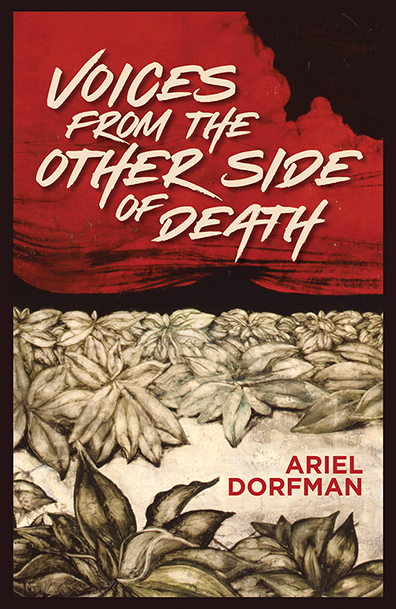
How To Read Voices from the Other Side of Death by Ariel Dorfman

Michael Sedano


Poetry collections give reviewers nightmares. One novel, one review, sabes? A single well-wrought poem will be worth its own essay. Hence, the pesadilla when an anthology comes with the richness and character of Ariel Dorfman’s Voices From The Other Side Of Death, coming this month from Arte Publico.


You should read this book. Caregivers must read this book. People in love ought to read  Voices From The Other Side Of Death


Dorfman’s as important an author as America produced in the twentieth century. This collection represents a pinnacle in the writer’s career. Indeed, when one detects the author’s authentic voice, it’s an old man who’s scared of dying, hiding behind his characters and imaginative settings.


Starting with the exemplary “How to Read Donald Duck,” Dorfman’s work characterizes itself with clever insouciance masking deadly serious values and revolutionary motives. That’s Voices From The Other Side Of Death, in a nutshell.


This is poetry. 


Don’t be fooled that prose poems look like paragraphs. One sentence, spoken by vegetables during harvest, fills an entire page. 


There are pages displaying eccentric columnar text, odd and distracting indentations, lots of white space. A casual browser will see that and say “poetry!”


It’s the thoughts that count, it’s the expression, and certain stylistic quirks like a heavy reliance upon Anaphora, repetition, for emphasis. Poetry lovers will really enjoy the author's pastiches on eternal sonnets.


The author may be most familiar to readers in a second-hand way, through grim stage plays and movies about Chilean torturers and desaparecidos. These dramatic vehicles, directed by others, offer a third party’s gloss on the author’s eye. Voices From The Other Side Of Death is Dorfman in his own artist’s voice, if not in propria persona.


That Persona becomes an issue for readers. Is Dorfman the “I”, or “the man” of the narrative? There won’t be much ambiguity  his “I” isn’t one of the historical personages of the book’s first set of poems whose motives run a gamut of personages

  • Pablo Picasso from the dead has words for Colin Powell who draped Guernica before a speech;
  • Christopher Columbus condemns a conquistador for stealing local place names;
  • Hammurabi wonders how he, creator of Law, can refrain from cursing Donald Rumsfeld;
  • William Blake assembles a litany of allusions for Laura Bush. This piece is unfair, but Laura makes a convenient foil as the face who could have stopped a thousand ships.
  • What do you think Salvador Allende is going to bark at Barack Obama? 
  • James Buchanan, history's worst U.S. president, has some grateful words for Shithead;
  • Dante Alighieri speaks to the same name about special places in Hell.


These pieces are Dorfman at his cleverest.  Students of the Classics will love that the poems comprise a coherent set of progymnasmata-type exercises in ethepoeia. That's a mouthful, but that's what it is. Writer groups might use the titles as prompts to explore their own creative impulses. This first section provides some fun reading. But after this, for this reader, organization goes all to Hell; it doesn't matter.


Technically, the book presents a section 2 and 3. That’s a linear fact. The pastiches on Cervantes and Shakespeare can be divided out into a wonderful little section of its own.


The heart of this book are four wonderfully eloquent eulogies, “Ashes to Ashes,” “Is There a Place Your Lips Go?,” “Long Forgotten,” and “A Sort of Epilogue with Help from Francisco De Quevedo.” These are distributed among section 2 and 3.


When opening this collection, the title alone screams “willing suspension of disbelief.” A reader has to put aside the coherencies of normal realities to read words purportedly spoken by a man dead 500 years. 


There’s supposed to be some distance between the page and the reader, but Dorfman’s arte grows painfully personal in the four death, dying, memory eulogies. These are the thoughts of a poet, facing inevitability, seeking justifications for what comes after a life’s love has died. 


The poet holds onto love as hard as possible. He takes his cue from De Quevedo’s 17th century poem, “Amor Constante Más Allá De La Muerte,” and Quevedo’s hyper romantic vision,

Ash they will be, but filled with meaning;

Dust they will be, but dust in love.


Dust is the persona in “Ashes to Ashes.” Human ashes mixing together, one dust reminds the other dust that in life he’d promised, I’d love you beyond death and she didn’t believe him. The poem is the best and most perfect work in the book. Its soulful ethos equals the intensity of the best love poems, in its consumingly joyous conclusion,


she knew that she was not alone, and they embraced, they embraced and seeing you, she knew that he had not lied, she knew that I was telling the truth when I promised that I would love her beyond death.


Shifting pronouns give a poem a way of sneaking up on a reader. As in Ashes, the poem begins in third person, its emotions growing powerfully into expression so heartfelt its expression transcends mere grammar. Love so intense the writer loses his own willing suspension of disbelief and begins speaking from the heart, “he” was always “I”.


Dorfman dedicates the book to Angélica, "who speaks from life." Then he seems to switch gears on the reader. A man tells a woman he’ll love her when they’re both dust, a lifetime’s piropo that becomes a family ritual invocation in the third person. In the first person, she dies from a plague. In his own voice, the author says he’s sentimental thinking that Angélica will be dust, that the finality of death remains somewhere in the future.


As a reader living with Alzheimer’s Dementia, these four elegies for death, dying, and memory, speak for people like us. For the author, his Angélica will be gone, one day and forever after. There’s kindness in that style Death. You live it once. Even the political prisoners in that final set of poems, they die horrible deaths but they die once and finally.


For the likes of us, caregivers living with dementia, our Angélica dies the day a diagnosis on a sheet of foolscap turns into wide-eyed fear at what’s happening before my eyes to my Angélica. And every day after, something happens again, and again, something grows in a concatenation of horrors and hopelessness.


We dementia caregivers will love our Angélicas when we are dust. If we didn’t say it to her when she was still here, Angélica will never know and won’t laugh at my romantic foolishness. That Angélica, she’s gone. 


Caregivers, read “Ashes to Ashes” aloud, if only for your own benefit and let your tears flow.


Tuesday, August 29, 2017

Gluten-free Calabasa Abundance. Glass sculptor Jaime Guerrero. La Palabra reading. No Border Wall Video On-line Floricanto.

Farewell, Joan. QEPD Joan Arias


"Farewell, Joan," was the subject line of Ron Arias' simple announcement. What more is there to say, when one's wife crosses over, but a tender, sad "farewell"?

Joan Arias passed away the night of August 18,  after a brief battle with cancer. She died without pain, surrounded by loved ones.

La Bloga extends our sympathy to husban Ron, son Michael, and Joan's transition. QEPD.


The Gluten-free Chicano Cooks Calabacitas
Michael Sedano


For gardeners and farmers markets, there's an abundance of squash and tomatoes right now. These delicious vegetables make the basis of numerous naturally gluten-free meals. Ingredients can be decided by what's ripe.

Preheat the oven to 350º.
Grease or not-stick spray a casserole dish.


Slice the squash into interesting shapes. This crookneck turned into rounds. I have a spiralizer and whirled a few half moons and a couple of long strands.


Make a savory custard. Hand beat two or three whole eggs to a froth, add a ¾ cup of milk or half-and-half. Stir in a cup of cheddar cheese, grated, and some sliced onion.

Chop two tomatoes, some chiles and peppers. I had left-over corn. One could use left-over rice or leave it out altogether. 

Here is where a host of options presents itself. Make it chiloso with chopped chiles. Add a meat, use three or four cheeses, add sliced fresh garlic or other herb. Make a roux with that milk, blend in the eggs. 


Mix the custard and vegetables, fill a casserole, and bake for an hour at 350º.

I had left-over tomatoes so I cooked them with the squash and made salsa later.


The custardy base is rich and has lots of liquid. Save it and let it soak into the leftovers overnight. Lunch tomorrow will be wonderful.

I served small pork steaks on the side. The whirlly yellow crookneck squash demanded attention.


Specular Reflections: Jaime Guerrero in "Broken Dreams" Exhibition


Jaime Guerrero works with fire. Molten glass, creativity, and heavy labor produce life-size glass figures whose presence “humanizes and universalizes” a young immigrant’s experience.

Three figures wear blindfolds, the sculpture in the storefront window covers his eyes, little kids do that so no one will see them, look right through them. Admirers look into the gallery where two figures face toward a figure and a piñata.


Inside, a blindfolded niño holds a palo in readiness to strike the colorful piñata. This figure stands in open space, viewers walk around the piece for views toward the window and the glowing figures aligned toward the light.

Two figures stand behind a chain link fence. They are walking through a landscape of shattered glass. You know these kids are going to be hurt. And on they come.


Letters from immigrants cover a wall. Most are Spanish, a right-aligned language, plain English. In their own voice, immigrants relate their satisfaction, their journey, their existence here. The glass kids crossing those cutting obstacles want to hang their messages, too.

Writers are happy they are here, despite what's on the page and maybe between the lines. You'll want to allow time to read and think about what kids like these have been going through. Don't look through them.


Guerrero's work process is the subject of a PBS documentary BORDERS and NEIGHBORS episode, premiering on PBS September 29, 2017. Photographs and videos of Guerrero at work in the studio will usually have Tyler Straight involved.

Straight is Guerrero's dependable assistant. The artist and budding craftsman met when Guerrero ran a glass workshop in Watts. Straight took to fire and has the scars to prove it. He earned a grant to attend the glass worker institute at Corning Glass Works and now teaches beginning glass-blowing at the Watts studio under auspices of Watts Labor Community Action Committee.


Guerrero's sculputre installation, “Broken Dreams,” is on view  through October 7th at:
Craft in America Center
8415 W. Third Street
Los Angeles, CA 90048
Tues – Sat, 12:00pm – 6:00pm

Jaime Guerrero will be a busy artist in September. Concurrent to the run at Craft in America, Guerrero has an exhibition at Skidmore Contemporary Art gallery, in Bergamot Station complex. Guerrero hosts an opening, Contemporary Relics: A Tribute to the Makers, on September 9, 2017 (and a second on September 16) from 5 to 7. The gallery is at 2525 Michigan Ave, Santa Monica, California 90404.


Avenue 50 Studio Hosts La Palabra Reading Series

Subdued lighting inside the back gallery at Avenue 50 Studio suggests a coolness that eludes the gente gathering for a literary reading. The last-Sunday of the month La Palabra Reading Series hosted by Karineh Mahdessian invariably draws readers and listeners from near and far.

West Anaheim, Garden Grove, and Santa Ana were the starting points for the three featured readers, Jesus Cortes, Marilynn Montaño, and Sarah Rafael García. One Open Mic reader from far reaches of the Valley recently migrated from Corpus and made her reading debut among the encouraging circle of listeners.


Jesus Cortes, who performs as Stay True, brought a niece and nephew, the peripatetic García attended with her significant other, a Ph.D. candidate from Texas. It’s one of the best kinds of audiences for a reader. Not only do friends and familiars bring a special vibe, but a lot of goodwill rubs off on the other readers.

In the Open Mic segment, returning after a long hiatus, Eddy Bello celebrated reawakening to love after widowhood. Kathryn read in public for the first time. Anabel Ramirez joined the readers with a bit of urging from Karineh.

Mahdessian is the spark who warms the air with effusive energy. In her fourth year hosting Los Angeles’ most engaging literary readings series, La Palabra has been engaging poets and storytellers since 2001.

Jesus Cortes


Marilynn Montaño "aged out" of the SanTana Barrio Writers Program. For García the reading marks Montaño's going from mentee to colleague.

Marilynn Montaño

Sarah Rafael Garcia read from her SanTanas Fairy Tales (978-0-692-86030-4 raspamagazine.com). Stay True shares a variety of work, as does Marilynn Montaño, poetry of urban landscapes, portraits and tributes, and in Stay True’s case, a drumming hip-hop recitation.

García's literary career extends to before 2010, when she read from her memoir at the 2010 Festival de Flor y Canto • Yesterday • Today • Tomorrow. She had just launched Barrio Writers, a important training ground for young raza writers.

Sarah Rafael García

That subdued lighting leads to photographic adjustments. Digital cameras have good low light sensitivity. These speakers are exposed between 1/8 and 1/25 second at f/5.6. That’s awfully slow. Gestures and head shakes blur. I don’t mind blur if it works, but I want mouth forming a word, eye contact, dynamic posture, and focus. Eye contact today is fleeting and unpredictable. In dim lighting especially, but as a general practice, printing the text in 16 point type promotes improved moments of eye contact and the directness, perhaps intimacy, that grows out of the eyes.

The traditional group portrait turns out to be a memorable photograph. The readers had circulated among the crowd and were floating high on the satisfaction of an audience-pleasing experience. Then the photographer pulled them away to pose. They took stiff and dour postures, their friends were out there watching. I reclamared them about being dour. Show me bad and baddest.

"bad"
"Baddest"


Part II in a Series
No Border Wall Video On-line Floricanto
Jose Antonio Rodriguez, Nayelly Barrios, Stevie Luna Rodriguez, Cesar Leonardo De Leon, Erika Garza-Johnson

La Bloga proudly shares this space with gente from Tejas directly affected by the border wall of hate, the second of a series of video On-line Floricanto we plan to share weekly. The readings originate from a reading organized by Emmy Pérez, Alejandro Sánchez, and Arnulfo Segovia, called Floreciendo Resistencia en el Valle / Flourishing Resistance in the Valley. You can view the full line-up who read at the Old Hidalgo Pumphouse World Birding Center at the event site, here (link). 

Resist! means don’t stop until there’s no reason to resist. Reasonable poets know there are as many reasons to resist as there are poems in their plumas. That’s why the Floreciendo gente will read anew, this week, in McAllen, Tejas.

Resistenica en la frontera: Poets Against Border Walls Reading
Yerberia Cultura, downtown McAllen, Tejas
Wednesday, Aug. 30th, 2017
Doors open at 6:30pm Reading starts at 7pm

Poets Reading:
Nayelly Barrios , Roberto de la Torre , César de León, Odilia Galván Rodríguez, Erika Garza-Johnson, Celina Gomez , Rodney Gomez, Rossy Evelin Lima, Stevie Luna Rodriguez, Carolina Monsiváis, Emmy Pérez , Santa Ramirez, Brenda Nettles Riojas , José Antonio Rodríguez, Alejandro Sánchez, Arnulfo Daniel Segovia, Priscilla Celina Suarez

In these videos, each poet responds to la frontera, immigration, the wall of hate, in personal ways of noticing and expressing. Running through each poem is a global consideration posed by organizer Emmy Pérez, "What do you want the world to know about your home?" #poetsagainstwalls

“Open House “(an excerpt from House Built on Ashes: A Memoir) By Jose Antonio Rodriguez
“You Bring Out the Border in Me” By Nayelly Barrios
“A Love Letter to the 956” By Stevie Luna Rodriguez
“My Words” by Cesar Leonardo De Leon
“Trump” by Erika Garza-Johnson


Open House (an excerpt from House Built on Ashes: A Memoir)
By Jose Antonio Rodriguez


It is a strange sight, the school at night, aglow with light emanating from all its open doors. Amá, Luis, Yara, and I walk toward it, together. Amá begins to lag behind. We slow our pace and she catches up but eventually lags behind again, like she prefers to walk one step behind us.
In every room, we find a corner to stand in, Amá wringing her hands like she owes the room money. I tell her about how crowded the school is, built for half the number of students that now live a third of their lives in it. The teacher walks to us. In every room I translate for the teacher. In every room I translate for Amá. In every room I am a gran estudiante. The Spanish reminds me of church. The Spanish sounds foreign—talk of literature, talk of math, talk of science. In every room the white students marvel at my perfect Spanish, my Spanish without an accent, avert their eyes from my mother’s lack of English.

In every room they harbor the suspicion, hear the language, my first tongue, the telling sign that I could not be from here, that I could not be American. How they look at me, see someone they didn’t imagine.


José Antonio Rodríguez was born in Mexico and raised in South Texas. His books include the memoir House Built on Ashes and the poetry collections The Shallow End of Sleepand Backlit Hour. His work has also appeared in The New Yorker, Poetry, The New Republic, The Texas Observer, and other publications. He holds a Ph.D. in English and Creative Writing from Binghamton University and is an assistant professor of creative writing at the University of Texas Rio Grande Valley.


You Bring Out the Border in Me
By Nayelly Barrios
after “You Bring Out the Mexican in Me” by Sandra Cisneros

You bring out the border in me.
You bring out the Rio Grande in me.
The nameless, cracked bones on the riverbed in me.

You flood that river that connects two countries
in me. Run it from a palm tree in El Valle to the plazita in Reynosa.
You bring out the border tongues in me,

the huarache, comal, parqiadero, cenizas, and calla lilies
in me. You bring out the Spanish, Spanglish, English, and Nahuatl in me.
You unfurl the coiled tongues in me.

You pray the rosary in me. Each beady eye a different gasp
for confessions to sink in. You bring out the Hail Mary,
the cold baptisms. You consecrate the sins

within me, pray to my crosses and robed saints. You bring out
the accordion in me. Stretch it out like a spine,
bent and breathless, in me. Braid its moans

through my hair. You bring out the corridos in me.
You bring out the chicharra in me. Make my wings tremble,
send that hum through my bones.

You bring out the mesquites in me.
Those tired limbs, dirty and freckled with chicharra casings.
You bring out the sin-vergüenza in me.

You bring out the hija de la chingada in me, scoop the earth
between my breasts. Light pyres
at the intersection of two lands within me.


Nayelly Barrios is a Rio Grande Valley native. She is a feminist and immigrant who earned an MFA in Creative writing and an MA in Literature from McNeese State University. She is currently a lecturer at UT-Rio Grande Valley. Nayelly is a CantoMundo fellow.


A Love Letter to the 956
By Stevie Luna Rodriguez

Do you want to know what I think is beautiful?
Aside from the intricacies that go into your braided velvet hair, or your brown voice and the melting of its notes on everything you sing and speak or, the dedication of your hands and spine, aside from your nopal resiliency, I love all of this and more.

It's breathtaking the way you all move like the palms trees and bougainvilleas, vast and steady, vast and steady, despite the constant pruning and tearing of you. You are not just the standing still in lines of offices where people get paid to dehumanize you. You dance like infinity was your stage. I've never seen anyone move like that. Remember that.

And listen, the ocean of South Padre calls us back to our very inception every day. The waves rolls their R's, we hear it even if they don't. and I love that you smile a Xochiquetzal type of smile when the tides roll right up to meet your busy minds with colchas of their unconditional acceptance. You are not still waters. Don't ever forget it.

I admire how you nurture yourselves with these South Texas sunrises, taking in a cafecito in the morning, kissing yellow school buses goodbye. I adore you taking hands with neighbors and building solidarity together. Like weaving a rug. You've all made something strong but you are not to be stepped on. Do not let them.

I love how you tear down walls within to your own hearts, despite your wrists in chains and how they can both still ache long after you've been freed. You are not a holding center, you are not greed. I've never encountered anyone so free like the way you cruise down 83. One day, with our hearts full of pink leche and poder and si se puede, we'll cruise here and tear down that wall, too.

Hear me out, I know there are silenced notes of us that we can never hear again. But we can compose corridos until the bottles run dry, make no mistake. We are infinite and no imaginary lines can contain the deafening songs of our Chicano cries.

The next time you say, "Let the sun pull us apart with it's rays, I'm done with these ways, I don't want to be afraid, I'm tired of being so fucking afraid" remember-
Our ancestors did not create rope out of the magueys for us to hang ourselves with.
We do not burn ourselves in with the sugar cane.

We take what we have harvested ourselves and make wine and honey and holy water and paved streets and smart kids and we write books with seeds, we are not just the picking of the fruit. We are simply the sweetness of its flavor.

Read my RGV love letter and write back later, because we are all too many shades of brown to let anybody else bleach the beauty of each and every hue. I love all of you, I really do. Love yourselves and each other too.


Stevie Luna Rodriguez is a mom first, cry later type of bitxh. Influenced by local poets/artists/friends, heartache as much as love, farmworker parents, existentialism, heauxism, and rap/hip hop, they continue to question and cry about everything from brownness to capitalism to PTSD that they experience alone but also collectively with El Valle. Their poetry is new, a work in progress, yet always ready to be devoured by anyone who is hungry. Reach them at st.luna.6@gmail.com or visit their site: stevieluna.wordpress.com.


My Words
Cesar Leonardo De Leon

You say my words have no power
no meaning
that they are not worthy
that is because you
only perceive them as words

but my words are more than words

My words are roots
like the roots of the mesquite
that grew in my back yard
the one that fucked up my back
when grandpa and I dug it up
because it fought hard to hold on
to the black soil and caliche it grew in
or like the roots of the huisaches
that grow twisted along the Rio Grande
and drink blood along with water

My words are more than words

Son palabras
and they are old and proud
like the cerros in Nuevo León
que todo lo ven
and then tell their stories
when the sun sets
orange and pink on their rocky peaks

My words are stars
that illuminate the dark
brighter than the gold paper ones
given to me in elementary school
when I finally learned the pledge of allegiance
not knowing what it meant
not knowing that it is only
liberty and justice for some

My words are magical and holy
like the smell of the curanderas hierbas
that penetrate
your clothes, your skin, your soul
and cleanse you

My words are futuristic
and they have been moving forward
from the day that Cortez set foot on Veracruz
to the day I crossed the border as a child
to the day when there are no more words to say

They are my mother's struggle
they are Malinche's struggle
they are her victory and her legacy

My words are more than words
my words are seeds.


César L. de León is a student in the MFA program at the University of Texas Rio Grande Valley. His work has appeared in journals such as Pilgrimage, The Acentos Review, Yellow Chair Review, PublicPool, La Bloga and the anthologies Imaniman: Poets Writing in the Anzaldúan Borderlands, Texas Weather Anthology, and the upcoming Pulse/Pulso Anthology among others. He has received awards from the Texas Intercollegiate Press Association and the Columbia Scholastic Press Association. An active participant in the local literature scene, he lives and works in the Rio Grande Valley of Texas.


Trump
By Erika Garza-Johnson

I made a nest of pillows.
The orange dictator won't find me here.
I am not his type, either way.
Woman of color, frizzy hair, bilingual.
Not a blonde bombshell he seems to favor
that he can't refrain
from kissing.

There is business to do today.
Get grabbed.
Appease a man.
Lose weight.
There is so much I need to do today.

I can't get up from here for fear of losing my life.

I can't let my emotional life be run by CNN.
A Beat taught me it makes madness.

Shut off the lights. He might see me.

I write this with fear.
I write this with urgency.
I don't want my daughter
to leave her room.

I teach my son
more than manners.
That he needs to see women as human.
Not an object bejeweled,
bedazzled for his eyes.

Not just a set of legs.

So much work to do
and I can't get that word out of head.

"Don't be such a pussy.” I tell myself.
Don't be such a pussy, orange dictator.
Don't be such a pussy, America.

The nest is swallowing me hole.
I can't fly away from this.


Erika Garza-Johnson
Closer to Crazy Cat Lady status than award winning poet, Erika Garza Johnson, coven of one, writes and lives in McAllen. Author, editor, instructor, mother, wife, daughter, sister, friend, frenemy, local loca, xicana, tejana, word witch y fideo enthusiast, Garza Johnson is working on her second book but mostly trying to balance it all while keeping sane and pain free.


Tuesday, February 03, 2015

QEPD Tony Mares. On-line Floricanto for February.

E. A. "Tony" Mares is one of the veteranos of the 1973 Festival de Flor y Canto who joined the 2010 reunion floricanto, Festival de Flor y Canto Yesterday•Today•Tomorrow, again at University of Southern California. Tony stands next to Manuel Ramos and Luis J. Rodriguez at right.


Tony transitioned to the Other Side last week, succumbing to the wear and tear of a good life and an illness that helped take him. 

Tony is gone, but his friends and readers of literatura Chicana can continue to share Mares' work via the USC Digital Library, where the 1973 festival videos and photographs are fully accessible.

La Bloga friend Jésus Treviño put this tribute to Tony at Latinopia, as the 2010 floricanto videos are not yet linked.


Mail Bag
Spec-Lit / Sci-Fi Resource

La Bloga friend Sabrina Vourvoulias joins La Bloga's Ernest Hogan and Rudy Ch. García in promoting reading and writing speculative fiction, science fiction, and related genre work.

Vourvoulias regularly shares her enthusiasm for the genres at her blog, Follow the Lede,  This week, Sabrina urges gente to read Tor.com, sending along the following (screen dump, links not active).


February On-line Floricanto
Rafael Jesús González, Paul Portugés, Margarita Cota-Cárdenas, Javier Pacheco, Betty Sánchez, Tom Sheldon, Mark Lipman

After the Lecture / Después del Discurso by Rafael Jesús González
North by Paul Portuges
Canto por ti and SB 1070, Ariztlán: A lo que nos llevó by Margarita Cota-Cárdenas
La Batea/The Washboard by Javier Pacheco
Vaivén por Betty Sánchez
(Lodestone) by Tom Sheldon
Goodnight America by Mark Lipman


After the Lecture   
by Rafael Jesús González

for Martin Luther King Jr.

A woman said I was not polite
to the opposition,
that I was harsh
and did not encourage
discourse.

Perhaps if I were Christ,
I could say, “Forgive them
for they know not what they do.”
Or the queen, and apologize
for stubbing my executioner’s toes.

But only if I knew
the executioners
were mine only.

What courtesy have I the right to give
to them who break the bones,
the souls of my brothers,
my sisters;
deny bread, books
to the hungry,
the children;
medicine, healing
to the sick;
roofs to the homeless;

who spoil the oceans,
lay waste the forests
and the deserts,
violate the land?

Affability on the lips
of outrage
is a sin and blasphemy
I’ll not be guilty of.

© Rafael Jesús González 2015


foto:Peter St. John
Rafael Jesús González, Prof. Emeritus of literature and creative writing, was born (10/10/35) and raised biculturally/bilingually in El Paso, Texas/Cd. Juárez, Chihuahua, and taught at University of Oregon, Western State Collage of Colorado, Central Washington State University, University of Texas El Paso (Visiting Professor of Philosophy), and Laney College, Oakland, California where he founded the Dept. of Mexican & Latin-American Studies, Nominated thrice for a Pushcart price, he was honored by the National Council of Teachers of English and Annenberg CPB for his writing in 2003. In 2009 he was honored by the City of Berkeley for his writing, art, teaching, activism for social justice & peace, and received the 2012 Dragonfly Press Award for Outstanding Literary Achievement. His latest book is La Musa lunática/The Lunatic Muse and his work may be read at http://rjgonzalez.blogspot.com/


North
by Paul Portugés

--for the children of El Salvador, Guatemala, and Honduras

When he was 8 in the white heat of El Infiernito
guarding their fruit truck they murdered his father
and the squawking blue birds of his young hope
flew away into the gut of lovely night
and the proud red plums he held rolled down
the blood alley as rain fell like broken feathers

When he was in the flesh of his blue youth
songs turned to skeletons in his best friend's eyes
they smiled as they slit her white naked throat
and stuffed panties in her red mouth of dreams
that día de los muertos she became the flowers of graves.
seeing a body was nothing anymore

When he was 12 narcos beat him blind
so he couldn't see their skulls of red death
his tearless baby cousins could only look on
Santa Muerte made him lick the white thighs of crack
"You'll feel freed like a bird entering
a red cloud in the bruise of bluenight"

His dirty government can't pull up its pants.
“If your house is burning, jump out the window"
so he took the lazy train of hopeful skeletons
with a handful of plums and his invisible hope
and crossed the red white and blue border of eagles
like a beautiful feather on the veins of lonely wind


Paul Lobo Portugés is a contemporary American poet, film maker, and essayist who teaches film and creative writing in the Department of Film and Media Studies and in the College of Creative Studies at the University of California, Santa Barbara.
Career. He was educated at UCLA (B.A.), at U.C. Berkeley (Phd.) and at the American Film Institute (M.F.A.). Allen Ginsberg has said of his poetry: "Paul Lobo Portugés' poetry sheds light on the myopic consciousness of a dark American night." Jack Hirschman, former poet laureate of San Francisco, on his poetry: "Portugés' poems are where the strength of future discoveries with language must come from in order for the continuity of poetry to be maintained in relation to the maddening and terrified middle class world which has taken refuge in the switches of television sets in order to fill the lives ghosted by capitalism They are worth reading many many times, and that is not saying a little in this day of one liners and walk-ons."
Portugés has published several poetry books, including Paper Song (Ross-Erikson), Aztec Birth (Mudborn Press), The Body Electric Journal (Plainview Press), Breaking Bread (Finishing Line Press), and Mao--1,000 Poems of Love and War (forthcoming). His poetry films include Fathermine, Kiss, To My Beloved, Stones from Heaven, et al.
Awards. Ford Foundation Fellowship, Fulbright Fellowship, National Endowment Fellowship


Canto Por Ti
by Margarita Cota-Cárdenas

What happens in Arizona
Stays in Arizona?

SB1070 (What The)
Stem Immigration?
Speak English Only?

I DON’T THINK SO.
© Margarita Cota-Cárdenas
Poema written 2010

“SB 1070, Ariztlán: A Lo Que Nos Llevó
por Margarita Cota-Cárdenas

¿Cómo no leer un libro
prohibido?
Si la tentación
y el deseo
de saber
qué es lo que hay
que no quieren que sepas
que no te entre
ni en pensar
esos pensamientos
como:
mi mente
es mía no tuya
mi alma me pertenece
no a ninguna ideología
y aunque dizque
somos minoría
en
tentación y deseo
de libertad
igualdad
pá todos
somos
aquí nos presentamos
¡la MAYORÍA…!!


Margarita Cota-Cárdenas is the author of the novels Puppet (1985, 2000), and Sanctuaries of the Heart/Santuarios del corazón (2005). Her poetry includes Marchitas de mayo (1989). She is Professor Emerita of Spanish at Arizona State University, where she had taught since 1981. Margarita mainly writes first in Spanish, and is currently preparing her third poetry collection for publication. Part One of her third novel, La gente de los girasoles, was published in 2010 and is in progress. She has had many poems and short stories published in anthologies and journals throughout her career.


La Batea del 2015
por Javier Pacheco

Mira la batea           
Como se menea
como se menea
el agua en la batea
~ Quilapayun (Chile) ~
https://www.youtube.com/watch?v=F6SksjDv0Ko

Al comienzo del nuevo año
aquí estamos esperando otros nuevos daños
contra nuestros derechos civiles y libertad
que los ladrones burdos del poder
con su “circo de gorilas”
van a soltar;

Tantos que viven en el borde
queriendo crecer, brotar alas y volar
en cambio, son derribados
el cuerpo etéreo demasiado débil para resistir
las señas oscuras, choques, traumas y subordinación
creando una profunda crisis de confianza
en la brecha de virtudes desde bien alto.
Pero surgen nuevos guerreros espirituales
los bálsamos y piceas han llegado de edad
los vínculos entre generaciones son más fuertes
los jóvenes son cada vez más comprometidos
y menos dependientes de las “verdades oficiales”
muchos han llegado a comprender
las maquinaciones feudales modernas
manipulaciones de la voluntad, ilusiones
y sabidurías falsas dejadas de escapar desde
las tierras baldías de los medios corporativos.

Son verdades esquivas para aquellos todavía
atados a la rueda y sus mitos:
sordos, mudos, y ciegos
a la infamia de la corrupción nacional
una insensible indiferencia hacia la opresión
la cual no hay palabras para describir
las víboras conspiradoras
ésos evitando la responsabilidad de sus actos
la impunidad de asesinos
la impunidad de criminales politicos
la aquiescencia enfermiza de los oportunistas
autómatas que adoran al becerro de oro
la muerte espiritual de una cultura conflictiva
gente de poco discernimiento o percepción
el desglose de la moralidad en todos los niveles
apreciados ideales que han sido aplastados
por nigromantes tribales ricos que incursionan en
la piratería, el genocidio, y la brujería demoníaca;
titiriteros supremacistas Illumi-Nazis
quienes escogen sus bolsones políticos
para esclavizar y matar lentamente a sus víctimas
como en Ayotzinapa, Palestina, y las Amazonas.

Crímenes mundiales ignorados por indiferencia
de la superficialidad burguesa cosmopolita
un pueblo “propio” que siempre ha usado la guerra
como una herramienta útil para su expansión
como una estafa para enriquecer a algunos;
pero el fascismo no puede permanecer
no puede sostener la pérdida de la razón,
o bestias carentes de magnetismo y carisma
una discontinuidad que separa y margina,
el abismo autodestructivo del ego
tribus dispersas, descompuestas, y
la deriva hacia la disolución del conocimiento,
la cultura de la muerte abruma la innovación
mientras que los borregos son distraídos con sus
aparatos, juguetes y baratijas nuevas.
Nueva tecnología en manos de
los de la vieja moda buscando una via rápida
hacia la modernidad en medio del desorden.

Somos pueblos atrapados por ciclos de control
manteniendo nuestras manos arriba (“No disparen!”)
gritando, “¡No podemos respirar!”
a los elites cínicos pervertidos quienes,
en su supremacía trastornado
han desechado vilmente
a cualquier semblanza a ideales populares,
de moral, ética y compassion;
sus siluetas arcaicos y reconocibles
revelan un delirio melancólico convulsivo
ahogándose en una cultura del alcoholismo
en bateas incoherentes llenas de babas
gorgoteando pomposidad y burbujas de metano.

Existen cosas que nos duelen saber,
que ponen a prueba nuestra fe y carácter,
es la ley para los que se despiertan y se levantan
dejando atrás las ruinas perversas de explotadores:
el tiempo favorece a la Tierra reponiéndose
los pobres martirizados, mansos y sin esperanza
con sus sueños, amor, ideales, y justicia
perduraran.
©Enero 2015           

The 2015 Wash Board
by Javier Pacheco

Look at the wash board
Look at how it shakes
the water on the wash board
~ Quilapayun (Chile) ~
https://www.youtube.com/watch?v=F6SksjDv0Ko

At the start of the new year
here we are waiting for other new damages
against our civil rights and freedoms
that the clumsy thieves in power
with their “circus of gorillas”
are going to unleash;

So many living on the edge
wanting to grow, sprout wings and fly
getting knocked down instead,
the ethereal body too weak to resist the dark
signs, shocks, traumas, and subordination
creating a profound breakdown of trust
in the breach of virtues at the very top.
But new spiritual warriors emerge
the balsams and spruces have come of age
the cross-generational links are stronger
young people are becoming more engaged
and less reliant on “official truths”
many have come to understand
the modern feudal machinations,
will manipulations, illusions
and false knowledge blurted out from the
wastelands of corporate media.

These are elusive truths for those still
tied to the wheel and its myths:
deaf, dumb, and blind
to the infamy of national corruption
a numbed detachment from oppression
for which there are no words to describe
the conniving vipers
those eschewing responsibility for their actions
the impunity of assassins
the impunity of political criminals
the sickly acquiescence of opportunists
zombies who worship the golden calf
the spiritual death of a divided culture
people of little discernment or perception
the breakdown of morality at all levels
cherished ideals that have been squashed
by rich tribal necromancers who dabble in
piracy, genocide, and demonic sorcery;
supremacist Illumi-Nazi puppet masters
who vet their political bag boys
to enslave and slowly murder off their victims
as in Ayotzinapa, Palestine, and the Amazons.

World crimes ignored by the indifference
of cosmopolitan bourgeois shallowness
a “proper” nation that has always used war
as a handy tool for its expansion
as a racket for enriching some;
but fascism cannot stay forever
cannot sustain the forfeiture of reason,
or beasts devoid of magnetism and charisma
a discontinuity that separates and marginalizes,
the self-destructive abyss of the ego
decomposed, scattered tribes, and
the drift back to the dissolution of knowledge,
the culture of death overwhelms innovation
while the sheeple are distracted with their
new gadgets, toys, and trinkets.
New technology in the hands of
the old fashioned seeking a fast track
to modernity in the midst of disorder.

We are peoples trapped by cycles of control
holding our hands up (“Don’t shoot!”)
screaming, “We can’t breathe!”
to the cynical perverted elites who
in their deranged supremacy
have vainly discarded
any semblance of popular ideals
of morals, ethics, and compassion;
their archaic and recognizable silhouettes
reveal a convulsive melancholic delirium
drowning in a culture of alcoholism
in incoherent wash boards full of spittle
gurgling pomposity and methane bubbles.

These are things that hurt us to know,
that put our faith and character to test,
it’s the law for those who awaken and rise up
leaving behind the perverse ruins of exploiters:
time favors the Earth replenishing itself
the martyred poor, meek, and hopeless
with their dreams, love, ideals, and justice
shall endure.
©January 2015


Javier B. Pacheco writes poetry and performs on piano in the S.F. Bay Area.


Vaivén
por Betty Sánchez

Siendo adolescente
Cargaba una libreta
Bajo el brazo
Por si de repente
Alguna  musa inquieta
Se cruzara por mi paso

Todo a mi alrededor
Se conspiraba
Para inspirar poesía
Los pétalos de una flor
Una casa abandonada
El ocaso que moría

Escribía versos de prisa
Los encerraba en mi diario
Por temor a que escaparan
Los repasaba en misa
Como cuentas de rosario
Para que no marchitaran

Mi juventud se alejó
Los afanes de la vida
Reemplazaron a la prosa
La inspiración  me dejó
No hubo adiós ni despedida
Se fue con las mariposas

Hoy que quiero ser poeta
He invocado su presencia
Y aunque se muestra elusiva
Cuando la noche esta quieta
Aspiro su dulce esencia
Y retorno a ser creativa

La veo en mi taza de té
En la risa de mis nietos
En la lluvia  y la neblina
Esta vez la atraparé
Conoceré sus secretos
Será ella quien me defina.


Betty Sánchez is a Yuba City poet.


(Lodestone) 
by Tom Sheldon 

We worship at a backwards altar
where what’s wholesome is not, what’s abhorrent is condoned.
A battlefield bonanza
of whitewashed graves...
The true face of our world uncovered.
A breed, whose moral compass,
is warped by violence.
It doesn't take much for the infection to take hold and spread.
A country of birth, an expression of faith,
a nightly broadcast.
With the Angels of deception lying infected out in right field
where hate is fermented in the belly of rigid dogma.
Likewise, the jagged splinters of hate,
keep the seeds of malice germinating.
Ever ready they push through the skin, like weeds.
Always insidious, ever vile.
With your thinking god
Hanging down at the starlight cafe
evangelistic and sadistic-soul mining with corrupt currency
A corona puffing Godzilla.
A modern burner of souls
spitting out words
like a hymn of sorrow and shame
like a dying prayer.
Choking the life from everything decent,
while fanning the flames of intolerance.
that consume us from within.
While there's still time,
do you think society will be determined to
keep the lodestone of their heart pointed true?
© Copyright Tom Sheldon January 27, 2015 


My name is Tom Sheldon and I come from a large Hispanic family with roots in Spain, Mexico and New Mexico. I enjoy writing poetry which allows me connection ,healing and a voice.Thank you for reading my work.


Goodnight America
by Mark Lipman

All hail, the American night,
  the fading crimson light
     on the horizon
From birch woods
  to redwood forest
From vast canyon
  to trickling stream
From Appalachian Trail
   to the concrete garden
     a shadow has covered this land.

The shining seas still beat
  against these shores
  yet its echo fades off into the wilderness.

The tide of man has not waited
  impatiently dragging the row boat of our civilization
     out into open waters
       where the waves of progress
          have soaked our dreams to the bone
            until the very marrow of hope has dissolved
               shivering with wet and cold
            this lonely seaman
          clings to his oars
       rowing as if his very life depended on it.

His eye straining to find a safe port
     beating back the swelling tempest
        while the watery sheet of time
          towers above his head
             in threatening posture.

In the distance the proud eagle roars
  untouched by the tears of field mice.

     The crash is a foregone conclusion.

Tonight, the last generation of memory
  will be put to sleep
     a new reality awoken.

Yet, staring up into the hurricane’s eye
  the force of almighty upon him
    his salty brow stained and grizzled
      hands calloused from years of labor
        his age bearing down upon him
The old man finds serenity
  as he too is swallowed up by
     the star-spangled experiment.

Down, he is pulled to the depths
  the weight of water all around him
     crushed into the foundations
He too has become a building block
  for the concrete walls
     and razor wire
       that are raised up high
          to pierce the sky
             in praise of what has been long forgotten.

For ten thousand years we did
  live in harmony with the world,
     with the buffalo and salmon,
       and yes, with even the crow
  our trees were not cut
     but grown
We rode free, savoring the open plains
  on a land that knew no lord.

But then the ships arrived
  and the flowers of May
     no longer held their savor
       they bloomed instead a steely grey
          and spoke to us of a savior
            who ushered in an age
          of Calvary swords
        and gunpowder
     to save us from ourselves
  our descendants tied to anchors
     and dragged away in chains
       from their native shores
  while monuments guard the gates
       for those tired and huddled masses
          sleeping homeless at the foot of the door
       denied entry
     to their promised land
  an Eden no more.

Conquered and defeated
  by the mighty arms
     of Technology
       we do not shed a tear
          instead we stand proud of our accomplishments
        for our clean food and water and air
     for our cultures that have all but disappeared
  the nature of life is impermanent
     and we must sail to where the winds of time will carry
       across that golden sunset
          into the house of our ancestors
       while those of the computer age
     simply die from within
  a hollow, rootless tree
     tumbling at the first hint of wind.

So built your statues of granite and light
  to the vast decaying greatness.

Show in them the chiseled faces
  not of presidents
     but of slaves
       and peasants
  those who were whipped and beaten
     for their masters’ sins
        who toiled to build
          these bastions and battlements
  born into their poverty and position
     as we today are born
       into our debt and indentured servitude
          humbling to the banker’s chicanery
       begging for mercy
     selling our blood for rent money
  while they snicker in the shadows
     still over-shadowed
       by our true potential
  lest we forget
     how close we came
       to the promise they gave
          of a world without regents or kings
  eagerly the passage we bartered
     pressing our aching bodies to the ship’s rail
       gleaning the horizon of a new day
          as it slowly rolled into view
            catching that glint of a better life
               of all the possibilities
                 right there before our very eyes
               and holding it as our own      
          breathing in the freshness
        of the long and winding tale
     known only as America.

For generations we laid down brick
  and miles of rail
     and built up their tall towers
We worked the mines
  and sweat-shop mills
     for what they’d pay by the hour
We died in wars
  we fought and killed
     those who were our brothers
We sowed the crops
  and paid our bills
     yet reaped only the hunger.

So too shall pass these final days
  and many will be left to wonder
      where went those amber fields of grain
        and the promise of a better future
  while millions walk the picket lines
     living without job or shelter
       we huddle close and bide our time
          for all will come asunder.

We gave all that we had to give
  and from us was taken the rest
     we put down our books
       and forgot to question
          what the television said
     we became afraid
       of different shades of color
       of them who had what we wanted
          cowering away from any idea
            that was in our own self interest
               holding tight to the status quo
            while the merchants of war
          made it illegal
        and worse unpatriotic
     to stand against the grain
  and just say, No
     out of habit
       did what we were told
          selling off our birthright
             for a handful of oil and gold.

Marching to a goosestep drum
  squeezing us to become
     the lowest common idiom
       that old man with his lonely oar
     pushed down to his knees
       still sings his praise to the failing light
          a twinkle in his eye
            a man he was, and still will be
               until the day he dies.

His whisper lingers
  in the ear
     raspy and full of homage

Yes, he said, I did make a difference

If then, just a little
  then a little to create the needed balance.

Perhaps, a word to the wind
  may not be heard
     and all ears have gone deaf
     
Yet, if it is our fate to be deaf
  then let us be deaf like Beethoven
     screaming our joy to the void
       filling our own minds with music
     and the love of what might have may
  and say, Yes, I will be remembered.

Slowly he lays down his tired head
  and takes his much needed slumber
     the stars watching over
       with their infinite gaze
          silent as forever
            all that is written
          all that must be
       will eventually come to pass
     we are merely another chapter
  in the unending saga  
     no greater, no less
       so close your sleepy eyes
          and take your well earned rest
        goodnight, farewell, adieu
     America.


Mark Lipman, founder of VAGABOND, is a writer, poet, multi-media artist, activist, and author of six books, most recently, Poetry for the Masses; and Global Economic Amnesty. Co-founder of the Berkeley Stop the War Coalition (USA), Agir Contre la Guerre (France) and Occupy Los Angeles, he has been an outspoken critic of war and occupation since 2001.

In 2002, he became writer-in-residence at Shakespeare and Company in Paris, under the guidance of its founder George Whitman. In that year he worked with Lawrence Ferlinghetti, Jack Hirschman and the Italian poet, Igor Costanzo, in Back to Beat, a Fluxus art and poetry event in Breccia, Italy.

He is currently a member of POWER (People Organized for Westside Renewal), Occupy Venice and the Revolutionary Poets Brigade. www.vagabondbooks.net