Showing posts with label writing. Show all posts

Thursday, July 23, 2026

Chicanonautica: A Whole Lotta Little Apocalypses Going On


by Ernest Hogan


There’s a whole lotta little apocalypses going on. Apocalypcitos? Apocalypsettes? Apocalypsoids? Another interlinguistic breakdown?


Not only did I mess up my schedule last week, but there’s smoke from wildfires darkening the skies, ICE is shooting people, the denizen of the White House continuously secretes incoherent stream-of-semiconsciousness, the wars are getting worse . . . keeping up with it all is becoming impossible.


Meanwhile, while the rest of the planet has been following the World Cup, I’ve been checking YouTube for coverage of the running of the bulls at the Fiesta of San Fermin in Pamplona, Spain. More happens in one encierro than in entire shelves of novels. I’m reminded that modern life is running through crowded streets with dangerous beasts. It always blows my mind, as we said back in the 1900s.


I also get ideas for my sci-fi bullfighting novel–something that the world doesn’t seem to want, but that probably means it’s what it needs. Maybe if I pitch it as being about a woman on a spiritual quest . . .


I’m also getting ideas for a sequel to my unsold novel Zyx; or, Bring Me the Brain of Victor Theremin. Anybody out there interested in publishing a Chicano vs. AI novel? I’m wondering how long the publishing industry as we know it will continue to exist. 


Who knows when my books will go back online on Amazon again . . .


I’m seventy years old. I’ve given up on trying to be commercial in a world where the corporate masters of global culture are being taken over by hallucinating AIs. And I keep getting all these ideas! This deranged world is a treasure trove of inspiration!


Guess I should just keep going, work on my bucket list novels, and keep looking for openings in the chaos that will allow me to sneak in, cause a little trouble because it happens to be the right thing to do.


And the really weird thing is I can’t stop. My monstrous imagination never sleeps, it has no off switch. I’m just going to let it go wild, do my best to make what it produces into something that someone will be amused or terminally disturbed by. 


Maybe it’s my real job.


If I need diversion, I’ll read more of Ru Marshall’s American Trickster: The Hidden Lives of Carlos Castaneda. Does Carlos count as a Chicano or a Latino? Is Peru the Mexico of South America? A Chicano does seem to be someone who pushes the limits. Latinos are what show biz thinks they can sell. And Hispanic is what law enforcement calls us.


I knew some Castaneda fans once who were . . .


There goes my brain again.


Ernest Hogan keeps on writing. The Father of Chicano Science Fiction refuses to die!


Thursday, April 30, 2026

Chicanonautica: ¡Ancient Gonzo Chicano Sci-Fi Wisdom, Otra Vez!

by Ernest Hogan


Once again, via the modern miracle of Zoom, I’m going to share the secrets to my bizarre success, the knowledge that has been beaten into me in over 40 years of writing that have earned me the title (warning label?) the Father of Chicano Science Fiction.


You’ll learn how to market yourself to the Anglo-centric publishing

industry in a time of global cultural wars and mass deportations, and hair-raising firsthand accounts of a professional writer’s life.

It’ll be interactive. I’ll answer your questions, and hope to learn a few things myself, maybe even get my mind blown.

Did I mention that’s my idea of a good time?


Also, I’ll start a story, and share how I write it, and encourage you to do the same.


Afterwards, we can set our creations loose on this unsuspecting world. They think all hell’s breaking loose . . . Heh-heh-heh.


Note: Though this is a Raza-oriented class, Non-Razas (Anglos, etc.) are welcome to apply, you'll be treated courteously, but just be warned that you will be in the minority, like I was through my entire formal education.


Besides, the more students, the more money I get.


The deadline to apply is May 20th.


It costs $100 for a four-day workshop over two weekends. 


Sponsorships are available, see the application.


Summer session:


June 6-7 &13-14


9am to 1pm Pacific Time.


DEADLINE to apply: May 20th


Do it now!


Ernest Hogan is determined to survive and thrive through these pendejoso times.  

Thursday, September 04, 2025

Chicanonautica: My Gonzo for Sale Again

by Ernest Hogan


I’m doing it again. I’ll be sharing my ancient Chicano (Xicana, Xicanx, whatevertheunholychingada) sci-fi wisdom on writing gonzo science fiction en stylo Chicano during the Fall session of the Palabras del Pueblo Writing Workshop. See the above ad for details.


Uh-oh. A whole lotta repetition and Spanglishism there. I’m doing it already, like a good space vato, ciberbandido, Chicanonaut.


I keep repeating Chicano. Like it’s my mantra or something.


So here I am, doing my best to squeeze my 40plus years of being a professional writer (should I mention that I’m one of the most successful Chicano writers of my generation?) into some revised notes that I can use as a guide to spill my guts to eager students.


I’m willing to do just about anything short of making Ernesto brain tacos. Nah, that only works for flatworms anyway.


It’s cheap compared to other writing workshops. Only $100. And if that’s too much for you, get in touch, options are available.


It’s also Raza-oriented. Non-Raza can apply too, just be warned that you will be a minority—which is an important educational experience. Besides, my entire “formal” education was gringo-oriented and I survived and thrived.


Apply as soon as possible, the deadline is September 14th, and this apocalyptic year is zooming along.


And the world needs our wild imaginations now more than ever.


Ernest Hogan was born in East L.A., his mother’s maiden name is Garcia, and her family were Mexican circus performers.


Thursday, February 09, 2023

Chicanonautica: Ancient Chicano Sci-Fi Wisdom Online


by Ernest Hogan


Good news, writers of the Latinoid continuum, Somos en escrito and MeXicanos 2070 are presenting the Palabras del Pueblo Writing Workshop 2030, and this time, I’ll be teaching one of the classes. It’ll be called Papí Sci-Fi’s Ancient Chicano Sci-Fi Wisdom. Here’s the official description:

Ernest Hogan was born in East L.A. during the Atomic Age and his mother’s maiden name is Garcia. His 40 years of writing and publishing science fiction and other strange things have caused some call him the Father of Chicano Science Fiction, though there has not yet been a DNA test.

He is now willing to share his vast Ancient Chicano Sci-Fi Wisdom. Come, learn about how to use the weirdness of the Latinoid Continuum in your writing, and how to market yourself to the Anglo-centric publishing industry, use the social media for self-promotion, as well as hear outrageous—sometimes hair-raising—firsthand anecdotes of living a professional writer’s life.

Ernest will also answer your questions, wants this to be an interactive experience, hopes to learn a few things himself, and maybe even get his mind blown.

Goal for the workshop: During the course of the workshop, he will start and write a story, sharing how he does it, and help the students do the same.

Then we will all set our creations loose on an unsuspecting world . . .

It’ll take place over two weekends: May 20-23 and May 27-28, 9am to 1pm Pacific Standard Time, and will be online.

The deadline to apply is May 1st. The workshop is free to apply. The minimum cost is $100, payable after acceptance before the class begins. If you can't afford $100, please write for options at somosenescrito@gmail.com.


Apply now! Space is limited! Don’t miss out!


Let’s rattle the planet!


Ernest Hogan is known as the Father of Chicano Science Fiction, but Papí Sci-Fi is shorter, and screams the freewheeling, rasquache approach he has to everything.

Monday, November 28, 2022

My father’s Quiet De Luxe typewriter: Chicano stories that the world will never read


By Daniel A. Olivas

“Pop would have wanted you to have it,” said my older sister as she handed the case to me. “Because you’re the writer in the family,” she added, though this explanation was quite unnecessary.

The “it” is a Royal Quiet De Luxe that reportedly was Ernest Hemingway’s typewriter of choice. The Royal Typewriter Company manufactured its popular portable model from 1939 until 1959, the year of my birth. My late father, Michael Augustine Olivas, purchased it sometime after he had returned to the United States in 1952 after serving two years as a Marine during the Korean War. I surmise that this 17-pound typewriter was a prized possession for this son of Mexican immigrants who worked in a factory and had dreams of becoming a published writer.

Sadly, those dreams would remain unfulfilled to the end of his life in 2020.

As with many immigrant families during the 1950s in my old neighborhood a few miles west of downtown Los Angeles, my parents were able to start a family, purchase a small house, and buy a car on the sole salary of my father’s factory job while my mother focused on the hard work of primary caregiver to their children, who would eventually number five over the course of a decade.

My father worked the nightshift at an electric turbine manufacturing company. He told me that when I was a baby—their third child—he would set his typewriter near my crib and work on a novel, short stories, and poetry. Pop joked that all that typing near my young self must have destined me to the writing life.

I imagine him now, a handsome young man in his late 20s—younger than my own son—clacking away on that Royal Quiet De Luxe with dreams of becoming a published writer like the authors he loved: Fitzgerald, Cather, Maugham, and of course, Hemingway.

Pop’s old portable typewriter is a beast of a machine in all its mid-century glory. The light-brown metal casing complements the green keys and space bar. The ivory-colored letters, numbers, and symbols still stand out brightly against the green beds of the keys, which dip slightly at their centers to allow fingertips to nestle in comfortably. And the smell—oh, that smell!—when I open the case: The pungent tang of typewriter ink emanating from the ribbon ignites a flood of childhood memories. I love that metallic, inky scent. It reminds me of my father.

What happened to Pop’s typed pages? That was a mystery to me until about 15 years ago. I had a book reading at Tía Chucha’s Centro Cultural & Bookstore for a short story collection, and my father attended. When it came time for audience questions, Pop stood, arms behind his back, and introduced himself as my father. Everyone nodded, smiled, appreciated that this man offered his son the support of his presence. Then he said softly, “I used to write, too.”

The audience again nodded, smiled, and perhaps became a bit puzzled about where this was going. I grew nervous, not certain what Pop was planning to say next. He continued: “But it was trite.” I took a breath. And he added: “Nothing important. Nothing like what you write.”

 “I wish I could read your stories,” I said, not knowing what else to offer.

He waved his right hand slowly to brush away my desires. “I burned them all,” he said, punctuating the end of his story with a smile that was far from bitter or morose, just accepting. He then sat, and the room fell into a thoughtful silence. I could not bring myself to ask why he took such final action in destroying his creative writing.

But a few years later, when my parents were visiting me and looking at my various books and literary journals in our family study, I asked Pop why he had destroyed his pages. As my mother looked on with trepidation, my father explained that his writing had been rejected repeatedly by publishers, and he decided that he needed to move on with his life. That meant he focused on getting his college degree and master’s and eventually getting a job where he wore a suit to work.

I so dearly wish Pop had saved his writing. I think about what he wanted to express through fiction and poetry. The question of what he wrote about was clearly a painful subject for Pop. I tried a few times to find out what stories and sentiments he tried to tell through the written word, but he never offered more than a wince and vague responses.

I do know this: My father was a proud Chicano who loved his culture and people. My suspicion is that the publishing industry in the late ‘50s and early ‘60s was many times less hospitable to Chicano literature than it is today—even with the structural racism that BIPOC and other underrepresented writers still face and battle.

And that is a heartbreaking conclusion. A conclusion that means my father’s voice will remain in my memory and not in the printed word. A voice thatI believe—would have enriched not only his family but also the world at large.

[This essay first appeared in The Writer Magazine.]

Thursday, June 16, 2022

Chicanonautia: Palabras del Pueblo Writing Workshop

I'm busy finishing a novel, and getting ready for a road trip to see what the new, improved, Wild, Wild America is like, so meanwhile here's something for all of you aspiring Chicano literary artistas out there.
 --Ernest Hogan, Father of Chicano Science Fiction 
 

Many writing workshops are overpriced and do not serve our Mexican American/Chicano community. Our storytellers, poets, and thinkers are not nurtured or given as many opportunities and so our voice as a people becomes drowned out or dictated by others. 

Palabras del Pueblo Writing Workshop is intended be financially accessible for raza to learn to better express themselves so our existence and values can be heard with clarity with no doubts to what they are and what we are. We intend the workshop to be a place to acquire tools, inspiration, and contacts for Chicana/o/x writers.

Classes will be held online on two long weekends (Friday, Saturday and Sunday): July 22-24 and 29-31 during the summer of 2022.

Applying is free, the cost is $100 once accepted. 18 years old and up. 

Deadline to apply is July 1, 2022.

Classes Offered

​We are offering three classes with a maximum of ten students per class

Fiction: Learn the art of crafting fiction with author Rosa Martha Villarreal.

Creative Nonfiction: Write and learn about the art of the personal essay, expository essay with a team of three instructors, Berte Reyes, Dr. Ernesto Mireles and Dave Weinstock. Students should come with three ideas they can write about. 

Poetry: Learn about the art and expression of poetry with Berkeley poet laureate Rafael Jesús González. ​​

Thursday, May 05, 2022

Chicanonautica: The Hazards of Writing While Chicano

by Ernest Hogan

I finally got to the end of Zyx; Or, Bring Me the Brain of Victor Theremin. I’m not finished -- there’s still a lot of brutal pick&shovel editing to do. Scenes will have to be rearranged. Stuff cut. Gaps filled. Stuff that most readers won’t notice. Welcome to the real work.


And now I’m thinking about what I’m going to do with a shiny new novel. Talk about Argh! I’m not satisfied with just having written something, I need it to be published, and read, and to be out there messing with people’s minds. Buhuhahahahahaha!


I’m not a humble “minority” writer. (I don’t like the word, it implies that we don’t matter and the big, important “majority” can safely ignore us. Do so at your own risk, pendejos!) It ain’t enough to be obscure, a hero among an elite group of barrio intellectuals. Every time I write something, I expect it to shake the world. Really. I see my books as bestseller material, and potentially, movies/TVseries/franchises.


Yeah, cabrones, go ahead and laugh.


When I was getting started, back in the antediluvian 1970s I didn’t think that my ethnicity would be an issue. The Chicano movement had just happened, and I thought the denizens of the publishing industry were the most progressive, intelligent people on the planet. Imagine my shock when they treated me like the most talented leper they had ever met.


After bashing myself bloody on this stumbling block for many a decade, I’ve come to realize that the English language book biz, centered in New York considers culture, pop and otherwise, to be of and about white folks. And even when they indulge in books by and about “others” they seem to be made to appeal to this perceived audience. Note American Dirt.


I suppose I could have taken advantage of my Irish surname, and never mention my ancestry, keep things Latinoid in my writing at a safe distance, and make sure the viewpoint characters are Anglo, but judging by the many times I’ve been called the n-word in my life, I don’t pass for white very well.


I’ve been told that things have changed, but it doesn’t seem so if you look at the bestseller lists. Guess I’ll be finding out. 


My gut tells me that the current culture, global and corporate as it has become–Hollywood is no longer a place–still has a problem with a Chicano (I’m willing to crash the Latinx party) in the driver’s seat, afraid of where we might take them. They also don’t think our audience is big enough to make the profits they need. I’ve had to argue with them that, yes, goddamit, I actually do exist.


So, I’m bracing myself for the beating I’ll get running this gauntlet. I wonder if I should call this Chicano-centric satirical work science fiction, or dare pass it off as mainstream, or even (shudder) Literature. 


Might as well go for the gold. I ain’t getting any younger. And a wad of cash would allow me to retire and spend more time writing.


If once again I’m told that what I’ve written is too weird for New York, I’ll go back to the small presses, the underground, where I always keep one foot planted, so when the shit hits the fan, I’ll have a place to stand.


Ernest Hogan is the critically-renowned, unrepentant Father of Chicano Science Fiction. He is merrily running amok. Oh yeah, Feliz Cinco de Mayo . . .

Thursday, January 13, 2022

Chicanonautica: Ernesto Update 2022

by Ernest Hogan

2022 is off and running. We got past January 6 without serious mayhem. Covid is still mutating and rampaging, but civilization ambles on.

And I’m still here, alive and well, as the Father of Chicano Science Fiction, doing the day job, waiting for El Porvenir ¡Ya! Citlalzazanilli Mexicatl A Chicano Science-Fiction Anthology to come out with a new story by me. If you can’t wait for another new Ernesto story, there’s one in Speculative Fiction for Dreamers: A LatinxAnthology–buy it, review it now! And it’ll be a while, but my story collection, Pancho Villa’s Flying Circus, is still a go . . .


The main thing I’m doing is fighting to concentrate on finally finishing my novel, Zyx; Or, Bring Me the Brain of Victor Theremin. I’m at the point where it’s all starting to come together, the end is in sight, all I have to do is sit my ass down and nail the entire gonzo mess down. And that ain’t gonna be easy.


I’ve long said that while short stories are like a bout with the flu, novels are more like demonic possession. The monster has been growing in

the back of your brain; so far it’s been fun following it around, jotting notes on the havoc it wreaks on the landscape, but now it’s time to wrestle it down and hog tie it into a conclusion that will satisfy the reader.


Yeah, both rodeo and bullfighting metaphors apply.

This is more work. You have to engage the frontal lobes. The monster drains more brainpower. You start having trouble with the routine, “normal” part of your life . . .


And of course, this takes more of your time, which triggers the diabolical cosmic machinery that throws more demands for your attention your way–like this column, and my personal blog, and my social media activities. 


I struggle to keep a public spectacle dedicated to drawing attention to my writing, rather than me blathering about my life.


It’s amazing how people don’t notice that.


It’s also a good thing that writing takes up so much of my life, and brain, that there’s not much left of anything else.


So I should get back to work. I have this complicated sequence where a lot of subplots come together with giant monsters, artificial intelligences, aliens (extraterrestrial and other), gangsters, a Chicano science fiction writer, and his crazy friends. And dammit, I keep finding places where I need to write new scenes . . .


Later I’ll worry about how to market the chingadera, and wonder if it’s possible for a Chicano to write a worldwide bestseller.


Yeah, I know, some people wish they had these kinds of problems.


Ernest Hogan has too much imagination for his own damn good. He is also the author of High Aztech, Cortez on Jupiter, and Smoking Mirror Blues.

Thursday, December 16, 2021

Chicanonautica: Reveling in Mayasploitation

by Ernest Hogan

Things have been apocalyptic for a long time. How long can it go on? Forever? Maybe there’s something to the idea of cyclical time after all. What goes around . . .


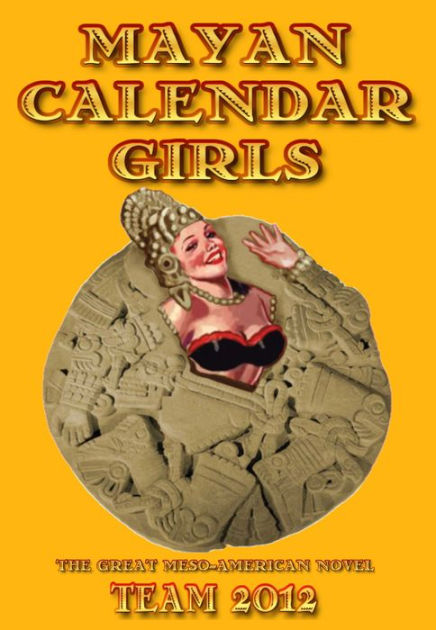
So, what do I read to take my mind off the newsfeed of doom? I keep a bloodshot eye for demented stuff like Mayan Calendar Girls: The Great Meso-American Novel by Linton Robinson, Grayson Moran, Cammy May Hunnicutt, and “Team 2012”.


Yes, it’s an oldie, from an earlier part of the 21st century when 2012 was still the future. Barack Obama, Dubya Bush, and Francis Ford Coppola do cameos. Ghosts of apocalypses past, riding again


Those suburban mystics who wonder what ever happened to the “Mayans,” while not recognizing who’s mowing their lawns and vacuuming their floors, will be seriously disturbed by this one. It's not just a Great Meso-American Novel, but a masterpiece of Mayasploitation, with plenty of sex (more than violence that should be preferable in a civilized world), drugs, and spirituality of a kind you can't find neatly packaged at Barnes & Noble. 


And it's not just the result of intense navel-staring on the parts of authors. Having been to the Yucatan, I can attest that the stranger than sci-fi stuff (yes, human/dolphin sex is a thing) that brims over on every action-packed page, in places where James Bond and Indiana Jones would fear to tread is, yeah, actually real. And just how will Mayan culture affect 21st century civilization? Probably like this, only more so . . .


To quote one of the many, crazy characters: “It’s multi-racial, multi-cultural, multi-sexual. It’s . . . you know . . . The Yucatan Lives.”


I unashamedly enjoyed it, and by the way, I don’t believe there’s such thing as a guilty pleasure. Damn the pretensions, just enjoy stuff.


My visit to Mayalandia, back before it was upgraded to the Mayan Riviera, blew my mind. My dad telling me about how when you go down south enough, the Mexican deserts give way to jungles didn’t prepare me for it. Suddenly, the tamales are wrapped in banana leaves instead of corn husks, the street names are all Mayan, and the little brown people half my size made me feel like I wasn’t in Aztlán anymore . . .


The same feeling comes back when I read this dizzying tsunami of weird details so dense it gets difficult to tell who’s doing what to whom, but then that just may be the point.


Strangely enough, it was originally an internet serial, like my own Brainpan Fallout. The cliffhanger style fits when things are fluxed up.


And it holds up amid the current global madness. Another decade, another apocalypse. New possibilities emerge in a shattered world.


Again, it gets me wondering about the Mayan influence on the future. Are they really the new Egyptians? Who will be appropriated? Who will consume? And who will be consumed? Are we products yet? Maybe I’ll finally get to use my idea about one day all the interwebs spontaneously translating into Mayan hieroglyphics . . .


Ernest Hogan is the Father of Chicano Science Fiction, and is just now learning what that means.