Showing posts with label Guest Columnist. Show all posts

Tuesday, June 16, 2026

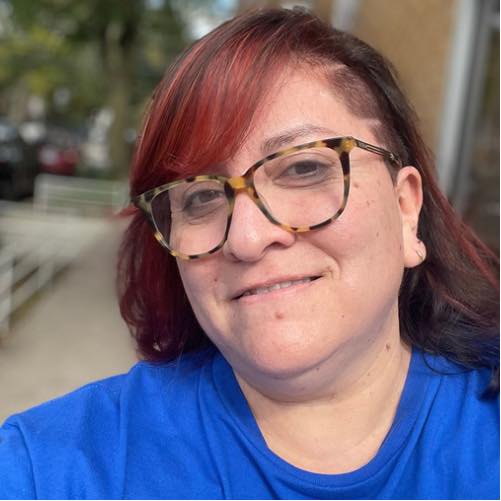
Guest Columnist: Margaret Elysia Garcia

 Editor's Note: La Bloga-Tuesday welcomes Guest Columnist Margaret Elysia Garcia with this account of her voyage to Cuba. Margaret will be joining La Bloga as our newest regular columnist. Her column will appear on Saturdays.

A Political Poet in Cuba             

Margaret Elysia Garcia


What do you do for fun? I’m still processing this last week that saw me accompanying political poet Matt Sedillo on a trip to participate in the 32nd Annual Festival Internacional de Poesia de la Habana. It’s a strange time to be Americans traveling to Cuba. We felt the angst of knowing that there were American aircraft carriers not too far from Cuba’s shoreline. We have the example of the kidnapping of Maduro in Venezuela. 

The American president had already made threats to take out Raul Castro. These factors alone made it an iffy time to come to Cuba. It felt less strange on a full American Airlines flight from Miami to Havana. We’d also heard the American press over the last several weeks speak about shortages, black outs, trash not being picked up—indeed the president had echoed these sentiments claiming that Cuba needed saving from communism and could use America’s help to free it of dictators. We kept an eye out for the American news media’s assertions of the direness of Cuba, of its impending doom.

                  The Cubans seemed chill. No one was worried about the United States bombing or taking out Raul Castro. We saw no police in the streets.

                  We got to our hotel, jet-lagged from the red-eye and plopped down into the aromas of Havana:  sweet fruits, and something meaty frying somewhere and tropical sweat and always the faint smell of cigar/cigarette smoke. If that didn’t sound like a delicious combination, trust me that it did its magic. I felt like I was wilting most of the time in the humidity but at the same time humidity means vibrance. Every flower, every deep green. Everyone I met. Matt seemed both entranced and informed by previous trips there. He noticed things I wouldn’t have known. There were less cars on the streets and less beggars too this time around. He’d last been here in 2022 for the festival and before that 2019. 

                   It was my first time in Cuba, and I was thrilled to be reciting my poems twice a day for five days—never repeated the same poem twice. We read all over El Vedado—the relatively more modern section of the city where energy seemed to be plentiful and blackouts did not occur in the week we were there. We read our poetry to students at a local junior high, at an art studio with a well-known Cuban artist welcoming us and introducing us to his students. We read in parks. We read with men and women poets from across the Americas: Mexican poets, Salvadoran, Honduran, Venezuelan, Ecuadoran, Italian, Kenyan and of course Cuban. We read at cultural centers and theatres. We read at an outdoor bar on our second to last night there.


   It was refreshing to see how interested the Cuban people were in poetry—how celebrated all the arts were, really. As an American, I get too used to disrespect and ambivalence from a mainstream audience and a miniscule reading public. Poetry in Los Angeles is often provincial, and one gets the sense that people are not experimenting with language, themes, or structure or pushing themselves to the next level. We often tend toward confessional but more towards Rupi Kaur and less towards the pinnacle of Anne Sexton. Cuba blew us both away in that respect. So much great poetry that spoke to the world and to the crisis of imperialism. To see so many people come out to hear poetry was nothing short of amazing. We were in awe.

                   It was Matt’s third time in Cuba and second time participating in the festival. He wrote a new piece specifically for Cuba as it once again faces the dire consequences of not succumbing to American imperialism. On the late afternoon of our first day, he recited the poem in a small musty theatre with Cuba’s Minister of Culture in the audience, who took notice of the American poet who proudly proclaimed he was not representing as an American but as a Chicano from Los Angeles. “Let Cuba Live” became the star poem of the festival and on that Saturday, it was recited at our final reading at an outdoor cultural center with TV crews from the local Havana news station covering the event. The Minister of Culture took a liking to Matt Sedillo and had him as a guest of honor for dinner that first night.

                  I, a newbie, and a Chicana who was not passing as Chicana in Cuba due to my poor Spanish skills (I got mistaken for being Chilean once?), who is not an internationally recognized poet to that degree—did not get the invite to eat dinner with the Minister of Culture but instead wrote in my journal and had two of many espressos I had that week. I sat on the terrace overlooking the street and looked down on the garbage below. There was no food in it so there was no smell of rot. I thought about the countries and states I’ve been too that had open sewers or bad plumbing: South Korea. Laos. Indiana. Mississippi. I thought of the trash and debris and homeless encampments in downtown Los Angeles, under bridges in Oakland. I thought about the PGE blackouts in the Sierras—I once endured two weeks’ worth.  We didn’t necessarily see the food shortages. But as we often missed buses that week and had to walk miles a day to our various destinations, I didn’t feel like we’d gotten sheltered from the truth or steered away from it. Many people are thin here. I thought of the hungry people I know in the USA. Those that have no place to live and are always in danger of homelessness. I saw obvious homelessness in Havana. When I met up with Matt for breakfast at the hotel, he concurred what I’d both seen and not seen.

                  On our second day, Matt Sedillo, of the better Spanish than me, arranged last minute for a field trip to Che Guevara’s house and museum. That was a trip. Ever land some place and not think twice about what you will see and see something wild in the back of your head you probably always wanted to see? That would be Matt and I at Che Guevara’s house/museum where we were the only visitors that afternoon. Likewise, the Bay of Pigs cannons nearby. The house was modest, like you’d expect, filled with photos of the famous and infamous who had visited him there including many photos of Che with Salvador Allende.  I loved that his typewriter and camera were there under glass. Tons of photos of his life and reference to his too early death by the hands of CIA operatives in Bolivia. Matt was also recognized on the street a few times as the political poet from the United States—the Chicano from California.

                  Next, we got to visit Casa de las Americas. Casa del as Americas was founded in April 1959 just four months after the Cuban Revolution as a way of developing socio-cultural ties between Cuba, other Caribbean nations, and Latin American countries. It has served as a publishing house, information center, cultural center, library and museum. Matt’s book, Mexican Style, which was released in 2025 by Flower Song Press, is now part of the library catalog along with my poetry chapbook Iconistas which celebrates Mexican Revolutionary women. It was a next level bucket list achievement to know one’s book is in the most important cultural institution on the island. I could sense too that Matt felt the achievement in his book being added to the collection. The excitement and significance of this was palpable.

                  We did experience one black out but that was in Old Havana at one of the old state-run hotels in the tourist district. We were looking for remnants of Ernest Hemingway’s time there and found his now closed watering hole. We found the best Ropa Viejo I’ve had in my life too. Many will say (including my husband) that we only saw the Cuba elected officials meant us to see. And while it’s true there were buses to take us places, it’s also true that 65% of the time, we didn’t make the bus and walked through many places that perhaps we weren’t meant to see. There was poverty. There were beggars. But none of it was beyond what I’d seen in the United States in our cities. And at least in Havana the homeless crisis was not nearly what we see here.

                  And then we were back to the pace of two big readings a day in sweltering tropical humidity. I must confess I was not well-versed in the who’s who of Cuban poetry. Matt Sedillo, on the other hand, like most topics tackled by the autodidact, knew of the entire pantheon of Cuban poetry. Which is why him getting to read his poetry in front of and with living legend Nancy Morejon was the highlight of his trip. Reading with one’s idols is a humbling experience, and Matt took it with the grace of a man both in deference of the elder stateswoman poet and as a poet who had the attention of every poet and Cuban cultural official there. Another highlight was reading at the National Library.

                  Can poetry change the world? Perhaps it can. The camaraderie of a few dozen poets goes a long way in making us feel un-alone in the world of literature and in the geopolitical world of the Americas. We felt changed. Can it call attention to the need for justice in the world? Absolutely. Matt’s poetry met the moment. Now, back in California we both have spoken about the renewed energy going to Havana has given us and given our work. I have the renewed energy of the activist I once was, and I know Matt –and his work which always tends towards chronicling Chicano history—is renewed as well. I know that Cuba is awaiting Matt’s next trip to Havana to celebrate his work that speaks not just to the Chicano experience or Mexican American experience but to the experience of all the Americas as we struggle towards a new solidarity. 


Tuesday, March 04, 2025

Guest Columnist Thelma Reyna: Octavia's Bookshelf Fire Fundraiser

A Roman God, History, and Poets: The Altadena Eaton Fire Revisited
Thelma T. Reyna
 
History is a bit like the mythological Roman god Janus, a two-faced being who simultaneously looked at the past and the future. Janus was thus the god of beginnings and endings, of necessary transitions and ongoing change. So, once history (the past) is made, what will be the ramifications (the future)? 

The Eaton Canyon fire that savaged the tightly-knit, artistic community of Altadena, CA, on January 7 made history as California’s second-most destructive fire ever. Its fury brought endings uncountable and unimaginable, and has spawned soul-searing transitions and changes that will affect our lives for generations and possibly forever. 

Luckily poets have been akin to first responders in this catastrophe. Since the beginning, in social media and reading events throughout SoCal communities—live, on-air, and virtual—, poets have brought their artistry and voices to navigating and parsing the losses and grief we have suffered. This past week, one such poetry event brought together stellar poets to address “history.” 

On Tuesday at Octavia’s Bookshelf in Pasadena, Altadena’s current Co-Poet Laureates, Sehba Sarwar and Lester Graves Lennon, presented their reading event, “After the Fire: Honoring Histories.” Billed as a fundraising event to benefit the Altadena Public Library, it included several distinguished poets.

Laureates & Award-Winners


Lester Graves Lennon

Lester Graves Lennon: current Altadena Co-Poet Laureate; author of three poetry books; Poetry Editor of Rosebud magazine. 

Sehba Sarwar

Sehba Sarwar: current Altadena Co-Poet Laureate; author of a novel and of poems published in various literary publications in Asia, Pakistan, and elsewhere. 

Teresa Mei Chuc

Teresa Mei Chuc: Altadena Poet Laureate Emerita; author of four books; member of the Pasadena Rose Poets; and Shabda Press book publisher. Her high school student, Riot, a member of Teresa’s Poetry Club, read two of his poems. 

Sesshu Foster

Sesshu Foster: author of six books; winner of the American Book Award, one of the top book prizes in the U.S.; winner of the Asian-American Literary Award for Poetry; winner of the Believer Book Award for speculative fiction.

Maryam Hosseinzadeh

Maryam Hosseinzadeh: a poet and community arts organizer in Altadena and other parts of Los Angeles county.

Cassandra Lane

Cassandra Lane: author of the award-winning book, We Are Bridges: A Memoir; winner of the 2020 Louise Meriwether First Book Prize; journalist with stories and essays appearing in newspapers and magazines, most notably as editor-in-chief of LA Parent magazine.

A Packed, Appreciative Audience


Nicky High and Nicki Winslow

Although Octavia’s Bookshelf is a cozy, compact reading venue, the diverse audience was packed and energized. The store’s owner, poet Nicky High, was present, along with Nicki Winslow, director of the Altadena Library District. The amount of library donations raised was not yet announced.


The poets varied in their emphasis on the fires but focused on themes of family roots in the area, losses in general, unity, and community spirit. Lennon, the current Co-Laureate, read a poem detailing the ubiquity of chimneys standing “proudly” amidst the ruins, vestiges of their centrality in the homes. Lennon also spoke in one poem about a memorable Christmas dinner his neighbor had hosted shortly before the fire and how, two weeks later, her house lay in ashes.  


Sarwar, also current Altadena Co-Laureate, read a poem describing a student’s stated hopes that fire victims would survive and prevail by “joining together,” and how she affirmed the student’s belief.


 Moving Forward:  Poets in Real Time, Writing “History”


The groundswell of poets sharing their observations, fears, grief, and dreams will likely continue as does the rebuilding of Altadena and Pasadena, for poets are the observers and reporters of the most consequential moments in life, the moments that most touch us, move us, and instruct us. May their artistry continue to enrich our community.

Tuesday, August 01, 2023

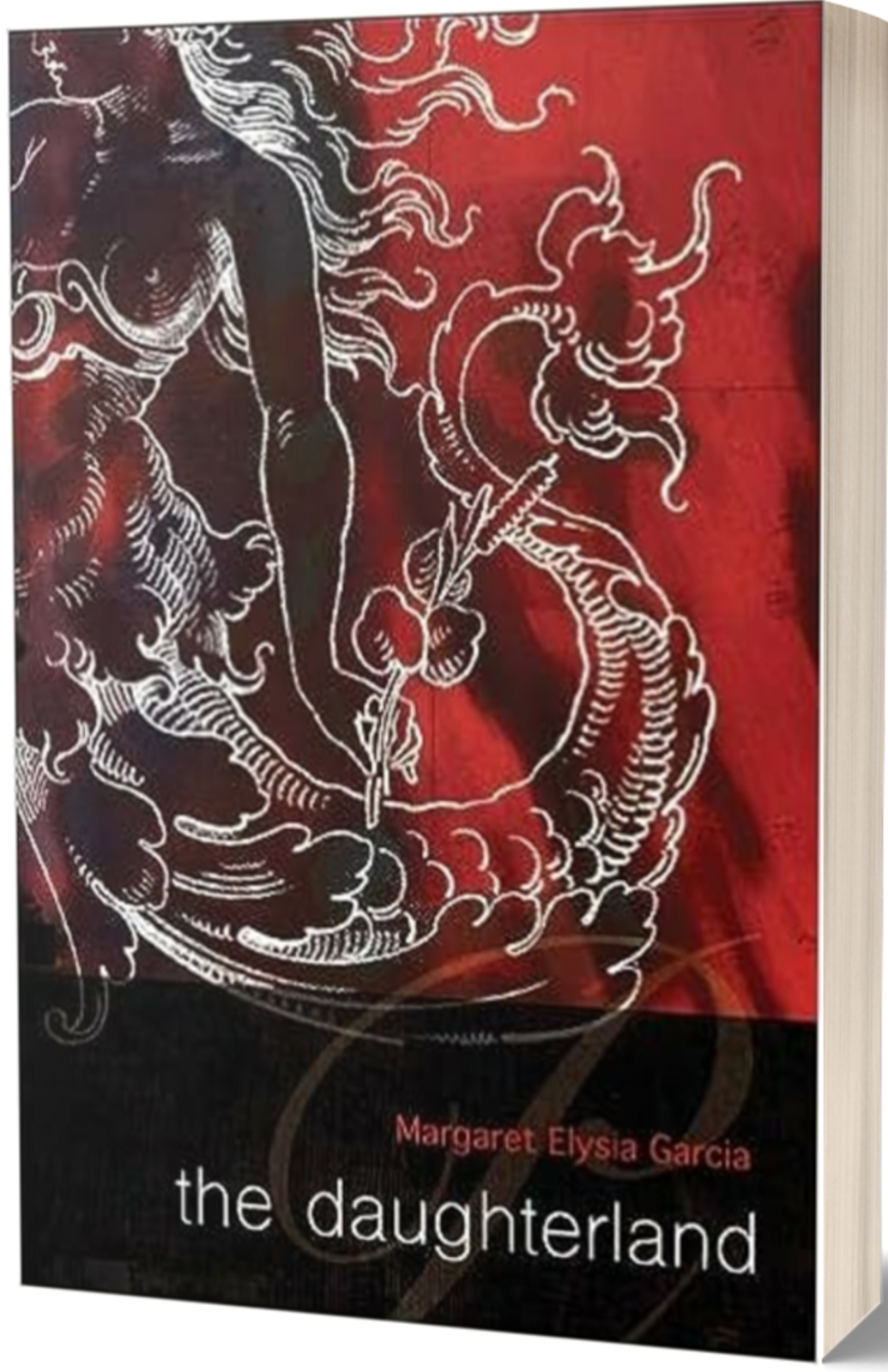
Guest Review: Daughterland by Margaret Elysia Garcia

Guest Reviewer: Maria J. Estrada


Don't you love it when you discover a new poet that speaks to your identity and a broader social context in regards to feminism? The collection the daughterland does not disappoint. 


Margaret Elysia Garcia has a beautiful, complex writing style that addresses issues of identity and one of my favorite topics: dealing with Covid. 

The first poem, “The Palette in the Room,” is just sublime, with “I am bruised purple by this motherhood” (9) being one of my favorite lines in the whole collection. I also enjoyed the haikus which offered a refreshing pace. 

The organic emergence of politics works really well throughout the volume, and her style is not proselytizing or forcing an important point that sacrifices the art. 

Motherhood is a theme as well as relationships to daughters. That is, in fact, the central theme. Daughterland goes beyond that. 

The collection does a wonderful job of speaking to women's rights issues, especially as they impact women of color, and as they affect youth. In “Bright and Shining Future,” Garcia writes:

My daughter is the scent of a bright and shining future. I bury
my face in her hair.
But there’s already decay–
Everything is fuck, now. The planet. The virus. Democracy.
Fuck.
My future is fucked, she says, We are in the past tense &
people need to shut up. (31)

The images are beautiful and haunting. Often Garcia, like many accomplished poets, juxtaposes horrifying images with wonderful ones. However, I found the issues of identity and race to be more compelling, especially as a person of color who suffered discrimination in grade school.

In terms of structure, the poems are not overly-long; in fact, I read through the collection in one pleasant sitting. 

I hope to teach sections of this collection to my college students; the collection is really appropriate for grade school and high school students, too. 

I plan on giving my 13-year-old son and eight-year-old daughter a copy because the collection does have the reader question the place of daughters in society. How are they exploited by the male gaze? How are they diminished by social expectations? 

Now, I would be remiss if I didn't give a resounding congratulations to El Martillo Press! The book design by David Romero (who I am a huge fan of as he is an amazing poet) was gorgeous and hats off to the cover designer. The book is gorgeous! 

My only criticism is that the book needs to be in Kindle format; as an owner of a small, charity press, I understand that poetry lines may be sacrificed when converted to an online format, but the poetry is too vital for it to only live in print. 

Nevertheless, I look forward to buying more books, not just from Garcia, but this amazing press.


===

MARIA J. ESTRADA (they/them/elle) is an English college professor of Composition, Literature, and their favorite, Creative Writing. Estrada grew up in the desert outside of Yuma, Arizona in the real Barrio de Los Locos, a barrio comprised of new Mexican immigrants and first-generation Chicanos. Drawing from this setting and experiences, Estrada writes like a locx every minute they can—all while magically balancing their work and family obligations. Estrada lives in Chicago’s south side with their wonderfully supportive husband, two remarkable children, and a menagerie of animals. 

Tuesday, June 29, 2021

Guest Columnist: Time & Space

Editor: La Bloga-Tuesday continues a series of essays dealing with dementia, decline, and death. Although various kinds of dementias strike so many people with ferocity, not everyone "gets" Alzheimer's or one of the numerous kinds of cognitive diseases collectively known as "dementia."

Death is no mystery. Facing death ought not be a mystery, either. Today's Guest Columnist, Emily Devenport, shares her own final hours with her mother, and prescient final words, perhaps Mom had been there already. The "Ernie" Devenport speaks of is La Bloga's Thursday coumnist (with Daniel Cano), Ernest Hogan.  mvs

Time and Space

Emily Devenport


Thirty-six hours before she died, my mom asked me, "Do you think it's okay if I go traveling through time and space?"

I knew what she meant; I just didn't think she meant it right that minute – but she did. She had awakened bright-eyed and bushy tailed. When I asked if she wanted coffee, she said, "That's just for starters!" I suspected that was a bit ambitious. Mom hadn’t taken more than a few bites and a few sips for a while, a situation that had caused me some anxiety. When people die of extreme old age, they often can't eat or drink anything in the last days. Their bodies just can't process things anymore.

Fortunately, when she asked me that question about space and time, I had the presence of mind to say, "I don't see why not, Mom. That sounds wonderful." We chatted while I cleaned her up for the morning, and I said, "I'll fetch you a little water, and then we'll see about that coffee." 

"Okay," said Mom. "I'm going to go traveling through time and space, now." That was the last conversation we had. 

When I returned with the water, she wasn't "present" anymore. She had been checking out for longer and longer periods of time for the past year. By the time she died, she was only aware of things for about half an hour per day. When I tried to get her to drink, she clamped her jaws shut and refused. Later, the nurse told me that was an autonomic function, not a conscious refusal. 

She deteriorated rapidly, that day. I called a hospice nurse, who checked Mom's vitals and told me things were progressing normally. After the nurse left, Mom's breathing became more labored, and she sometimes had long spaces between, when she seemed to have stopped completely. I sat by her bed, wondering if I was watching her go. I told her I loved her and held her hand, despite an earlier experience we had with her about a month before she died – she had me call Ernie into the room and wanted both of us to hold her hands, and then she got this faraway look on her face. I believe she thought she was going to pass, and she wanted us there. But after a minute, she shook us loose and said, "Oh never mind." Having us hold her hands didn't help her go; it derailed the process. It reminded me of that scene in Little Big Man when Old Lodge Skins decides “Sometimes the magic works, sometimes it doesn’t.” 

By nightfall she got quieter. We went to bed, and I wondered if she would pass in her sleep. I felt a sad relief that she was too far gone to call out to me in the middle of the night. Over the past year, Mom had often cried out in alarm at all hours. “Em!” 

Regardless of how much you love someone, your first reaction to something like that is panic. Your second reaction may be resentment, and your third, sadness. 

When I would go in to comfort her, she would demand, “Where is everybody!?” She had lost her understanding of night and day, and I always had to explain to her that Ernie and I were trying to get some sleep. She would feel bad about that, and then she would resolve to go back to sleep, but that didn’t always guarantee peace for the rest of the night. Often, I would hear her calling out in panic again, just as I was dropping off. I learned a new appreciation for the character of Elinor, who took care of her invalid mother until she died, setting her up to be especially vulnerable to the machinations of the ghosts in The Haunting. The last night of my mother’s life, she didn’t have the self-awareness to call out to me, and yes, that was a blessing.

In the morning she was still holding on, and I talked to her some more. I said, "I love you" and kissed her forehead. I came in to check on her every half hour or so, and to sit by her bedside. Looking back, she had left the world when she told me she was going—this was just her body shutting down. 

By the time Ernie got home from work, I began to wonder if I weren't making my mom's situation worse by not finding a way to get water into her. I called a nurse for an emergency visit, and she set me straight. She was the one who told me how eating and drinking shut down at the end. She gave me some sponge-pops for wetting the mouth, but when we tried one on Mom, she clenched her jaws shut on the stick. "That's automatic," the nurse assured me. "She's not upset and she's not in pain." She measured Mom's oxygen level with a monitor that goes on the finger. In a healthy person, the reading should be above 98%. Mom's was 72%. "She could go tonight," said the nurse.

We said goodbye to the nurse, who ordered us not to stay up all night. Then I wrote a group email to my sisters and brothers, telling them what was happening. Five minutes later, I checked on my mom. She was dead. She looked peaceful. She was well on her way through time and space.

The most powerful emotion I felt when Mom died was relief. I had already begun to grieve a year ago, when I saw she was starting to go, so I had plenty of time to work through it. It wasn’t so much the loss of her mental faculties that bothered me; Mom never completely lost herself, and I was able to gain appreciation for the person she became rather than obsessing over the partial loss of the person she had been. What challenged me the most was the loss of her dignity. She required adult diapers, and I was the one who changed them. Don’t underestimate how demoralizing and nauseating that task can be, though it did have its humorous moments. For instance, one morning when I was trying to shift her in bed so I could clean her up, I said, “Mom, we need to take this off.”

She began to sing, “’Take it off, take it off!’ cried the boys in the rear, ‘Take it off, take it off!’ that was all you could hear . . .” 

Because I was right there with her, I’m not burdened with guilt or regrets. Mom handled it. She decided how it should go, and I honored her wishes. She didn't feel sad or upset that people weren't flocked around her deathbed. The nurses saw beauty in her process. They were touched, and a bit awed.  That's how I felt, too.    

I think the picture I’ve posted here of my mom was taken about 15 years ago. She would have been about 85. You can see why we thought she would last forever. She kept her sense of wonder and her humor until the very last minute. In the last couple of months before she died, she had long, happy conversations with deceased friends and relatives, including her sister Katey, who grilled me, through Mom, about her care. "Who is bathing her? Who is doing the shopping?" I managed to give Katey answers that satisfied her.

Weirdly, it was the COVID crisis that gave me quality time with Mom in the last year of her life. I was furloughed from my job, and I collected enhanced unemployment payments while I stayed home with her and took care of her. It as an amazing gift. I'm not sure how I would have managed it if I had been forced to work while trying to be a full-time caretaker. I'm so grateful.

In August, Ernie and I will be scattering Mom's ashes in a couple of her favorite places in New Mexico: the Very Large Array of radio telescopes near Socorro (I think that's where she got the idea about time and space – from the film in the visitor's center, narrated by Jodie Foster) and a farm in Truchas. We've converted her room into an office, and we're planning road trips, which my mother taught me to love. I'm learning how to play her favorite music on the piano. When someone leaves a void in your life, expand into it.

100 years is a long life. I celebrate my mom.  


Tuesday, May 04, 2021

Guest Columnist Thania Muñoz: Latina Motherhood, a Pandemic, and Belonging

Note: In 2008, today's Guest Columnist, Thania Muñoz, posted exclusive reports from Crime Fiction's international big-bash as our  Roving Reporter at that year's La Semana Negra (link). She was a student doing research in the best way. 

Dr. Muñoz writes, "I got to say, it feels like a full circle. La Bloga supported me in my early years as an academic, not even in grad school yet, and now I am a profe, a mami, and a researcher. Thanks for all the mentoring and support! It meant to me a lot then and now!" 

 It means a lot to us at La Bloga then and now. What a wonderful journey Dr. Muñoz has shared with us here at La Bloga. Thank you, compañera. Adelante!

Our Birth Story: on Latina Motherhood, a Pandemic, and Belonging
Thania Muñoz D.


Sinan Sol was born at home, in our bathroom, unexpectedly. 


I was pregnant at the beginning of the pandemic. When my university closed down, my husband started working from home, my daughter’s daycare closed, and I was pregnant with our second child. I taught my college classes online and did yoga at night to alleviate sciatica discomforts. My doctor’s appointments were spread out and every time I did have one I was told, “The hospital protocols are changing everyday, so just be prepared to labor mostly at home and head out at the last minute. It’s better to spend the least amount of time at the hospital during these unprecedented times”. 


Although I did think about having my baby at home, my husband refused. During my first pregnancy and this one, he feared complications that could potentially put me and our babies in danger. I, on the other hand, have always been afraid of hospitals, knowing too many statistics about the mistreatment of Black and Latina women— they never felt like safes place for me. Even if sometimes people just by looking at me are not sure if I am Latina, when I am in pain or afraid, I feel more comfortable communicating in Spanish. The few times I had been stopped for traffic violations and when I had my first encounters with immigration officers, my brain switched quickly to Spanish; unable to communicate in English, cops and la migra always dismissed me while rolling their eyes.  


36 weeks


Sometimes in the evening, when my back and sciatica pain was unbearable I would recite mantras and prepare mentally for the day my baby decided to come: “Ride the wave”, “It’s easier to remain in control than regain control”, “This won’t last forever”, “Every contraction is one less”, “I embrace the wisdom and innate knowledge of my body” —these were my favorite. I repeated them out loud for weeks while I bounced on my yoga ball to open up my hips and be ready for labor. During those evenings, I also thought about my grandmas, mis abuelitas, women who gave birth to 5 and 10 children. I thought about how they had prepared me for labor, how they created big families for my children to cherish. But I also felt scared. I never had a chance to talk to them about pregnancy and motherhood. They passed away when I was still too small to worry about these things. I am well aware not all their pregnancies were happy ones. I also know they lost a few children, but I would lay down most nights thinking about how they had relatives close by and vecinos ready to help out; I’d also remember my neighborhood when I was a child in Mexico, a big warm barrio, where I knew all the kids, their parents, and never felt alone. Here, as I was laying down in a suburban house in Maryland, far away from my family in California and Mexico, a few nice neighbors, no Latinx neighbors, I didn’t know their kids or if they would help us if we needed help. I felt alone. I’d dream of giving birth and not been able to communicate with my husband in English. I’d practice all my mantras in English as a way to make sure I didn’t lose my Mexican English while I was in pain, giving birth in a white hospital, in a white city in Maryland. 


My kids’ middles names are in Spanish, Sol and Lucía. Both are bright. Both are bold. Both mean light and glow. We decided as a family to give them my husband’s last name. Davaslıoğlu. A long name full of otherness and Turkish roots. Mexican, Turkish, American. I wanted their names to interconnect all of their heritages. People in the U.S will probably say their names with a gringo pronunciation, so at least I wanted to resist through spelling. But I also wanted their names to be creative and share the light and shine I felt while I carried both in my womb. I wanted their names to inspire creativity. While I wish they choose artistic paths, I know this is out of my control. As the daughter of immigrants, I was supported to go to school so I could go to college and find a job. When I decided to graduate with a Spanish language and literature degree I was asked by family, ¿vas a encontrar trabajo?  Are you going to find a job?  I’m a professor of Latin American Literature now, I somehow successfully managed to merge my love for creativity, books, and trabajo. I will support my kids in whatever career and life path they choose. I hope they don’t feel any debt to me. I hope they are unapologetically creative.


“El sol” - Huichol Art


The morning my contractions started I went on a walk around the neighborhood. It was 11 am when I called my mom and my sister. They both told me they would pray for me. The semester was still not over and I had to grade final projects. It didn’t seem like the best week to have a baby, but of course, it was the perfect time. I still had two weeks before my due date, it was just starting to feel like summer in Maryland, and I was worried I would have to push my baby out while wearing a mask. As I finished my walk, my contractions were getting stronger. Sinan Sol’s amanecer was coming. 


I labored at home. We had a lunch as a family and my daughter and I napped together while my husband rushed to finish up work meetings. As my daughter and I laid down together in her room, I stared at her small happy face[i]. She likes to touch our arms while she sleeps, but my contractions were so strong I couldn’t hold still. I sang to her while I moved around, kneeled and buried my face on the mattress trying to breathe through another contraction; at one point my eyes couldn’t hold my tears anymore, I cried due to the pain, and because I knew this was my daughter’s last day as an only child. She couldn’t sleep for long and joined me --- we walked around the room breathing loudly. She drank my coconut water and asked me to share my snacks. I laughed so hard when she completely took over my mug and drank the whole thing. She was my little doula and kept me distracted as my contractions became more painful. We started a bath together, but she eventually left with her baba to drop off her furry sister at her sitter’s house. While they were gone, my contractions became so strong I couldn’t walk around anymore. I kneeled down next to the toilet. I couldn’t keep any food down. I threw up a couple of times and drank water to keep me hydrated. I was alone in the house. I kept repeating my mantra, “ride the wave…. ride the wave” whenever the contractions hit. “It has only been a few hours, I probably have a few more” -- I told myself many times, while I kneeled, swayed my hips, buried my head on pillows, or sat in the tub. But the tub was so uncomfortable, I cursed at all the videos I watched that recommended baths to ease contractions. My daughter, on the other hand, came back home, jumped into the tub, and told me the water was so nice. I started to howl.  


Sinan’s birthday


I managed to text my family to let them know the baby was coming. I texted my friend to tell her Bellis would be staying with her that night. It was almost 5 pm and I was howling every 6-7 minutes. The pain was becoming unbearable. I was losing my sense of time. I laid down on the bed, next to my daughter, while my husband pressed down hard on my lower back as he did when Lucita was born. I was repeating my mantras in English. My husband kept telling me, let’s just go to the hospital now. He decided to call the maternity unit, the nurses were rude to him on the phone and said, “Just bring her here and we’ll check her”. As I got up to get ready to go, a big contraction hit. I was standing by our bathroom’s doorway then and the force of the contraction made me kneel down next to the tub. I screamed. Another contraction hit. I was now on the toilet and felt his head crown. As I told my husband “he is coming”, I felt another contraction. 


I was blinded. I couldn’t see. I couldn’t feel pain. I couldn’t speak. 


I caught my own baby and time froze. 


As I held Sinan Sol, wet and soft, his eyes shined. 


He didn’t fall on the floor or in the toilet as I was squatting on top of it. I caught my baby with the same hands Bellis couldn’t let go of while she napped earlier that day. As my husband quickly called 911, Sinan just looked at me quiet. He stared at me with his big dark eyes. He fit perfectly in between my hands. I saw the blood on the floor and my legs turned weak. He stared up at me, to reassure me, yes, he was here. My husband handed me a blanket and Sinan let out a big cry. Kemal and I smiled. He started to cry again. My daughter came into the bathroom and said to him, “baby, don’t cry”. I stared at her and time froze again. She was there the whole time while his brother was making his way into this world. They met just minutes after he gave me his first look. I started to cry. My two kids were in the same room, while the placenta was still inside of me. The children of two immigrants, sharing their first phrase in English. 


As I was sitting on the toilet looking at my two kids, I felt grateful I didn’t have to speak or be touched by someone else. I was at home with my family. My legs were still weak as the paramedics wearing masks helped me walk down the stairs. I did it. I did it. I did it. I kept repeating quietly in English. I can’t never leave this house now. Is this how “belonging” feels like?   


Umbilical cord cutting at home


I napped in soft pajamas and two kids in my cuarentena. The pandemic took away summer and quick visits from friends. I had to show my breasts to a lactation consultant through Zoom to figure out how to feed Sinan successfully. 


While there are moments I feel invincible, strong, for raising two kids in the middle of a pandemic, I yearn for the company of my family and for help. I delivered my own baby, but I haven’t truly rested since. My home feels my own and as a now family of four we have slowly transitioned to a new routine.  But, my quiet neighborhood is not a sanctuary. This country does not feel like a sanctuary either. A year later after my son’s birth, family and friends are still getting sick, friends have passed away, and many others are suffering emotionally and economically from this pandemic. 


Sofa naps with Lucita


I didn’t feel afraid when I gave birth to Sinan on a Monday in May 2020 at home . My English did not fail me. I actually didn’t even need it. While I still feel out of place, as Latina in a white neighborhood in Maryland, I have two kids that taught belonging it’s not necessarily a place. Belonging can mean moments, a touch, a phrase. The birth of my son at 5:30pm in the middle of a global pandemic was one of these moments for me.   


----- 


Thania Muñoz is a reader, a researcher, and an Assistant Professor of Spanish, Latin American and Latinx literature. She is an immigrant from México and has familial ties to Türkiye. Thania immigrated to California in 1998 and since 2015 lives in Maryland. Her journey of immigration to the U.S is part of her familial lineage. Her grandfather was a bracero in California and her maternal side of the family immigrated to Southern California because of his move; her mother moved back to Mexico in her twenties, but eventually made the journey back to the U.S along with her family. Thania grew up being called an “immigrant” - a term she found uncomfortable at first, but that now cherishes as it has shaped how she experiences the world. She received her Ph.D. at the University of California, Irvine in the Department of Spanish and Portuguese in 2015. 


[i] I use she/ her pronouns for Bellis, but she hasn’t announced her pronouns yet. We are waiting patiently for her and Sinan to decide on their chosen pronouns.