Thursday, November 09, 2023

Veterans Day, 2023, the Ultimate Sacrifice Ignored

                                                                                 
A day of remembrance and reflection

Note: On this Veterans Day, I chose to rewrite an essay I wrote last year. It only seems appropriate, lest we forget the servicemembers and their families who paid the unforgettable price.

      As another Veterans Day approaches, the words of journalist Carlos Sanchez, written in 1989, still resonate. In his Washington Post article, “Another Unknown Soldier,” Sanchez wrote: “It has fallen to the Mexican Americans of the war generation to teach Longoria’s story; too often it has fallen to chance.” 
     I came across Sanchez’s article in 1991, my third-year teaching community college in upscale Santa Monica. I’d heard of Felix Longoria, but I’d never pursued the story, not until Sanchez reporting fell into my hands. At the time, I was teaching a course in Chicano Literature, the first time it had been taught in the English department. I was the first tenured Chicano faculty member in the department, so I lobbied for the class. 
     At the time, I had just published my novel Pepe Rios, the story of a young man’s struggles through the early days of the Mexican Revolution, and I was finishing a novel about Chicanos in Vietnam, Shifting Loyalties. In 1988 Joe Rodriguez had published his Vietnam novel, Oddsplayer, and, in 1990, Charley Trujillo had just published Soldados, which would go to win the prestigious 1991 National Book Award. 
     The earliest literature I’d read about “Chicanos and Vietnam” was a poem, “Another Death in Vietnam,” by Omar Salinas, in his book, Crazy Gypsy (1970). Barely two-and-a-half-years home from the war, and having lost many friends, I was deeply affected by Salinas’ lines: “another sacrifice for America – a Mexican/ the sacrifice is not over.” 
     Just about that time, my father handed me a book by Raul Morin, Among the Valiant (1963), stories of Chicanos who had won the Medal of Honor in WWII and Korea. I knew Chicanos had won more Medals of Honor than any other ethnic group in WWII, so it made sense to me that in the final pages of his book, Morin, a WWII veteran, had written, “These Chicanos were different from the Mexican Americans that we had known before we left the States and went overseas…. Where we had been held in contempt by others who disliked us because of our constant Spanish chatter or our lax in military discipline, we were now admired, respected, and approved by all those around us including most of our commanding officers.” 
     I assigned Soldados to my students, and Charley Trujillo was gracious enough to come by and speak to my class, a real eye-opener for college students, most who knew nothing about Vietnam, and really, very little about war, at all. They’d lived in a world of relative peace. 
     I’ll always remember one female Vietnamese American student saying shyly, “I didn’t know Chicanos had fought in Vietnam.” Her comment shocked me. In the military and in Vietnam, I’d seen more Chicanos, Puerto Ricans, and African Americans than I’d ever seen in any one place, for sure not on any college campus. If she didn’t know Mexicans had served in Vietnam, this child of Vietnamese refugees, how many other Americans didn’t know, or didn’t care? As Sanchez inferred in his article about Felix Longoria, it was our responsibility to teach Longoria’s story, as well as the stories of other Mexicans who sacrificed so much for this country. 
     At the time, the early 90s, I confess, I was hesitant to teach books about war in my class, especially Vietnam, fearing students, like young Latinos and Latinas, susceptible to military recruiters on campus, might romanticize war, forego college, and join the military. Yet, one can’t separate history from literature. There would be no Chicano Studies, as we know it, without war, from the Mexican Revolution to World Wars 1, II, Korea, and Vietnam, the catalyst for the Chicano Movement. So, Felix Zepeda Longoria’s story, and the stories of all Chicano veterans, had to be told and passed down to future generations of Americans, to teach them the Mexican community is woven into the fabric of this country. 
     On June 15, 1945, Pvt. Felix Z. Longoria, “…after volunteering to flush out retreating Japanese in the Philippines,” was killed, barely two months before Truman announced the end of the war. It took three years for Pvt. Longoria’s remains to come home to Three Rivers, Texas, a small town between Corpus Christi and San Antonio. When Longoria’s distraught wife, Beatrice, went to make arrangement at the local funeral home, the owner-director, Tom Kennedy, denied her request. He said, “The whites wouldn’t like it.” 
     Beatrice’s sister, Sara, and later, Dr. Hector Garcia, a Corpus Christi physician, and a veteran, tried to intercede. Kennedy told them the same thing, that they should find another place for the viewing because the whites would not like it in the town’s mortuary, and he feared their retribution. 
     Dr. Garcia took the story to the newspapers. He sent letters everywhere, even to congress. Longoria’s story attracted national attention, embarrassing many politicians in Texas. The story “horrified” Americans throughout the country. Famed journalist, Walter Winchell stated on national television, “The state of Texas, which looms so large on the map, looks mighty small tonight.” 
     Mexicans and Americans rallied around the Longoria family. A young senator from Texas, Lyndon Johnson, embarrassed by the situation, stepped in, and though he had no authorization over the Rice Funeral Home in Three Rivers, Texas. lobbied to have Felix Longoria buried, with full military honors, at Arlington National Cemetery, in Virginia. In his letter to Senator Johnson, Dr. Garcia, wrote that Kennedy’s refusal to honor the Longoria family’s request is “a direct contradiction of those same principles for which this American soldier made the supreme sacrifice in giving his life.” Johnson replied, in part, “I deeply regret to learn that the prejudice of some individuals extends even beyond this life.” 
     The Texas legislature investigated the incident and concluded no discrimination occurred. Ironically, they “conducted the investigation in a building next door to a barbershop that did not serve Mexican Americans.” At the time, Jim Crow laws were vigorously enforced, even for returning Mexican veterans, some who had seen the worst fighting in Europe and the Pacific, the same men who, after their discharges, would challenge the racist system that still existed throughout the country. 
     In his article on racism in America, “Saying I’m not Racist,” Steven Hochstadt writes, “Throughout the first half of the 20th century American scientists, philanthropists and political leaders agreed that people of any color but white were inferior and that their lives were not worthless but worth less.” Hochstadt calls this the “racist consensus” and argues, it, “was visible in every public space in America. Every major newspaper, every radio and, later, TV station, every legislative body, every private club, and every classroom taught, repeated, and reinforced the racial rankings that had developed.” Sounds like some of those states would like to take us back to those times. 
     This was certainly true in Three Rivers, Texas in 1945, and though Pvt. Longoria’s remains rest among the country’s great Americans in Virginia overlooking the Potomac into D.C., Longoria’s sister-in-law, Sara, stated, “This is so sad, that he had to come and rest so many miles away from home because of ignorant people.” 
     No doubt, it was an honor to be buried at Arlington National Cemetery, but at the same time, wasn’t it a dishonor, a humiliation, and a slap in the face, to be refused burial on your own land, among friends and family, where your people have lived for generations? Many Texas families, like the Longoria’s, Sanchez wrote, “…traced their family back a century or more to the time Texas still belonged to Mexico, it had an unusual effect. The Mexicans of Texas, though they were U.S. citizens, thought of themselves as Mexicans. Their Anglo neighbors thought so, too.” 
     Was Felix Longoria’s sacrifice, and the sacrifices of many Mexicans during war, made in vain? Maybe not. It might carry more importance than private Longoria could ever have imagined. Dr. Garcia said, “It changed the whole situation for our people.” Educators, like Professor Ricardo Romo, UT Austin, stressed, “I think it [the Longoria story] was the catalyst for the development and emergence of the civil-rights movement in the Mexican American community.” Historian, Carl Alsup, said about Mexican Americans returning from WWII, “They returned to a situation in which all the old barriers are still in place.” Yet, he concluded, after the Longoria story broke, “For the first time, the national public took notice of the Mexican American condition.” 
     Yet, in 2017, when Ken Burns released his much-awaited documentary The Vietnam War, I, and many Chicano veterans, watched, enthusiastically, but by the conclusion I was disillusioned. Latinos, particularly Chicanos, who have served in this country’s wars longer and in greater numbers than any other ethnic group, were non-existent. Just like in Tom Brokaw’s bestselling book, The Greatest Generation, of all the WWII veterans profiled, Mexicans were absent. 
    Last year, I sat down to watch PBS series, the American Veteran, and again, but for a brief 30 second appearance by a veteran named Ayon, Chicano, Latina and Latino veterans. were absent. Is this absence just another way of saying, “Sorry, we can’t offer you services here. It might offend the whites.”

Wednesday, November 08, 2023

International Latino Book Award Ganadores 2023


This is the list of picture books awards. To find the list of all ganadores, visit https://www.latinobookawards.org


Felicidades a todos los ganadores.


A1 CHILDREN BOOK AWARDS


The Alma Flor Ada Best Latino Focused Children’s Picture Book Award

-Gold Medal:Jovita Wore Pants: The Story of a Mexican Freedom Fighter, Aida Salazar, Art by Molly Mendoza; Scholastic Books.

-Silver Medal: Only for a Little While, Gabriela Orozco Belt; Illustrated by Richy Sánchez Ayala; Balzer + Bray; Ancestry of the author(s): U.S./ Costa Rica; The author(s) lives in: Las Vegas, NV.

-Bronze Medal: Abuela’s Fideo: A Story of a Grandma’s Love, Gabriela Tijerina; Del Alma Publications, LLC; Ancestry of the author(s): USA, Mexican; The author(s) lives in: San Antonio, TX.

-Bronze Medal: Vitamina C for Cultura, Mando Rayo & Suzanne García-Mateus; Jade Publishing; Ancestry of the author(s): U.S./ Mexico; The author(s) lives in: San Jose, CA.


The Alma Flor Ada Best Latino Focused Children’s Picture Book Award – Spanish

-Gold Medal: El cabello de Gregorina, Milagros Wallace, illustrated by Alynor Díaz; Snow Fountain Press; Ancestry of the author(s): Venezuela; The author(s) lives in: Chicago.

-Silver Medal: Domingos con abuelita, Teresa Verduzco, illustrated by Gloria Felix; Adobe House Press; Ancestry of the author(s): Michoacán, Mexico; The author(s) lives in: California.

-Bronze Medal: Soy la arepa, Ximena Montilla, illustrated by Laura Stagmo; Clases Listas; Ancestry of the author(s): Venezuela; The author(s) lives in: Atlanta.  


Best Children’s Fiction Picture Book – English

-Gold Medal: Mr. Macaw Lost in the Big City/ El Sr. Macaw perdido en la gran ciudad, Leticia Ordaz; Cielito Lindo Books; Ancestry of the author(s): Mexican American; The author(s) lives in: Sacramento, CA. 

-Gold Medal: Something Happened to My Dad: A Story About Family Separation and Immigration, Ann Hazzard & Vivianne Aponte Rivera; American Psychological Association.

-Silver Medal: Something About Grandma, Tania de Regil; Candlewick Press; Ancestry of the author(s): Mexico; The author(s) lives in: Mexico city.

-Bronze Medal: Little Person, Luis Amavisca, illustrated by Anna Font; nubeOCHO; ; The author(s) lives in: Málaga, España.

-Bronze Medal: Magic: Once Upon a Faraway Land, Written and illustrated by Mirelle Ortega;  Ancestry of the author(s): México; The author(s) lives in: Los Angeles

-Bronze Medal: Run, little Chaski! An Inka Trail Adventure, Mariana Llanos, Illustrated by Mariana Ruiz Johnson; Barefoot Books; Ancestry of the author(s): Perú; The author(s) lives in: Oklahoma City.


Mejor libro ilustrado de ficción para niños

-Gold Medal: El Mundo Magico de Mishi, Carla Martilotti; ; Ancestry of the author(s): Italian/ Uruguayan American; The author(s) lives in: Miami, Fl. 

-Silver Medal: Algo Le Pasó a Mi Papá: Una Historia Sobre Inmigración y la Separción Familiar, Ann Hazzard & Vivianne Aponte Rivera; American Psychological Association.

-Silver Medal: El gato más largo del mundo, Susana Illera Martínez, illustrated by Blanca Bk; Hola monstruo; Ancestry of the author(s): Colombia; The author(s) lives in: Miami, FL.

-Silver Medal: Guapa Canta, Canizales; Apila Ediciones; Ancestry of the author(s): Colombia; The author(s) lives in: Palma de Mallorca, Spain. 

-Bronze Medal: El fantasma de las bragas rotas, José Carlos Andrés, Illustrated by Gómez; nubeOCHO; Ancestry of the author(s): España; The author(s) lives in: Santander.


Best Children’s Nonfiction Picture Book

-Gold Medal: When I Feel at Home, Dia Mixon, illustrated by Siara Torres; El Mundo Mixon Books; Ancestry of the author(s): US/ African American; The author(s) lives in: Columbus, OH. 

-Silver Medal: Arepa, Ximena Montilla, illustrated by Laura Stagmo; Clases Listas; Ancestry of the author(s): Venezuela; The author(s) lives in: Atlanta.

-Bronze Medal: Daniela y las mujeres pirata de la historia, Susanna Isern, illustrated by Gómez; nubeOCHO; Ancestry of the author(s): España; The author(s) lives in: Santander, España.

-Bronze Medal: El monstruo Téfilo, Mónica Moranchel Matarranz, illustrated by Teté Cirigliano; Editorial Gunis; Ancestry of the author(s): España; The author(s) lives in: Guadalajara, España.


Best Educational Children’s Picture Book – English

-Gold Medal: Lupe Lopez: Rock Star Rules!, e.E. Charlton-Trujillo, Pat Zietlow Miller; Candlewick Press; Ancestry of the author(s): Mexican American; The author(s) lives in: San Antonio TX & Madison WI.

-Silver Medal: Brave Lolis Learns English / La valiente Lolis Aprende inglés, Armida Espinoza, Illustrated by Robert Blancas; ; Ancestry of the author(s): Mexican American; The author(s) lives in: Fresno, CA.

-Silver Medal: Day of the Dead - Día de los muertos, Marisa Boan; Magic Spells for Teachers LLC; Ancestry of the author(s): Cuban-American; The author(s) lives in: New York.

-Bronze Medal: ABC Taíno, Armando Valdés Prieto; Little Boricuas; Ancestry of the author(s): Puerto Rican; The author(s) lives in: San Juan, P.R.

-Bronze Medal:  Chabelita’s Heart/ El corazón de Chabelita, Isabel Millán; Reflection Press; Ancestry of the author(s): Chicana: Mexican American; The author(s) lives in: Portland, OR.

-Bronze Medal: Polvorones, Marta Arroyo, Illustrated by Isa Medina; Babidi- bú; Ancestry of the author(s): Mexico; The author(s) lives in: San Diego, CA.  

-Bronze Medal: Raspas con mi Grandpa: A Spanglish Story, Eliza M. Garza; The author(s) lives in: Mc Allen, TX.

-Bronze Medal: Taking Flight with Captain Mama/ Despegado con Capitán Mamá, Graciela Tiscareño-Sato; Gracefully Global Group LLC; Ancestry of the author(s): Mexican-American; Th author(s) lives in: San Francisco. 

-Bronze Medal: The Sculpture for Children Though the Hands of Ángel Tarrac/ La escultura para niños a través de las manos de Ángel Tarrac, Carlos F. Tarrac; Unique Artistic Creations Showcase; Ancestry of the author(s): Mexico; The author(s) lives in: San Diego, CA.


Mejor libro ilustrado educativo para niños

-Gold Medal: Éramos una vez... mi mamá y yo, Saioa López Rico, Illustrated by Eva Rami; ; Ancestry of the author(s): España; The author(s) lives in: Vitoria-Gasteiz, Spain.

-Silver Medal: Pimpón, Libro para cantar y jugar, Yolanda Borrás; I’m Bilingual!; Ancestry of the author(s): Dominic Republic; The author(s) lives in: Atlanta, Ga.

-Bronze Medal: El Cielo de Susana, Lulú Buck, illustrated by Chrys Zyx; FriesenPress; The author(s) lives in: Frederick, Co. 


Most Inspirational Children’s Picture Book – English

-Gold Medal: ¡Eso es extraño! That’s Weird!, Pilar Vélez; Snow Fountain Press; Ancestry of the author(s): Colombia; The author(s) lives in: Miami.

-Silver Medal: Mi Casa is My Home, Laurenne Sala, Pictures by Zara González Hoang; Candlewick Press.

-Bronze Medal: The Tree of Hope: The Miraculous Rescue of Puerto Rico’s Beloved Banyan, Anna Orenstein-Cardona, illustrated by Juan Manuel Moreno; Beaming Books; Ancestry of the author(s): Puerto Rico; The author(s) lives in: London, UK.


Libro más inspirador ilustrado para niños

-Gold Medal: Éramos una vez... mi mamá y yo, Saioa López Rico, Illustrated by Eva Rami; Ancestry of the author(s): España; The author(s) lives in: Vitoria-Gasteiz, Spain.

-Silver Medal: Silencio, Nívola Úya; Cuento de Luz; Ancestry of the author(s): España; The author(s) lives in: Mallorca.

-Bronze Medal: Soy solo mía, Raquel Díaz Reguera; nubeOCHO; Ancestry of the author(s): España; The author(s) lives in: Sevilla, España.


Tuesday, November 07, 2023

In the Room They Come and Go and Talk of Chicano Lit

Casa Reyna Hosts Backyard Floricanto
Michael Sedano

The fact my wife and I majored in English for our BA had a lot to do with Casa Sedano’s tradition of literary salons we dubbed the Backyard Floricanto. Also, the Living Room Floricanto.

Ordinarily, a Festival de Flor y Canto takes place across several days on a college campus supported by a nice budget. The whole idea of floricanto translates well to the intimate setting of your living room or back yard.


The most famous literary salon is the setting of “The Love Song of J Alfred Prufrock,” the one where the women come and go talking of Michelangelo. At first, I considered inviting gente to a Tertulia at our house, but too many immediately asked “what’s a tertulia?” It’s a Floricanto. 

Anyone can, and should, hold floricantos in their own space. The process is elegantly simple: connect with a writer promoting a new book; invite friends for a reading and Open Mic; lay out snacks; welcome guests do the reading; kick back with the author. The fulness of the event promises a celebration of literacy, good food, and camaraderie.

The first Backyard Floricanto at Casa Sedano came out of a Pasadena Literary Festival whose organizers invited a single panel of chicana chicano writers. After the Q&A, I invited the panel and anyone within earshot and we had the first backyard floricanto. It was impromptu and it set the model.


The most recent Backyard Floricanto follows the model while establishing new standards.


As English majors, Barbara and I enjoyed the rich diet of arte and literary events that make Los Angeles a major center of world culture. Long before her diagnosis, Barbara’s Alzheimer’s Dementia had begun affecting our ability to get out. We stopped going out, and we started inviting cultura to our pad.


Jesus Treviño was on the guest list and he immediately recognized the opportunity to document the writers invited to Casa Sedano. Jesus, who directs the superb documentary site, Latinopia (link), partnered with Casa Sedano to keep a video record of the writers. 

Latinopia’s near-encyclopedic record of great raza writers comes to you free. Just click and explore.


Monday, November 06, 2023

Tres de mis libros en los International Latino Book Awards de 2023 por Xánath Caraza

Tres de mis libros en los International Latino Book Awards de 2023 por Xánath Caraza


La ceremonia de premiación para los International Latino Book Awards de 2023 fue el pasado 21 de octubre en Los Angeles, California, ahora con veinticinco años de historia. Para esta ocasión quiero compartir con ustedes tres de mis libros que fueron galardonados en esta ceremonia.


Red Teardrop / Κόκκινο δάκρυ, publicado por Pandora Lobo Estepario Productions en 2022, versión inglés y griego, recibió Medalla de Oro en la categoría para Best Fiction Book Translation—Spanish to English.  Los traductores de este proyecto son la Doctora Sandra Kingery y Aaron Willsea para el inglés y Natasa Lambrou para el griego. La introducción de este poemario es de Natasa Lambrou. La imagen de portada es de Miguel López Lemus. La Doctora Thalia Pandiri, Profesora de Estudios Clásicos y Literatura Comparada en Smith College, comenta sobre este poemario, “El enfoque de estos poemas es el abuso hacia las mujeres mexicanas y los pueblos indígenas alrededor del mundo”.


Mi otro poemario galardonado es La mariposa de Jackeline / Jackeline’s Butterfly, publicado por FlowerSong Press en 2022, versión bilingüe, español e inglés.  La mariposa de Jackeline recibió Medalla de Bronce para el Juan Felipe Herrera Best Poetry Award—One Author Bilingual. Los traductores al inglés son la Doctora Sandra Kingery, Aaron Willsea y Hanna Cherres. La nota de traductora de este poemario es de la Doctora Sandra Kingery. La imagen de portada es de Mariana Ramírez Cano. La Doctora Denise Low, Poeta Laureada de Kansas, comenta sobre este poemario, “Esta autora galardonada ilumina la tragedia de una niña guatemalteca de siete años en custodia de los oficiales fronterizos de los Estados Unidos”. La Doctora Sandra Kingery dice en su nota de traductora, “La Mariposa de Jackeline celebra y conmemora la vida de Jackeline Caal, la niña de siete años que murió cuando estaba bajo la custodia de US Customs and Border Protection (CBP) el 8 de diciembre de 2018”.


Finalmente Labios de piedra / Lips of Stone, publicado por The Raving Press en 2021, versión bilingüe, español e inglés, recibió Mención de Honor para la categoría Best Children’s & Youth Poetry Book. La traductora al inglés es la Doctora Sandra Kingery. El prólogo fue escrito por el Doctor Alain Lawo-Sukam, profesor de Estudios Hispánicos y Africanos y Coordinador del Programa de Estudios Africanos en la Universidad de Texas A&M. La imagen de portada es por la que escribe. Lawo-Sukam comenta de este libro, “Leer los versos de Labios de piedra es un ejercicio mental en los senderos de los orígenes de las identidades mexicanas. La obra da forma al ethos cultural olmeca desde el amparo del lenguaje vivo…”.


Celebro estas buenas nuevas y gradezco a todos los que hicieron posibles estas palabras impresas. ¡Qué la poesía nos salve!


Friday, November 03, 2023

La Visión de Mi Madre

Here's a story from my collection The Skull of Pancho Villa and Other Stories.  It's based loosely on scenes I remember from my childhood.  The story was first published way back in 1986 as His Mother's Image.  Yes, it is a few days late for Halloween.  

______________________________


La Visión de Mi Madre
©Manuel Ramos


Tony died in Vietnam when a bullet from a high-powered automatic weapon tore out most of his intestines and stomach. At the instant of death, as his blood flowed into the dark, damp earth of the jungle, the ghost of his grandfather Adolfo walked up to him, cradled his head and murmured something in Spanish. Tony could see the old man smiling, tears in his eyes. The gleam from Adolfo’s gold filling reminded Tony how the light from the dining room lamp reflected off the tooth as the old man told the kids his stories of old Mexico, Pancho Villa, gambling with the devil, and, of course, La Llorona.

Tony would sit with a glass of pop, listening to Adolfo. The boy took a drink each time the grandfather sipped his bourbon. Adolfo’s voice boomed across the room in a rhapsodic mixture of Spanish and English flowing with poetry, curses, songs and other sounds the children did not understand. They all fit into the story at just the right time.

When Tony was eight, he visited the river for the first time with Johnny, his older cousin, and some of Johnny’s friends. It was a hot, dry summer with days that stretched for miles across the cloudless sky, yellow and lazy. They swam in a deep, still pool. Trees hid the place from the highway that followed the river for a short span outside the town. 

Tony floated for what seemed like hours, forgotten by the other boys.  The river was lower than usual, the trees more brittle, but the water was cool.

He thought of his missing mother and the father who was only a shadow standing over him in the night, tall and dark. He wanted to know why they were gone, why she had given him over to the grandparents, and he brooded in the water, unable to shake the feeling of desertion that engulfed him in the sticky heat of summer.

Tony drifted, almost asleep, when he noticed the change. The chicharras quit humming. Birds flew from the trees in squawking bunches. Then—silence. Tony opened his eyes, but the sun’s glare reflected off the water and blinded him.

He swam to the rocks, quickly put on his clothes and shivered. Johnny and his friends were gone. No wind stirred the wild grass. Smothering quiet lay on the river. 

“Oh-h-h. . . . Oh-h-h.” From the river, a noise Tony would remember for the rest of his life. The sad, melancholy cry surrounded him, stirred up an emotion he couldn’t understand, and Tony’s eyes filled with tears. The crying came from a woman who wanted something so bad it was killing her not to have it. 

Johnny found him at the river’s edge, softly crying that he wanted to help her. Johnny said it was La Llorona, and it was time to go home. As they walked away, Tony looked back at the river and saw a woman dressed in black, wandering along the bank.

That night Adolfo listened, nodded his head and declared, “La Llorona, hijo. The woman condemned by God to roam the earth searching for her children, children she threw away years ago.”

Adolfo held his glass of liquor in small, bony hands. The veins in his arms popped out on his skin. Their gray color deepened to blue as he drank more Jim Beam. His hair was thin and white, his moustache full and gray. Gold glistened from the corner of a smile that stretched from his black, moist eyes to the wrinkled, grizzled chin.

Jesusita hollered from the kitchen where she stirred a pot of beans. “¡Viejo! ¡Déjalo! These things are not for children. Mira, no más. You will make him afraid to go to sleep, afraid of his own shadow. Quítate con tus mentiras.” Her words were wasted on the old man and boy who were determined that the story be told.

“She was a young woman, beautiful, of course, with a dark, Indian face framed by long, rich, black hair. Every man wanted her, but she wanted only one—Don Antonio, rancher, richest man in the valley. And he fell for her, hard. They were more in love than two people have a right to expect in this world. They prospered in wealth, influence and happiness. They had three children, one after another, two boys and a girl who mirrored her beautiful mother.”

Tony had no problem imagining the mother and children. 

“That was where the love story went bad, niño. Don Antonio loved the children with a generosity that bordered on the hysterical. He showered the babies with gifts they couldn’t use for years—fancy mechanical toys, horses, clothes, even money piled up in their rooms. He watched over them with a singlemindedness that caused him to neglect his ranch. He gave them so much love that he had little left for his wife. Oh, he loved her, that was still true. But the feeling he had for the children was overwhelming, all powerful. And the woman could feel the difference.”

Tony marveled at the love a parent could show for his children.

“Soon the woman blamed the children for the lack of fire in her husband’s lovemaking. She saw them as rivals. She remembered the early days of her romance with the Don, the greatest love she had ever known, and she hated the children for taking it away. She had to do something, she was desperate, on the edge of losing everything she had ever wanted. She turned to the devil and his ways for help.”

Adolfo stopped and slowly sipped his drink. He stared into the dark liquid and rolled it in the glass. Tony waited, nervously anticipating the story. 

“Pues, tú sabes, ’jito. In those days it was much easier to deal with the devil than it is now. Brujas were everywhere. A person only had to ask the right one to get what he wanted. My own mother asked one for help for my father because of the illness he suffered for months that made him weak, unable to work or do much else. The witch gave my mother a smelly salve she rubbed on my father and it worked. It only cost my mother a few hours of work por la bruja.”

The old man whispered the word bruja each time he said it, making it sound sinister and threatening. 

“The woman sought the help of one of the bad brujas. Their plan was to take the children to the river, where the devil would trade Don Antonio’s love for the little ones. On the night of the exchange, driven by jealousy, she threw them into the rushing water.”

Tony gulped down the last of his drink and tried not to think of drowning babies. 

“Then, son, she learned the lesson all who deal with the devil must learn sooner or later. He doesn’t keep his part of the bargain. Don Antonio never loved her again, con razón. Se murió de sentimiento por sus niños. His last words were that he hated her and he would see her again in hell. She wasn’t that lucky. She tried to undo her evil but that was impossible. The bruja disappeared, and no other would talk to her, much less give her any help. Priests avoided her. Church doors were slammed in her face. La mujer se volvió loca.”

Tony heard the words as if they came from God. 

“She convinced herself that the children were alive. She said they floated down the river and were waiting for her to find them and take them home. She followed rivers to their end, crying for her children, but she never found them. To this day she wanders the earth looking for the children, crying for them. And to this day she is despised and hated for what she did.”

But Tony didn’t hate her; he thought he understood. She was a mother looking for her lost children, a woman like his own mother who regretted giving him away and now wanted him back. She was sorry and he realized he needed to go to her.

The sounds at the river were heard by others, and soon the small town was caught up in the myth of La Llorona. People parked their cars along the highway and sat on fenders and bumpers, cameras and binoculars pointed at the river. Women fingered rosaries and men had handguns hanging from their belts.

The older boys treated the story of La Llorona as a joke. They made ugly faces at the younger children and told crude stories about an old woman under the bridge. Johnny coerced his friends into searching for the source of the moaning. He wanted to show everyone that La Llorona was just another fairy story, another fantasy of old Mexicans.

Tony knew the truth. He spent hours planning how to bring his mother back to him, how to find her and lead her away from the maze she was trapped in by the river. Jesusita saw that he was deep in concentration and she warned, “The boy who spends too much time thinking is the one who ends up with more problems. Get out and play, ’jito, outside, con tus hermanos y no pienses tanto.” 

The night of the search, Johnny wore his best pair of khakis. His hair was brushed back in a ducktail. A gold crucifix hung from his neck. He put a card with a picture of the Virgin Mary in his wallet. He told Jesusita he was going to a movie and then spend the night at a friend’s. She didn’t believe him but she knew at seventeen he was almost a man and could not be told what to do by an old lady. She patted his arm and advised him, “Con cuidao.”

Tony decided he had to keep Johnny away from the crying woman. After Johnny left, Tony paced nervously, shouting and slapping at the younger children, driving them to tears with his craziness. When the house was finally quiet, all the kids and abuelitos in bed, he sneaked out the back door. He grabbed a bicycle and rode through the dark town to the river.

The day’s heat lingered. The night had a heavy, stuffy feeling. The air was clean and still. Tony rode under long, gray shadows cast by trees in the moonlight.

Details stood out. He saw numbers on houses, hopscotch patterns on the sidewalks. Fireflies flitted around the hedge near the library, where he turned onto the street that led to the river. A few bats circled the trees, but he ignored them.

He concentrated on the face of his mother. She was sorry, loving, eager for him.

Tony parked the bicycle at the edge of the woods and walked into the darkness of the trees. He avoided thick clumps of bushes and weeds. 

Bright stars hung over the hills beyond the edge of the highway. A dog or coyote howled in the darkness. Owls hooted sadly.

He stared at the river, the moon, the trees. No one appeared to talk to him, to take him home. He threw flat rocks at the river, immediately frustrated with his bad luck. He walked towards the bicycle.

“Oh-h-h. Oh-h-h.” The suddenness of the crying made him jump. It started low and soft, slowly increasing with intensity.

The wind stirred the trees and shadows danced on the ground. Tony felt the earth move.

The moaning was loud, vibrant.

He thought he saw shooting stars fall behind the trees. A cloud covered the moon and Tony was in darkness.

He heard footsteps behind him. He turned but there was nothing. He heard other sounds from other directions. Things seemed to move in the bushes. 

The moaning covered the sound of the river. The wind whipped dust in small whirlpools around Tony.

Tony knew he had made a mistake. He did not belong near the river looking for a woman who drowned children. He tried to calm himself with thoughts of his lost mother, but they were not the good ones he needed. He wanted to be home with his grandmother, with the flesh and blood person who loved him and cared for him better than any imaginary mother. He wanted to run but he forgot where he left his bicycle. Sobs came out of his throat in hiccups.

Then he saw her.

The woman in black walked to him with open arms. She was beautiful. Coal black eyes pierced into his, asking him to come to her. “Hijo . . . niño. Vente conmigo, tu mamá. Niño-ohh . . . niño-ohh.” Her voice reminded him of the train whistle he heard rushing by every night. 

Dark red lips formed a kiss she blew to Tony. “Niño . . . corazón, niño-ohh.” Her hands beckoned him. Tony stepped towards her, driven by his need to know.

“Run, Tony, run!” Johnny hollered from a hundred yards away. Tony saw him running, holding a long stick in his hands. He started to tell Johnny it was no sweat, man, this was his mother, his old lady.

A loud hiss stopped him. His beautiful mother changed into an ugly, grotesque creature. Lumps and oozing pustules covered her skin. Ragged teeth grinned evilly at him. Patches of scalp gleamed beneath strands of wispy hair. The eyes were red-orange balls.

She lunged at him.

“Run, Tony, run. Get the hell out of there!” 

Fingernails scraped his back. He dodged her by twisting as he ran to Johnny. “Move, you little shit. Run! Run!”

It grabbed Tony. He felt a warm, slimy arm wrap around his waist. He smelled the sweet, putrid odor he remembered from the time he found a dead chicken in the coop.

He screamed.

He kicked at the thing that had him. He saw a light flash, felt a thud on his back. He fell to the ground and though he tried to stop, he threw up. He sobbed into the earth until Johnny picked him up and carried him to the car. 

Years later, as Tony again lay crying in the dirt, in a place he had not known existed, Adolfo told Tony he knew what had happened, and he was sorry he couldn’t have helped the boy back when he was sick with fear and loneliness. “But hijo, now you can rest. You can come home with me.”


Later.

__________________________


Manuel Ramos writes crime fiction. Read his latest story, Northside Nocturne, in the award-winning anthology Denver Noir, edited by Cynthia Swanson, published by Akashic Books.

Thursday, November 02, 2023

Chicanonautica: Memories of Palenque

by Ernest Hogan

They say that the social media is bad for creativity, but sometimes it delivers inspiration like a sniper’s bullet through the frontal lobes. I found an interesting news item about construction of the Maya Train uncovering a tomb. I shared it on Facebook and Twitter with a comment about my having fond memories of Palenque. Then those memories came flooding back. Talk about fun.


Hey, I should write about that! So here we are . . .


In 1982, I accompanied my sister Carol on a trip to Mexico. My Spanish was a lot better than hers, and I don’t think our parents would have let her go alone. I owe her an eternal debt for it. Whenever I go to Mexico, it changes my life . . .


We went to Mexico City, Oaxaca, and the Yucatán, visiting a lot of archaeological sites. For the sake of brevity, here, I’ll concentrate on our visit to Palenque.


We did a lot of train and bus travel. It was fantastical and Kafkaeque. I was reminded of Juan José Arreola’s story The Switchman, a magic realist piece where fake landscapes line the railways, passengers never end up where they intend to go, and often are persuaded to start colonies in some undeveloped territory.


I have been tempted to steal the idea and expand it to a galactic scale. Hell, it’s what will probably happen, if it doesn’t already exist . . .


Palenque is not just the name of the Mayan ruins. An old guy I asked for directions joked about las ruinas actually being the town. A fellow tourist told us, “You can’t get to Palenque.” It took some determination, but we made it.


The town was surreal. I’m not sure how accurate my memories are. I have an image of a street on a hill, breaking off into a cliff out of which there was a drainpipe, and a feathered serpent jaw carved into the rock. Could be confabulation. There’s something about this part of the world that makes your realism magical.


Getting to the actual ruins was a real adventure. The bus driver couldn’t have yet been in his teens. He was tinkering with the engine when we found him. He wore aviator sunglasses, an unbuttoned shirt, shorts, and sandals. A cigarette hung from his lips. He had a cynical smile that grew more intense when hit bumps on the winding, cliff-hugging road and his passengers went airborne. And he loved taking those curves fast.


The ruins of Palenque were amazing.


The Lacondon jungle—now home of the Zapatistas—surrounds them like a high, living wall. They were so thick I was sure I would get lost after a few steps. I felt that it wanted to devour me. A local man trotted into it with a rifle on his shoulder and his dogs leading the way.


Looking up I saw the edges of the jungle, like a huge open mouth. The air was full of butterflies, above to them, large dragonflies, and above them, hawks. Concrete poetry.


Palenque is famous for being the location of the pyramid with the carving that Erich Von Däniken claims depicts an ancient astronaut. I suppose it looks like that if you don’t know much about Mayan art or space travel. More likely, it’s information about the mummy that was found beneath it.


I did see things that suggest a sci-fi-ish reality:


A small, onsite museum had a skull that could have been a prop for a science fiction movie. It’s probably the result of the well-documented practice of skull shaping.


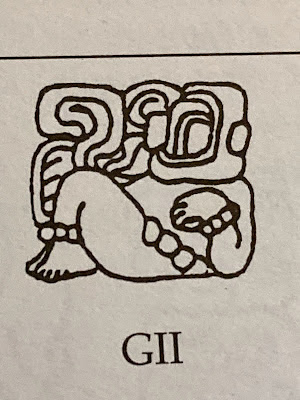
There were also disturbing carvings of humans in the arms or strange humanoid creatures. The intimacy often did not look consensual. They are similar to glyphs of the Burden of Time, but quién sabe?


Back in town we made an astounding discovery. A used comic book shop! These were Mexican comics. A lot of them were sci-fi. I recognized some as translations of American comics from the Fifties. Probably unauthorized translations.


It was run by boys about the same age–some younger–as that daredevil bus driver. I wonder what happened to them? Have they written any science fiction? Did they become Zapatistas?


Zapatista futurism. Is that a thing?


Now the Maya Train chews through the Lancondon jungle, spitting out its own future, Mayalandia, out to give Disney World a run for its money. I do wonder what it would be like to tour la ruinas in such high tech luxury. I also feel sorry for those who will not have strange adventures like mine.


Ernest Hogan, the Father of Chicano Science Fiction, has been wandering through Planet Nevada, NoCal, and Sasquatchlandia, and will be blogging about it soon. And judging the Somos en escrito Extra Fiction contest.

Wednesday, November 01, 2023

TEPOZTECO’S BELLY


Written by José Agustín


ISBN:  978-1-55885-982-1

Format:  Trade Paperback

Pages:  112

Imprint: Piñata Books

Ages: 12-18


This entertaining adventure story about Aztec gods introduces teens to Mexican indigenous traditions.


Alaín’s parents have a home in Tepoztlán, outside of Mexico City, and he invites a group of friends to spend the long Mexican Independence weekend there. They can’t wait to hang out, play video games and climb up to the Toltec pyramid that’s in the town! 


Once there, the city kids meet some of the locals, including Pancho, who’s about their age, and his mother, a curandera who does cleansings. The young people are thrilled to be able to watch the indigenous ceremony that involves copal incense, candles and rubbing an egg along the body. But more exciting is Pancho’s invitation to explore a large cave he has recently discovered. 


They set out early the next day and find the cave entrance without too much trouble, but soon things get weird. In the huge, dark cavern, they encounter an assortment of odd people. Before long, the friends realize they’ve accidentally entered Tepozteco’s Belly, where the ancient Aztec gods live. Mother figure and the goddess of sustenance, Tonantzín, and Xiutecutli, the lord of fire, want to help the kids escape, but others, including the fearsome earth mother goddess Coatlicue, want to subject the intruders to a bloody sacrifice! Soon the gods agree to a test to decide whether they will live or die. Introducing teens to Mexico’s pre-Hispanic culture and religion, this adventure novel blending fantasy and myth races to an exciting conclusion sure to satisfy young readers.  


JOSÉ AGUSTÍN, a native of Guadalajara, Mexico, is a journalist and author of numerous books. The Spanish-language original of Tepozteco’s Belly, La panza de Tepozteco, was published in Mexico in 1992.