Showing posts with label call for poets. Show all posts

Tuesday, July 08, 2014

Literary Diversity: Publish Your Own. Fútbol On-line Floricanto. Call for Poets.


Review: Pepperpot. Best New Stories From the Caribbean. NY: Peekash Press (Akashic), 2014. ISBN: 9781617752711 e-ISBN: 9781617752834

Michael Sedano
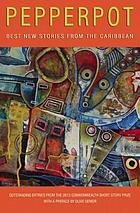
Peekash Press started out to be not a role model for U.S. publishers but the antidote. “we acknowledged that writers based in the Caribbean are less likely to be published than those living in the British or North American diasporas.” In Pepperpot. Best New Stories From the Caribbean,  the publisher does both. Clearly, one  answer to exclusion and lack of diversity is publish it yourself. Now readers need  to discover and prove there's a market.

The thirteen stories collected in Pepperpot come from six island nations, Trinidad and Tobago, Jamaica, Belize, Antigua & Barbuda, Barbados, Bahamas. The editors chose for quality not token inclusiveness from Caribbean-region entries to the 2013 Commonwealth Short Story Prize.

Readers want consequential characters in diverse roles and authenticity of everyday life. Good writing that sets stories off with compelling plots and rewarding insights make or break any collection of short fiction, no matter how inclusive. Most stories in Pepperpot: Best New Stories From the Caribbean make it. Readers will enjoy the characters' interesting awareness of dialect and ways the writers use their Antillean setting.

Irony happens irrespective of location. So do coming out, murder, incest, redemption, perversity. In some ways, everyday sins and what they look like here. One character laments how completely a father can disappear on a small island. Another gets insulted for being called an up island snob. Anarchy arisen from gang-dominance makes up the daily fabric of some neighborhoods of walled-in homes.

Island food and smells play key roles in other stories. The soup of the title raza will recognize as cocido. What makes jam heavier coming out than the fruit going into the mass murder's neighborhood stove? Readers will be glad to see the perverts get their just desserts, like the creep who liked to suck soft fruits and his sleeping mother’s nipple,  who “was particular to fleshy, squishy fruits where juices dripped—sweetsops, custard apples, melons, hog plums, star apples, mangoes, and so on.”

In “A Good Friday”, beguiling aromas rising from a woman’s waist capture a man's attention. “She not so cool, after all. She not so cool." He could smell the fragrances of her, her skin, her breath, her hair—cinnamon, coconut, peppermint, vetiver, and oh, Y’boy KarlLee can’t tell which is which, only it warm and nice and sweet”

Readers new to Caribbean literature will find dialect among the most notable elements of the genre; nearly every story contains moments where characters, even narrators, relax into everyday speech.

Bilingual readers will appreciate the way these writers handle dialect and code-switching. For the most part they don’t. The writers adopt standard orthography and grammar, using dialectal variation and local knowledge to inform an ethos and otherwise make a tactical point.

Kimmisha Thomas’ characters use a code-alternating style during intimacy that reflects their relationship. Jackie yields to constraints of straight society while Berry looks to free her lover from being uptight:
“Is like I could feel you coming,” she said, squeezing me tightly.
“Okay, I’m happy to see you too. Don’t squeeze the life out of me.
“All right, man. You too soft and dainty.”
Once free, I looked around. Nobody was watching us. Maybe they were just pretending.
“Stop it,” Berry said, tapping my chin, “nobody nah pree we.”

I suppose a non-dialect reader like me doesn’t need to know for sure what that all means word for word. Jackie found Berry’s words reassuring, and that’s where it matters, and what it sounds like, in Jackie’s life.

Kevin Baldeosingh’s Sukiya is comparing her one-percenter world to a minimum-wage bank teller when a surprising error shakes her enough that years of dialect discipline nearly slip away. “Except, now, Sukiya was facing one of these very tellers and feeling a flutter in her stomach. She said, “What you mean—“ then stopped. She took a breath to make sure her voice was steady and, making sure to pronounce each word properly, said, “I don’t undertand what you mean. That cheque is for five million dollars.”

Sukiya will be among a reader's favorite characters in the collection. She’s an up-from-nowhere girl writing contracts and moving money around the world for oil and mineral exploration interests, contracts, bribes. A crook. Her boss intended the erroneous five million bucks to finger Sukiya for all the fraud and let him walk away rich and clean, while she rots in jail minding her accent.

For me, the best dialect usage is something not used--appositional translation. When a character uses a word like “rassclaat,” or “pickney,” the discourse flows along without accounting the language switch. It’s the nature of multicultural expression, text selects its readership. Tipos who resent being left out by diversity can Google the terms, join the audience.

“Bomborassclaat! Me dead to rass! Me’s the Queen of England, me’s royally and unmentionably verbed!”

Most often, context is sufficient to fill in the gaps, and after a few paragraphs sprinkled with dialect a reader catches the regularities of style and readily grasps the story, enriched by the lives and sounds of these characters and stories. The Caribbean ambiente adds its own unique pleasures that can be discovered for the first time only once. Pepperpot. Best New Stories From the Caribbean will make a grand first impression, then lead into deeper exploration.

Readers seeking additional Caribbean writing will enjoy Akashic's Caribbean interest catalog and such noir collections as Trinidad Noir, Haiti Noir, Havana Noir, or Kingston Noir.

Order your copy of Pepperpot. Best New Stories From the Caribbean from an independent bookseller in your town and take Pepperpot along on vacation. It’s an ideal summer read and a loud promise from the publisher: If you want diversity and inclusion, keep buying it.


Fútbol On-line Floricanto • A Taco Shop Poet

©2013 michael v sedano
Continuing into the semi-finals, the world stops for 90 minutes hoping to hear the announcer's lusty scream, "¡gggooolll!" Lástima, for the US side, as today's Taco Shop Poet laments "we" lost in many more ways than on the Brazilian grass.

there are no winners tonight
By A Taco Shop Poet

our last hope of america,
the united states lost today.
it lost in more than one way.
it lost by points
but also, by way of a lost
love of america. it lost.
it lost its head, it lost its heart
it lost its word.
it lost its hope.

during the match,
the post from the child
says, “lo que me gusta
de la selección estadounidense
es que nunca se da por vencido”
the u.s. team never, ever
gives up. this, while i look
on and see the failure
of soccer moms. the failure
of status quo. the failure of
signs and of protest.
and truth be told,
there weren’t enough
brown and black faces.
there were not enough
poor faces. faces with legs
willing to run to another
country to win.

such are the days
we live in. we have
never seen war. we’ve
never seen drugs or la bestia.
we don’t know survival.
and we’ve pushed
the border so far south
that central america
is now the beginnings
of the fence.

when i was
thirteen, i recall seeing
a man at plaza bonita
one day. he asked me what direction
and how far los angeles was. see,
he’d just crossed. and i pointed.
north. he’d told me
he’d walked from
guerrero. guerrero.
to los angeles.
from san diego.
from my home.
didn’t seem like
a distance too far
if you’ve traveled.

and two weeks ago,
i didn’t even want
to ponder the depth
of the rabbit hole
children might have traveled.
such are the days
when i try my hardest
to understand a broken
system. it hurt just
to think of children
that have walked
from honduras,
from guatemala,
from el salvador.
and as a parent,
i couldn’t bear it.
the weight of so many
paces. alone.

today, we lost a match
we lost a game.
but life continues on.
the cruel cynicism
slaps me straight in the face.
it slaps me and tells me
i may not be “american”
enough. and yes, i feel anger.
i feel anger for the young
lives turned away.
i feel anger for having protested
and been treated like a criminal
while rights of others
are respected.

today, we lost a match.
there was no fire.
there was no next time.
there were only children.
children held in prisons.
children left alone.
children wondering
when they will see
their mothers again.
children with lives
like my children and
we couldn’t do so much
as offer shelter
or food.

what would’ve jesus
said? i can tell you jesús
believes in america.
in his posts. during the game,
he believes, we should love.
believes that we can
be both mexican and american
and american and mexican.
but he wonders if these are the values
we’ve shared?

the match was too long.
and we lost. we lost our perspective.
we called them wetbacks
we told them that they carry
diseases
gangs
dirtiness
has the story ever changed?

this, this is the jimi hendrix
star spangled banner
crashing. this is the
bald eagle that has died
from DDT. this, this is the
home for refugees
following an armed conflict.
but not one from a conflict
caused by our consumption.
policies. police. drugs.

this is the day that we lost.
we lost our heads.
we lost our hearts.
we lost the game.
we lost the love.
of what it means
to be
american.


Jazz-Inspired Poetry Anthology: Call for Poets


Pick a jazz artist and write three poems. “Jazz” is a big word and that’s what bloguera emerita Lisa Alvarado and Tara Betts intend. Pick your jazz genre and write about 3 songs. As Lisa told La Bloga, the proposed anthology is “looking for the best words about the music.”

LOVE YOU MADLY will be edited by Lisa Alvarado and Tara Betts. They seek poetry for a new anthology - poets write jazz. Each poet picks one jazz artist and writes three poems based on 3 songs.

Here’s a link to the Facebook page that includes all the details and specifications.


Tuesday, April 06, 2010

2010 Festival de Flor y Canto Launch; Review: Jimmy Santiago Baca, A Glass of Water.

Michael Sedano


Visions and Voices: The Arts and Humanities Initiative at the University of Southern California has awarded a grant funding 2010 Festival de Flor y Canto to Barbara Robinson, USC Libraries Curator of the Boeckmann Center Collection for Iberian and Latin American Studies, and Maria Elena Martinez, Associate Professor of Latin American History and American Studies and Ethnicity.

As chronicled in La Bloga over the past two years, Tuesday Bloguero Michael Sedano has been organizing this reunion of the landmark first Festival de Flor y Canto held in 1973 at USC. Dozens of poets, writers, and academics shared work at the 1973 event. Of these, thirty-nine presentations were preserved on videotape, including one musician and three teatros.

Sedano has focused his reunion efforts on the videotaped artists from 1973. Sadly, José Montoya and Roberto Vargas presentations are absent from both UC Riverside and Texas A&M Kingsville libraries. Those are the only known repositories of the 1973 videos. Contacted to date--most of whom will be appearing at 2010 Festival de Flor y Canto, September 15, 16, 17--are Alejandro Murguía, Alurista, Avelardo Valdez, E. A. Mares, Elias Hruska, Enrique La Madrid, Estevan Arellano, Frank Sifuentes, Javier Pacheco, José Montoya, Juan Contreras, Juan Felipe Herrera, Olivia Castellano, Roberto Vargas, Rolando Hinojosa-Smith, Ron Arias, Teresa Palomo Acosta, Tomás Atencio, Veronica Cunningham, Vibiana Chamberlin. In addition, Marco Antonio Dominguez, a 1973 poet not videotaped, will read, perhaps accompanied by his son, an MFA candidate at UTEP. Remote hope exists that José Montoya and Richard Montoya will also present a father-son reading.

A number of 1973 readers have died, including Oscar Zeta Acosta, Lynne Romero, Omar Salinas, raúlrsalinas, Mario Suarez, Marcela Trujillo, Ricardo Sánchez, Tomás Rivera, QEPD. Honoring these deceased luminaries, 2010 Festival de Flor y Canto's program includes ¡Presente! a program of memorial readings performed by actors or friends of the late artists.

A number of contemporary poets have submitted materials for consideration and inclusion in 2010 Festival de Flor y Canto. Numerous invitations have been accepted, with others pending. Based on preliminary responses to the Call for Artists, the three-day event will provide a full schedule blending the reunion voices, many of today's established Chicana Chicano Latina Latino poets, and up-and-coming newer voices.

In addition, Francisco Aragón and University of Notre Dame's Letras Latinas, is co-sponsoring with 2010 Festival de Flor y Canto a program featuring three poets including Diana Garcia, Emmy Pérez, and Maria Melendez.

2010 Festival de Flor y Canto also includes the opening of a semester-long photographic exhibit of Sedano's photography from 1973, together with the debut of the digitized video recordings of the original festival. Doheny Memorial Library's Digital Library Initiative will allow world-wide access to the historic, nearly lost, 1973 performances, as well as those documented during 2010 Festival de Flor y Canto.

The 1973 anthology, Festival de Flor y Canto, (Los Angeles : University of Southern California Press, 1976. ISBN: 0884740315 and 9780884740315 ) edited by Alurista et al, will have a companion multimedia volume, 2010 Festival de Flor y Canto, within a short period following the completion of the September event at USC. Publishers interested in the project contact msedano.

2010 Festival de Flor y Canto will be celebrated at Doheny Memorial Library on the USC campus on September 15, 16, 17, 2010. La Bloga will post developments, schedules, attendance details, as these are defined.

The Call for Artists for 1973 readers--whether or not in the videotaped collection--as well as contemporary poets and writers, is at Read! Raza. Open Call closes in mid-April. Institutions wishing to sponsor a panel of readers will contact Michael Sedano.

Visions and Voices: The Arts and Humanities Initiative is a year-long program featuring outstanding arts presentations that reaffirm the University of Southern California's Core Values. The grant is a singular honor marking the University's ongoing commitment to Chicana Chicano students, arts, and culture.


Review: Jimmy Santiago Baca. A Glass of Water. NY: Grove, 2009.
ISBN-13: 978-0-8021-1922-3

Michael Sedano


A murdered singer, her stroke victim widower, a major league pot dealer, a Chicano Muhammad Ali, a love-smitten urban Latina grad student, a background cast of migrant farmworkers and Anglo landowners, Time.

This is the cast of Jimmy Santiago Baca’s novel, A Glass of Water. As such, the cast fulfills the canonical demands of some Chicano literature: the romance of el campo, downtrodden farmworkers, angry organizers, oppressive bosses. Santiago plays out threads of these characters in unexpected ways, and, as such, A Glass of Water is not just another Chicano farmworker novel.

Baca refuses to allow his story to follow a pedestrian mold. This begins with that title, which offers a bit of a mystery, as in the classic half full hall empty conundrum. Does murder demand retribution, and, if left to fester unavenged, does it exert its own vengeance more terrible than death or imprisonment? Is eye for an eye murder justified, the actors vindicated for their actions? With such concepts at hand, Baca grows the canonical notion of Justice beyond a raza-specific agon to encompass more generalized ideas about carnalismo, hubris, renascence. Readers will be pleased to discover such complexities woven into a cloth of Chicanismo.

Time looms in the plot as an almost tangible character. Baca plays with sequence in chaptering the story, flashing back to earlier events to wrap context around ongoing outcomes. The novel begins with the voice of a dead singer, brutally murdered, leaving behind her bereaved husband and two barely mothered boys. When the novel closes, one of the few spiritual acts the mother conducted for her youngest develops into the agency that pulls him out of his mindlessly self-destructive path and points him right. All this time, he's been waiting for his mother's invisible hand to guide him.

Casimiro, the dead woman’s husband, knows the land, crop, workers. He’s tired, sick of the fields but knows nothing else so he puts in his time, tormented by the memory of a murdered wife while haunted by memory of a man he himself murdered unjustly years ago back in Mexico. Felled by a stroke, Casimiro can only impotently pass time, remembering his dead wife, the man he killed, and observing his older son pick up where Dad left off, with a twist.

Lorenzo, the older son, takes over as majordomo of the Anglo’s ranch. He not only husbands the land but becomes a paternalistic boss to the Mexicano and Chicano laborers. He mounts teevees in the packing shed so the women can watch their telenovelas while they sort and pack chiles; installs basketball courts and baseball fields so the kids can organize their time through sports; brings in literacy tutors to give the next generation a better chance. The twist is the money comes not from savings and hard work but from increasingly large marijuana deals. A duffle bag of weed becomes a truckload becomes a tankertruck filled with top leaf; fancy customers flying in from across the country to turn their deals.

Middle class Chicana from San Diego, Carmen comes out to the Texas / New Mexico fields to conduct field research. At first, she flirts with the smitten younger son, Vito, but soon relations up with Lorenzo. For the Chicana grad student with options, hers is a life choice. Blending field research with worker organizing and roping in Lorenzo, she takes the money from the dope deals willingly, to buy the trappings of advancement for her gente. Her efforts to organize the workers meet with frustration and excuses. Workers, in fear of losing a paycheck plus getting hauled away by ICE, don’t buy Carmen’s political philosophies.

Vito knows the leverage of the Anglo landowner. Not from having ICE sicced on him, but exiled nonetheless. The landowner’s son and a pal want to see Carmen strut her nalgas for them. Vito punches out their lights for their salaciousness. Casimiro has a choice: banish the boy or abandon his own livelihood.

Vito’s exile to New Mexico becomes his felix culpa. Dismantling a bloodied crumpled car he discovers a pair of boxing gloves. The gloves, and Vito’s mouth, launch him on a career from free-for-all bare knuckle brawls to a pay-per-view shot at a championship belt. Baca does a skillful job giving readers just enough ring action to keep them turning the page. Vito’s mouth riles the crowd and his fists are equal to the taunts. Vito’s chief shortcoming is lack of discipline. He nearly throws it all away for no discernible reason when a twist of fate—he spots his mother’s killer’s boots—brings him back to Lorenzo and Carmen. The fellow has it coming—he raped the dead mother years ago on her journey north—and the brothers' slaughter of the rapist wraps the Time and Justice motifs into a tidy package. They get away with it. Right place at the right time serendipity appears to answer life’s most pressing exigencies. Absent those, there’s Casimiro, paralyzed helpless, watching and observing.

Baca washes his hands of canonical thematics, his farmworker motif illustrating worker resistance to persuasion rather than crafting a romanticized huelga producing justice and higher wages through collective resistance. Lorenzo, Vito’s and Carmen’s involvement with one another illustrates a more compelling truth. Individual decisions produce wealth and lifestyle improvement, whereas collective action illuminates a path not much further than just beyond one’s lips.

As A Glass of Water concludes, Lorenzo and Vito are are out there tilling their own fields, purchased by dint of their own labor and serendipity. Carmen brings her daughter and a cold glass of water to slake the brothers' thirst. If it’s half empty or half full doesn’t matter, they'll soon drain it and be left with an empty vessel and more rows to how. And so it goes.


2010 Festival de Flor y Canto fulfills a dream for me. It's a pleasure to announce its realization today, this first Tuesday of April 2010, a Tuesday like any other Tuesday, except You Are Here. Thank you for visiting La Bloga. See you next week.

mvs


La Bloga welcomes your comments on this and all columns. Click the comments counter below to add your observations. La Bloga welcomes guest columnists. If you have a book review, an extended commentary on something you've read here at La Bloga, a literary, arts or cultural event to report, or something from your writer's notebook, click here to discuss being our guest.