Showing posts with label short story collections. Show all posts

Tuesday, July 08, 2014

Literary Diversity: Publish Your Own. Fútbol On-line Floricanto. Call for Poets.


Review: Pepperpot. Best New Stories From the Caribbean. NY: Peekash Press (Akashic), 2014. ISBN: 9781617752711 e-ISBN: 9781617752834

Michael Sedano
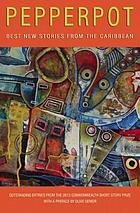
Peekash Press started out to be not a role model for U.S. publishers but the antidote. “we acknowledged that writers based in the Caribbean are less likely to be published than those living in the British or North American diasporas.” In Pepperpot. Best New Stories From the Caribbean,  the publisher does both. Clearly, one  answer to exclusion and lack of diversity is publish it yourself. Now readers need  to discover and prove there's a market.

The thirteen stories collected in Pepperpot come from six island nations, Trinidad and Tobago, Jamaica, Belize, Antigua & Barbuda, Barbados, Bahamas. The editors chose for quality not token inclusiveness from Caribbean-region entries to the 2013 Commonwealth Short Story Prize.

Readers want consequential characters in diverse roles and authenticity of everyday life. Good writing that sets stories off with compelling plots and rewarding insights make or break any collection of short fiction, no matter how inclusive. Most stories in Pepperpot: Best New Stories From the Caribbean make it. Readers will enjoy the characters' interesting awareness of dialect and ways the writers use their Antillean setting.

Irony happens irrespective of location. So do coming out, murder, incest, redemption, perversity. In some ways, everyday sins and what they look like here. One character laments how completely a father can disappear on a small island. Another gets insulted for being called an up island snob. Anarchy arisen from gang-dominance makes up the daily fabric of some neighborhoods of walled-in homes.

Island food and smells play key roles in other stories. The soup of the title raza will recognize as cocido. What makes jam heavier coming out than the fruit going into the mass murder's neighborhood stove? Readers will be glad to see the perverts get their just desserts, like the creep who liked to suck soft fruits and his sleeping mother’s nipple,  who “was particular to fleshy, squishy fruits where juices dripped—sweetsops, custard apples, melons, hog plums, star apples, mangoes, and so on.”

In “A Good Friday”, beguiling aromas rising from a woman’s waist capture a man's attention. “She not so cool, after all. She not so cool." He could smell the fragrances of her, her skin, her breath, her hair—cinnamon, coconut, peppermint, vetiver, and oh, Y’boy KarlLee can’t tell which is which, only it warm and nice and sweet”

Readers new to Caribbean literature will find dialect among the most notable elements of the genre; nearly every story contains moments where characters, even narrators, relax into everyday speech.

Bilingual readers will appreciate the way these writers handle dialect and code-switching. For the most part they don’t. The writers adopt standard orthography and grammar, using dialectal variation and local knowledge to inform an ethos and otherwise make a tactical point.

Kimmisha Thomas’ characters use a code-alternating style during intimacy that reflects their relationship. Jackie yields to constraints of straight society while Berry looks to free her lover from being uptight:
“Is like I could feel you coming,” she said, squeezing me tightly.
“Okay, I’m happy to see you too. Don’t squeeze the life out of me.
“All right, man. You too soft and dainty.”
Once free, I looked around. Nobody was watching us. Maybe they were just pretending.
“Stop it,” Berry said, tapping my chin, “nobody nah pree we.”

I suppose a non-dialect reader like me doesn’t need to know for sure what that all means word for word. Jackie found Berry’s words reassuring, and that’s where it matters, and what it sounds like, in Jackie’s life.

Kevin Baldeosingh’s Sukiya is comparing her one-percenter world to a minimum-wage bank teller when a surprising error shakes her enough that years of dialect discipline nearly slip away. “Except, now, Sukiya was facing one of these very tellers and feeling a flutter in her stomach. She said, “What you mean—“ then stopped. She took a breath to make sure her voice was steady and, making sure to pronounce each word properly, said, “I don’t undertand what you mean. That cheque is for five million dollars.”

Sukiya will be among a reader's favorite characters in the collection. She’s an up-from-nowhere girl writing contracts and moving money around the world for oil and mineral exploration interests, contracts, bribes. A crook. Her boss intended the erroneous five million bucks to finger Sukiya for all the fraud and let him walk away rich and clean, while she rots in jail minding her accent.

For me, the best dialect usage is something not used--appositional translation. When a character uses a word like “rassclaat,” or “pickney,” the discourse flows along without accounting the language switch. It’s the nature of multicultural expression, text selects its readership. Tipos who resent being left out by diversity can Google the terms, join the audience.

“Bomborassclaat! Me dead to rass! Me’s the Queen of England, me’s royally and unmentionably verbed!”

Most often, context is sufficient to fill in the gaps, and after a few paragraphs sprinkled with dialect a reader catches the regularities of style and readily grasps the story, enriched by the lives and sounds of these characters and stories. The Caribbean ambiente adds its own unique pleasures that can be discovered for the first time only once. Pepperpot. Best New Stories From the Caribbean will make a grand first impression, then lead into deeper exploration.

Readers seeking additional Caribbean writing will enjoy Akashic's Caribbean interest catalog and such noir collections as Trinidad Noir, Haiti Noir, Havana Noir, or Kingston Noir.

Order your copy of Pepperpot. Best New Stories From the Caribbean from an independent bookseller in your town and take Pepperpot along on vacation. It’s an ideal summer read and a loud promise from the publisher: If you want diversity and inclusion, keep buying it.


Fútbol On-line Floricanto • A Taco Shop Poet

©2013 michael v sedano
Continuing into the semi-finals, the world stops for 90 minutes hoping to hear the announcer's lusty scream, "¡gggooolll!" Lástima, for the US side, as today's Taco Shop Poet laments "we" lost in many more ways than on the Brazilian grass.

there are no winners tonight
By A Taco Shop Poet

our last hope of america,
the united states lost today.
it lost in more than one way.
it lost by points
but also, by way of a lost
love of america. it lost.
it lost its head, it lost its heart
it lost its word.
it lost its hope.

during the match,
the post from the child
says, “lo que me gusta
de la selección estadounidense
es que nunca se da por vencido”
the u.s. team never, ever
gives up. this, while i look
on and see the failure
of soccer moms. the failure
of status quo. the failure of
signs and of protest.
and truth be told,
there weren’t enough
brown and black faces.
there were not enough
poor faces. faces with legs
willing to run to another
country to win.

such are the days
we live in. we have
never seen war. we’ve
never seen drugs or la bestia.
we don’t know survival.
and we’ve pushed
the border so far south
that central america
is now the beginnings
of the fence.

when i was
thirteen, i recall seeing
a man at plaza bonita
one day. he asked me what direction
and how far los angeles was. see,
he’d just crossed. and i pointed.
north. he’d told me
he’d walked from
guerrero. guerrero.
to los angeles.
from san diego.
from my home.
didn’t seem like
a distance too far
if you’ve traveled.

and two weeks ago,
i didn’t even want
to ponder the depth
of the rabbit hole
children might have traveled.
such are the days
when i try my hardest
to understand a broken
system. it hurt just
to think of children
that have walked
from honduras,
from guatemala,
from el salvador.
and as a parent,
i couldn’t bear it.
the weight of so many
paces. alone.

today, we lost a match
we lost a game.
but life continues on.
the cruel cynicism
slaps me straight in the face.
it slaps me and tells me
i may not be “american”
enough. and yes, i feel anger.
i feel anger for the young
lives turned away.
i feel anger for having protested
and been treated like a criminal
while rights of others
are respected.

today, we lost a match.
there was no fire.
there was no next time.
there were only children.
children held in prisons.
children left alone.
children wondering
when they will see
their mothers again.
children with lives
like my children and
we couldn’t do so much
as offer shelter
or food.

what would’ve jesus
said? i can tell you jesús
believes in america.
in his posts. during the game,
he believes, we should love.
believes that we can
be both mexican and american
and american and mexican.
but he wonders if these are the values
we’ve shared?

the match was too long.
and we lost. we lost our perspective.
we called them wetbacks
we told them that they carry
diseases
gangs
dirtiness
has the story ever changed?

this, this is the jimi hendrix
star spangled banner
crashing. this is the
bald eagle that has died
from DDT. this, this is the
home for refugees
following an armed conflict.
but not one from a conflict
caused by our consumption.
policies. police. drugs.

this is the day that we lost.
we lost our heads.
we lost our hearts.
we lost the game.
we lost the love.
of what it means
to be
american.


Jazz-Inspired Poetry Anthology: Call for Poets


Pick a jazz artist and write three poems. “Jazz” is a big word and that’s what bloguera emerita Lisa Alvarado and Tara Betts intend. Pick your jazz genre and write about 3 songs. As Lisa told La Bloga, the proposed anthology is “looking for the best words about the music.”

LOVE YOU MADLY will be edited by Lisa Alvarado and Tara Betts. They seek poetry for a new anthology - poets write jazz. Each poet picks one jazz artist and writes three poems based on 3 songs.

Here’s a link to the Facebook page that includes all the details and specifications.


Tuesday, December 17, 2013

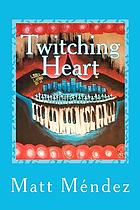
Twitching Heart; Top Books; Aural On-line Floricanto

Review: Matt Méndez. Twitching Heart. Moorpark, CA: Floricanto Press, 2012.
Isbn: 9781480257023 1480257028

Michael Sedano

In ten stories making up Twitching Heart, Matt Méndez draws intimate portraits of life on the El Paso / Juarez frontera. As the title predicts, Méndez' debut on the literary fiction market presents a set of stories about heart-broken people and heart-breaking times. Méndez is a portratist, not a novelist, the short form meets his need. Yet, there’s a connectedness among characters and artifacts they own that gives a richness to the collection more akin to a novel.

Ultimately, each story stands alone, despite its allusions to incidents and characters outside this story. Méndez’ intent in the compressed space of short fiction is putting tragedy on display, not the why and wherefore of such people and decisions, even when irony and random change link them.

Méndez offers a cast of well-drawn characters and lots of darkness. As a young author, the writer doesn’t pretend to forge an illuminating ethos for his people. Instead the stories move characters through the night, show people going through the motions thinking through a fog, gente who, when they make decisions, get it all wrong.

There’s a sadness to the characters because Méndez isn’t crafting larger-than-life avatars but ordinary gente at their limit, pendejos and losers being themselves because they can’t help it, and a rare ray of light. People like this are pendejas to someone, and this fact encourages Méndez to weave elements from earlier stories into others. When these connections crop up there’s a delight in the recollection, and satisfying closure to earlier experience, a way of informing one’s understanding of characters and events in terms of those earlier stories. Like Pedro Páramo.

A copy of the novel, Pedro Páramo, belongs to a down on her luck woman in Chuy’s story. Chuy’s an open wound of a person, the opposite of his name. Disappointed in his non-athletic son, his old lady is fed up with him and he proves her right, he’s a total loser. That copy of Pedro Páramo emerges a few stories later when Perla presents it to a bartender as a letting-go of Perla’s last valuable possession. Then Perla disappears herself. Years on, Oscar--Chuy’s son the disappointment—is in the early throes of love (a seeming normal guy) and his girlfriend shoplifts that copy of Pedro Páramo.

The act shines a ray of light into their nascent relationship, as well as Twitching Heart. These guys, this generation, finds happiness, Pedro Páramo has found a loving shelf. Yet, given the tenor of some of these lives, a reader wonders if Méndez is being archly ironic in the last words of the story, Oscar and Linda drive away “partners in crime.”

The entire collection offers enough diversion to excite any reader, with its themes of parenting, manhood, and mortality. But there are a couple of unexpected bonuses. First is a piece of Iraq war fiction. Second, the author’s departures into fantasy.

A visit to the author’s website discloses Matt Méndez is an Air Force Veteran, which explains the authenticity of the bomb loader’s world in the twisted epistolary piece, “Airman”. The military is a visible element of El Paso’s streetscapes, so Méndez puts soldiers in cameo appearances, and one character is a soldier who settled in town after discharge.

Science Fiction and Imaginative Fiction readers, like resident experts blogueros Rudy Ch Garcia and Ernest Hogan, will enjoy when Méndez takes off the restraints of the ordinary and sends his guardian angel character soaring into space, or when literary El Paso becomes dystopian and pilgrims—another Perla--journey to view the last standing saguaro in the land of shrinking babies and maybe birth the last baby on earth.
Twitching Heart rewards readers of diverse interests, but the publisher makes it a chore to acquire. Floricanto Press’ catalog is hopeless. A local brick and mortar bookseller can get your copy. It’s a strong collection, so better get your copies before they all go away.


Top Books Thing

There's a bit of book fun spreading on the social media site, Facebook. The chain letter goes something like this, "don't think just list 10 books that have made a lasting impression on you, then tag ten people to list ten books..." There are all sorts of reasons I don't play Facebook games, so I haven't responded nor tagged a soul.

In fact, I'm sticking with a list I put together in La Bloga back in 2005, in a column I called "the opposite of Chicano Literature?" In 2005, Time magazine listed its top 100 novels in the English language. The list excluded all the writers of the US's hispanoparlante communities. There is no surprise there, and ni modo. Make our own lists Manuel Ramos said. And I agreed. I offered five titles then that I reiterate today.

My intent, by the by, is not "the best" but the essential, books every reader needs to know to be literate about Chicana Chicano literature.


Graciela Limon. Memories of Ana Calderon. 
Benjamin Saenz. Carry Me Like Water.
Alfredo Vea. Gods Go Begging.
Alicia Gaspar de Alba. Sor Juana's Second Dream.
Ana Castillo. Peel My Love Like an Onion.


Ask, or Tag, your friends if you wish, see if they agree, how they'd expand or change my top five. Get a conversation started and there's a great chance of finding a holiday gift in the discussion.


Aural On-line Floricanto

When a group of college students at Cal State LA signed up for a Speech Class in advanced communication technology, they found the technology part fun and time-consuming, taking photographs, editing and pulsing audio tape, operating multimedia projectors.

The poetry is what brought life to their eyes. After all, technology is empty electrons without content. And poetry of the early movimiento was puro content in classic rhetorical terms from Burke to Aristotle: identification, exigence, style, delivery, ethos, pathos, logos.

Abelardo's "La Causa" is an early movimiento declaration of independence, a powerful battle protreptic or call to arms. The reader, Al Rosas, has one dysfluency that doesn't damage the impact of the reading. When your tongue trips like Al's has, don't correct yourself, keep going and the audience won't be badly distracted.
--

--
Sadly, I am unable to locate a full text version of the piece. Here is an excerpt to read as you listen.

La Causa
Abelardo Delgado

What moves you, Chicano,
to stop being polite?

Nice Chicano,
could be patted on the head
and wouldn’t bite,
how dare you tell your boss,
“Go fly a kite?”

Es la causa,
hermano
which had made me a new man.

What is this
causa
which disturbs your steady hand,
could it be an inherited
love of land
or the Indian impudence
called pride that I can’t understand?

This causa, hermano,
is charcoaled abuse
ready to burn.

What nonsense this brown power
that you claim,
what stupid demands
erupt from Will untamed,
what of your poetic submissiveness
that brought you fame?

Es la causa, hermano,
which leaves no one untouched.

Delano awaits the verdict of the nation,
Del Rio and justice
dance in wild anticipation,
El Paso and la causa
will be good for the duration.


Tuesday, February 26, 2013

My Old Kentucky Hangout; Mailbag; February's Final Floricanto

 Review: Everything Begins & Ends at the Kentucky Club

Michael Sedano

Benjamin Alire Sáenz. Everything Begins & Ends at the Kentucky Club. El Paso TX: Cinco Puntos Press, 2012.
ISBN: 978-1-935955-32-0

I thought Everything Begins & Ends at the Kentucky Club was Benjamin Sáenz' new Young Adult novel. Surprise! It's not.


Everything Begins & Ends at the Kentucky Club collects seven stories about love, suffering, courtship, suffering, torment, suffering, pain, and suffering.

Something’s changed in novelist Sáenz’ art—he appears to have taken a lot of the art out of his writing, and that takes a lot of art. Unlike the author’s Carry Me Like Water, a wonderfully beautiful novel that explores relationships with tenderness, friendship, love, and complexity, Everything Begins & Ends at the Kentucky Club pounds on relationships like a ball peen hammer dappling soft aluminum. Pound pound pound and every blow leaves a mark, by design but not always pretty.

Sáenz doesn’t endeavor to craft a unique voice for the seven first-person stories. One story the narrator is a teenager, another he's a would-be painter, or a high school counselor, or a guy named Al or Charlie or Neto. In every case, the same empty frustration echoes throughout the character's world and the character himself lives to be tormented, if not out of anomie then by his choice in partners.

There’s a sameness to the characters: abuse, cryptic lives, refusing to commit nor admit the word “love” into a relationship, a handsome man who attracts sex but leaves love out of it.

The stories are tightly wound like the characters. Drugs, danger, brutality contribute to the messy lives Sáenz creates. But there’s something beneath the surface the author wants to dig out of these gay Chicanos’ lives: a sense of decency, an urgency to do good and be happy despite the conspiracy of events that strike at the characters’ sense of well-being.

Fathers are brutal monsters who appear and reappear in horrific cycles. In the final story, “The Hurting Game,” for example, Mr. Michael Steadman is a high school counselor surrounded by violence, some obvious, some a not unexpected surprise. When a boy shows the counselor the bruises, Steadman gets a social worker involved to rescue the boy.

“Where will I go? Where will they take me?”
“Wherever it is, you’ll be safer. Gina won’t let anything bad happen to you.”
“What about my dad?”
Shit, why was it thata kids like Danny were always trying to take care of a parent who didn’t deserve to be taken care of, that didn’t deserve their love, that didn’t deserve to be called Dad? It was too common and too sad to talk about. (205)

Steadman is himself a refugee from that kind of father, so Danny’s endangerment becomes a causa for Steadman, a beacon of hope out of his battered past for this child’s future. In fact, Sáenz gives Danny’s foster family the name Lucero to emphasize the point. And, when Steadman abjures the gratitude Danny wants to assign, Steadman declares there’s no extra credit for doing your job. “Mr. Steadman, I’m on to you” are Danny’s parting words.

Then Steadman’s lover, Tom, reappears after a period of unexplained, but typical, absence. Tom’s strung out and paranoid, needs Michael to rescue him as he’d rescued the youngster. It's a parallel of hopefulness contrasted to consequential behaviors.

Now Sáenz pulls a ray of hopefulness out of the depression that permeates the collection—but not really. Tom has seriously messed up—he’s going to prison. But might there exist strong likelihood of life with Michael after exiting prison? Sáenz sets that up as a ruse, proffering an imagined happy ending:

“I can almost hear his voice as he tells me about his dream, 'You were sitting at the bar of the Kentucky Club and you looked like a fucking angel.' I’m imagining me sitting there and I do, I do feel like a fucking angel, and I’m waiting for him and then I picture him walking in, and he says to me, “See, babe, it’s true, everything begins and ends at the Kentucky Club.” I look at him and say, “No, not everything, just your dreams.” (222)

Relationships, in these characters’ lives, do not end with a bang but a whimper. And of a sudden, what appeared to be simple pain and suffering becomes infinitely complex, à la lady and tiger, and that takes a lot of art.


Mailbag: Kentucky Coincidence 
Marketing a Chapbook: We'll Print What We Sell

Kentucky's Finishing Line Press emailed recently to share the news that La Bloga friend and Guest Columnist Thelma T. Reyna's upcoming chapbook, Hearts in Common, would be available for pre-ordering from the publisher, with a catch.

What catches my eye in the publisher's announcement is Finishing Line's plan to limit the print run based on pre-orders: This limited-edition book can be ordered now. The number of books printed for public purchase nationwide will be determined strictly by how many books are ordered between now and APRIL 5.

I'm not sure I understand what that all means. If only a thousand people pre-order, will the publisher print only 1000 copies? Maybe there's a different formula. There's a principle in customer service management that a complaint represents at least 15 people with the same issue, but who remain silent without complaining; they just go away.

Paralleling that complaint formula, perhaps Finishing Line Press will print 15,000 copies if they get 1000 pre-orders by their April 5th order target?

Surprisingly, the publisher's come-on doesn't offer a sample of Thelma's poetry, making all the more problematic their decision-making process.

La Bloga is happy to share "Rosita's Hands" that appears in the upcoming chapbook. The poem moves from drudgery to dream, not like some raisin withering in the sun deferred, but the product of Rosita's deliberate doing. "Rosita's Hands" is a Dreamer piece. Reyna's poem lifts a lamp to light the path through the rapidly opening door of immigration reform. You don't realize a dream by dreaming but as a result of dedication and labor.

ROSITA’S HANDS
by Thelma T. Reyna


Rosita’s hands soaked in early morning suds,
the scalding pinking her skin as she
swooshed and swirled the scouring pad and
scrubbed pans until they sparkled.

Then her prune-skin hands wiped baby’s
face, peach oatmeal sticking on Allegra’s
chin and rosebud mouth, dangling like mushy
earrings on the child’s pale curls as she
cooed and grabbed for Rosita’s Gerber wipe.

At noon, Rosita’s hands folded linens with
precision, her fingers pressing creases in lines
straight and pure, stacking sheets and cases in
the master rooms while baby dreamt of
dolls and Rosita dreamt of vows.

At four, Rosita’s hands waved to Allegra and
her mother, gathered car keys and canvas purse, then
lay still on the manicurist’s table as her nails were
freed of jagged edges and transformed to
ruby nuggets of promise.

When I raise my hand tonight, Rosita said to
the manicurist, and, smiling, raised her free hand
to demonstrate, when I take the oath, I want my
hand to be beautiful. She inhaled radiantly:
And when I sign the paper at the end, when I sign my
name, my hands will be beautiful.

Rosita’s hands lay on the towel on the table,
pristine, the tiny salon fan whirring its breath on
the red-tipped hands that tonight, tonight,
tonight would be American hands at last.


Click this link to order the chapbook for under $15.00. Finishing Line Press welcomes mail orders at Finishing Line Press, P.O. Box 1626, Georgetown, KY 40324.

About Thelma Reyna:
Thelma T. Reyna’s new poetry chapbook, Hearts in Common, was a semifinalist in a national poetry competition, as was her first chapbook, Breath & Bone. Thelma is also author of The Heavens Weep for Us and Other Stories, winner of four national awards. Her stories, poems, essays, book reviews, and other nonfiction have appeared in journals, textbooks, anthologies, blogs, and regional media. Thelma’s fourth book, Life & Other Important Things, will be published this spring. She is an editor, ghost writer, and writing consultant with her business, The Writing Pros, and holds a Ph.D. from UCLA. Contact: www.ThelmaReyna.com.


Mailbag: Mysteries' Re-emergence
Henry Rios On the Rebound

6th novel in the Rios series
La Bloga friend Michael Nava forwards word from epublisher Open Road Media that Nava's exciting and infuriating Henry Rios series is available for a variety of devices.

Rios is one of those characters who's his own worst enemy, taking the lumps that come of bad decisions, then making more knuckleheaded moves.

Struggling with father issues that complicate his life, Henry Rios' career keeps readers on edge like lookie-loos staring up some pendejo on a ledge threatening to jump. Except Henry isn't threatening to jump. In most stories, he's in mid stride with no idea how far down the bottom lies, and he doesn't think he can fly.

Nava didn't kill Rios, Rios simply stopped appearing in print on paper. So these ebooks are not new titles, but given the growing readership for excellent Chicano literature, and the insatiable audience for top-notch detective fiction, the re-emergence of Henry Rios into the literary marketplace is great news.

Click here for Nava's book trailer and datos on the ebooks.


On-line Floricanto for February’s Final Tuesday: Love Lingers in the Air
Ramón Piñero, Zahra Zamorano, Francisco X. Alarcón, Mari Herreras, Victor Avila

"La Lenta Noche En Tus Ojos" by Ramón Piñero
"When time danced the tango" by Zahra Zamorano
"Love Blessings / Bendiciones de amor" by Francisco X. Alarcón
"she has a nopal heart" by Mari Herreras
"The Romantic Notion" by Victor Avila


La Lenta Noche En Tus Ojos
por Ramón Piñero

Te espero perdido
en esta noche lenta
ausente tu presencia
aun tu aliento
como un humo
efímero
rodea por el
cuarto
cuando la
ultima vez
te vi.

Te espero perdido
en los callejones
de mi mente
el recuerdo
de tus besos
y tus caricias
como puñales
directo al
corazón.

Te espero perdido
en esta lenta noche
sabiendo
que no llegas
ni llegaras.
Te espero
sonámbulo
por esta
lenta noche
de mí
existir.

Espero ver
tus ojos
oscuros
tu velo
negro
tu piel
como
mármol
acostada
junto a
mi.

Te espero
en esta
noche lenta,
sin fin
sin aurora
sin luz.
Te espero
perdido
en esta
lenta noche.
como me perdí
en tus ojos
me perdí
en tus
brazos
me perdí
en la
lujuria
que fue
nuestro
amor.

Mi alma
frágil
brotada
en el suelo
como las
hojas de
una flor
marchita
olvidado
como
el ayer
sin
rescate
sin piedad.

Te espero perdido
en esta noche lenta
ausente tu presencia
aun con tu
memoria tachada
en mi corazón
como un clavo
de acero
sangriento
en mi ser.

© Ramón Piñero 3/10/10


When time danced the tango
by Zahra Zamorano

and then they danced
to ancient rythms calling
back time to yesterday
past the tango, the salsa
into years sliding by as
steps become two, a beating
heart of the earth itself in
revolutions per minute, where
red meets black meets brown
where volcanoes erupt into
oceans of love's forbidden
adam and eve, where dark
histories are found in forgotten
books of old stories told, in
bandages shred from bloody
wounds begin to heal, inside
this beating heart of earth lives
a universal drum, beating death
into love, ancestral memories
come alive, as she saves life
in this story told to you...
now, kiss me, you fool.


LOVE BLESSINGS
by Francisco X. Alarcón

my grandma
and grandpa
blessed me

Mamá and Papá
also gave me
their blessings

crossing
kissing me
on my forehead

o every time
I am kissed
on my forehead

I feel so blessed! —
all love always is
a true blessing!

© Francisco X. Alarcón

BENDICIONES DE AMOR
by Francisco X. Alarcón

mi abuelita
y mi abuelito
me bendijeron

Mamá y Papá
me dieron también
su bendición

santiguándome
besándome
en la frente

oh cada vez
que me besan
en la frente

me siento bendecido —
todo amor siempre es
¡una bendición real!

© Francisco X. Alarcón


she has a nopal heart
by Mari Herreras

she has a nopal heart.
it bursts big
blue to green
the space
between thorns widens
when that heart belongs
to everyone along her street

she has she has she has
a nopal heart
sometimes tender, small
made purple
made easy for a hand's caress
tufts of yellow thorns
prevent this delicacy
from breaking apart

she has this heart
this nopal heart
every havelina feral creature
wants for it
a mordida
careful around the thorns
a flesh that sets even feral souls afire
content,satisfied
no mouth can resist


The Romantic Notion
"mi corazon, te quiero infinito"
by Victor Avila

Around my wrist a red bandana
bought in '66 with Bolivian coins.
Then your memory was a soft vein of ore
that I would mine and soon rejoice in
as cigarette smoke filled still another cantina.

It's now 1967.
Ahead of me lie oil fields and insurrection.
I wait in a train station in Angola.
It's an oven full of flies.

When all fails here
I'll write you from Mozambique
where the gibberish in Portuguese
is unfamiliar to both of us.

I've waited for your letters
near every airfield and in every dusty village
where the machetes that once cut the sugar cane
are now raised against automatic rifles.

I once cradled inside of me
notions of a romantic nature-
"I will die in a smokey trench
looking out toward the Rio Tama
for then maybe, just maybe..."

After two years of contaminated water,
dysentery, and stolen rifles,
I have seen through my own field glasses
that we fight battles that aren't
worthy of our weapons.

There is a pier we once walked on.
With paper arms I reached for stars
that were violently unreachable.
You were a wonderful addiction
and your girlish kiss naive.

I no longer want to die drunk
but return home instead with Lorca's poems
stuffed inside my passport.

I want to plant a silver bayonet
underneath your feet
and talk to to you for hours and days
of how I never missed you.

There's a DC-10 now landing in Los Angeles.
On it there is someone asking,
"Did we have Paris?
Yes, we had Paris.
And, aren't we both magnificently alive?


Bios
"La Lenta Noche En Tus Ojos" by Ramón Piñero
"When time danced the tango" by Zahra Zamorano
"Love Blessings / Bendiciones de amor" by Francisco X. Alarcón
"she has a nopal heart" by Mari Herreras
"The Romantic Notion" by Victor Avila


Ex Bay Area poet living in the buckle of the Bible Belt, aka Florida. Where good little boys and girls grow up to be republicans who vote against their own interest. Father of three and Grandfather to six of the coolest kids ever. Nuff said...


Zahra Zamorano is a poet/artist of mixed heritage who resides in the Bay Area of California, where she is raising her children as a single mother and working on a collection of poems. She looks at the world though a unique lens which is comprised of different spiritual disciplines and beliefs and influenced by global indigenous movements and a deep reverence for nature. "I love love and I love life. I want everyone to feel the same way." She is currently involved in putting vision into action and publishes some of her poetic commentary on her website: idreamofroses.blogspot.com.


Mari Herreras is a fifth-generation Tucsonan who spends her days writing about the weird, ugly and beautiful of Tucson, Arizona as staff writer for the Tucson Weekly. When she's not writing, she talks to friends and her heart -- her middle-schooler son -- about the weird, ugly and beautiful of Tucson. It's a vicious cycle that requires massive amounts of coffee and poetry, and a little mezcal, but someone has to do it.

Victor Avila is an award-winning poet. Two of his poems were recently included in the anthology Occupy SF-Poems for the Movement. He is also an illustrator whose worked has been featured in Ghoula Comix. Victor's own collection Hollywood Ghost Comix will be published in August 2013.

Tuesday, June 15, 2010

Review: Women who live in coffeeshops. On-Line Floricanto.

Review: Stella Pope Duarte. Women Who Live in Coffee Shops. Houston: Arte Publico Press, 2010.
ISBN 9781558856004.

Michael Sedano

Stella Pope Duarte's Vietnam war/Chicano movimiento novel, Let Their Spirits Dance, tells a powerful story that merits reading, both for its view of movimiento organization around the Vietnam war as well as Duarte’s skillful writing.

I know some readers--I among them--were put off by Duarte's stridently nationalistic stance at the conclusion of her Vietnam novel, the roll call of war dead Duarte limits to dead Chicano soldiers, to the exclusion of other names. That was her author's prerogative, signalling that Jesse's life and death in Let Their Spirits Dance was the story of all those dead Chicano soldiers whom history and United States literature would otherwise ignore. All the men I trained with at Ft. Ord—not just raza--who followed orders and went off to die in Vietnam deserved to be noticed, not ignored. To me, the only color that mattered was the green uniform we all wore, hence my discomfort with Duarte's politics.

Ultimately, Duarte’s strategy proves prescient, doesn’t it? PBS’ WWII series planned to burn us out of our role in that history. Texas pinheaded textbook writers are erasing us out of US history. In today's Arizona, its "breathing while brown" law would stand Jesse and all those names up against a wall and demand they prove their citizenship. All those names Duarte omitted could walk past whistling Dixie without a care in the world. My apologies to Stella for resenting her insight.

It’s unlikely Duarte’s work in Women Who Live in Coffee Shops will engender even a whit of rejection from readers based on their ethnicity or Duarte’s focus. The thirteen stories feature either very young or very old people, and in addition to Chicana Chicano characters, Duarte peoples her tales with Italian, Polish, and Appalachian Anglos.

Here are Arizonans trapped in their own lives by poverty and its pernicious economic culture. But Duarte isn’t writing some bleeding heart tales of woe, but rather how hard scrabble people find ways to earn hope, or just a soupçon of satisfaction.

The title story, which comes fourth in the sequence, for example, has a host of locals—Chicana, black, Anglo--unite to protest the arrest of an Italian coffee shop owner. Duarte suggests Sal is guilty of something, maybe the revenge murder of a jewel thief, or something else. The piggish cops earn no respect from the locals, who relish poking a sharp stick in officialdom’s eye. When the child narrator’s mother hands Sal back the inciminating evidence she’d absconded in advance of the search warrant, it’s a measure of justice.

“Homage” shows how women and men readily close ethnic and class-based gaps. The first-person narrator is a clerical factotum in the county courthouse. Overdrawn and perpetually broke, she’s painfully aware of the fancy cars in prime parking spots, and the expensive consequences from the letters she and her co-worker stuff and put into the mail. She catches the eye and, owing to a studied vocabulary, the ear, of a mid-level manager. They flirt. He turns a cold shoulder to a needy Chicano couple. She nags. He has a change of heart. The couple will profit, and the clerk and the boss will have a date and who knows, a happily ever after future.

Readers will note how efficiently Duarte uses her words and material. In the coffee shop story, for example, a colorful bagwoman called Margaret Queen of Scots, is good for a couple of paragraphs, then forgotten as the plot turns to the central action. But as the collection closes, Margaret’s back in “Enemy Lines.” The colorful habitué of Sal’s coffee shop comes back in a haunting first-person story as her life spirals to its end. She’s a joke to the doctor, an irritation to the emergency room nurse, who summons a sincere young cop to haul her away.

Duarte gives the bag woman a name, Margaret Claybourne. In her final moments, Margaret’s memories revert to her happiest time, a passionate love near a small Ohio settlement. The social worker whose job is to administer the county’s extreme unction exhibits genuine care for the old woman. She hallucinates, calls the young man by her long-ago lover’s name, wails for the son given up for adoption. As the social worker writes up his report it’s likely he fails to see the irony a reader knows. It should be corny, adopted son helps his lost birth mother take her last breath. In Duarte’s hand, it’s a masterfully heartbreaking tale.

As with any collection, readers will find some stories they prefer above others. Because of this, Women Who Live in Coffee Shops would be a great book club selection. Duarte makes it look easy but let folks get into a discussion of their favorite story or character and there’s sure to be passionate discussion about characters, themes, events, and writing. A truly enjoyable collection, reading it turns Duarte's dedication on its head, "Dedicated to the invisible city dwellers of the world. Someday we will all be invisible."


On-Line Floricanto: Poets Respond to Arizona Hate Laws.

Davis, California poet Francisco X. Alarcón has been sending La Bloga the weekly on-line floricanto selections. Introducing this week's On-Line Floricanto of Poets Responding to Arizona Hate Laws, Francisco recounts the process used to select the poems. "Em" Sedano is my Facebook name owing to Facebook's rejection of a single letter first name; normally my internet handle is msedano.

Dear Readers of La Bloga:

On April 24, 2010, as a direct poetic response to the xenophobic SB 1070 that was passed by the Arizona Legislature and then signed into law by Arizona governor Jan Brewer, a Facebook page was created, POETS RESPONDING TO SB 1070. There was an immediate great response from poets from all over the country. Currently we have around 3,300 “fan” members, more than 430 poems have been posted and indexed, and the Facebook page is visited by more than 2,000 times a week.

Currently there are 11 moderators of POETS RESPONDING TO SB 1070 who are able to post poems, announcements, articles, and statements directly on our Facebook page and also write comments to posted poems: Alma Luz Villanueva, Odilia Galván Rodríguez, Meg Withers, Scott Maurer, Lorna Dee Cervantes, Abel Salas, Israel Francisco Haros, Hedy Treviño, Andrea Hernández Holm, Elena Díaz Bjorkquist, and Francisco X. Alarcón, the original creator of the Facebook Page.

Em Sedano, Tuesday editor of La Bloga, invited the moderators to select 5 to 7 poems from the poems posted on POETS RESPONDING TO SB 1070 for the on-line issue of La Bloga that is released on Tuesdays. The selection process is that most moderators read and comment each poem as it is posted, and send their weekly selections to Francisco, who then tabulates them and sends the final selections to Em Sedano.

So far, 47 poems have been published as part of ON-LINE FLORICANTO at La Bloga. These poems reflect the tremendous diversity of the poetic communities they come from. These poems are a showcase of the richness of poetic forms, styles, and, yes, of the depth of feelings, concerns, positions, testimonials against a discriminatory law that promotes racial profiling. These poems are timely and yet timeless; they represent the best of the human spirit; they are a celebration of solidarity and good will; many are more than just poems, they are songs/invocations/prayers intended to heal the social wounds opened by irresponsible and opportunistic politicians. Our present aim is: "Civil Rights to All! For a Humane Immigration Reform Now!"

The moderators are seeking to publish a hard copy poetry anthology. We hope that you re-read the poems listed on this list:

Selected Poems for Tuesday June 15 Issue of La Bloga:

1. "We Will Sing Hope Songs" by Odilia Galván Rodríguez
2. "Today I Return As The Sun" by Hedy García Treviño
3. “You also have books? You also understand the signs by which you communicate with the absent?” by Scott Maurer
4. “Sunset Stanza” by Dionisio de la Viña
5. "Tortilla Telethon" by Nephtalí De Leon
6. “Reasonable Suspicion” by Manuel Ramos
7. “Brown Skin” by Hector Carbajal
8. "My Sweet Dream, My Living Nightmare: Adobe Walls" by Manuel Lozano


Selected Poems for Tuesday June 8, 2010:

1. “Hummingbird Medicine” by Devreaux Baker
2. “Yolotl Xoxoctic Tlalticpac-Green Heart On The Earth” by Diana Joe
3. “Arizona Goddamn” by Joseph McNair
4. “Two Missing, One White, One Brown, One Rich, One Not so Rich” by Elena Díaz Bjorkquist
5. “What The Day Brings and The Night Finishes” by Kristopher Barney
6. “Borders” by Matt Sedillo
7. “Las Uvas de la Ira” by Will Auther


Tuesday June 1, 2010:

1. "Invocación al Sol" by Maria del Carmen Cifuentes
2. "The Ghost Dance" by Hedy Treviño
3. "I Am From Two Different Homes" by Itzie Alarcón
4. "La regla de los ladrones / The Law of Thieves" by Avotcjia
5. "Scavenger Dreams" by Jeanette Iskat de Aldana
6. "Hierba Loca: The Children of Aztlan" by Lorenzo HerrerrayLozano
7. "Three-Ten to Tule" (Mixtek, Spanish, English) by Octaviano Merecias-Cuevas


Tuesday, May 25 2010:

1. “Chook Son, Arizona” by Abel Salas
2. “Wolf and Spider House” by Israel Francisco Haros López
3. “Escritores del Nuevo Sol” by Phil Goldvarg
4. “brə-sâr'ō” by Rachelle Linda Escamilla
5. “Qué Pinche” by Alma Luz Villanueva
6. “Whale Songs” by Francisco X. Alarcón


Tuesday May 18 2010

1. "End of An Affair" by Cathy Arellano
2. “Say/Mean/Think: by Miguel Morales
3. “Wilderness of Hope” by Yasmeen Najmi
4. “The Dead Speak” by Jessie Reyes
5. "Teachers Line up at the Tattoo Parlor" by Catriona Rueda Esquibel

Tuesday May 11, 2010:

1. “My Place” by Mariam Muradian
2. “Arizona Green (manifesto #1070)" by Juan Felipe Herrera
3. “The Immigrant” by Genny Lim
4. “Nepantla” by Odilia Galván Rodríguez
5. “on issues of aliens and immigration” by devorah major
6. ” I Call Out” by Elena Díaz Bjorkquist
7. “Where We Belong” by Andrea Hernandez Holm
8. “Legal Humans” by Jules Villanueva-Castaño


Tuesday May 4, 2010:

1. “Breathing While Brown” by Alma Luz Villanueva
2. “Synergy of Hate” by Antoinette Nora Claypoole
3. “Borderlines” by Meg Withers
4. “Insist and Resist” by Manuel Lozano
5. “Border Ghost of Sonora” by Carmen Calatayud
6. “For The ‘Capitol Nine’” by Francisco X. Alarcón


Let the Poets Sing!


1. "We Will Sing Hope Songs" by Odilia Galván Rodríguez


for Andrea


we will
sing our hope songs~
real songs of healing us.
of real love holding in its hands
this planet


blue, light
buoying up
our sadness, against hate - madness
which we choose to face head on
fearless


Quetzal-
coatl is
returning to the earth
molting into shades of Sixth Sol
birthing


whale songs
reach all the way
to the landlocked Black Hills
and wake children dreaming of peace
nightly


never
will we lose hope
our dancers and drummers
will heal the circle ~ erase our
despair


©Odilia Galván Rodríguez

9 Junio, 2010


photo is adapted and ©: http://www.flickr.com/photos/windsorschild/2909988816/in/set-72157607570673018/ used via Creative Commons Attribution 3.0 License.


2. "Today I Return As The Sun" by Hedy García Treviño


TODAY I RETURN AS THE SUN

By Hedy Garcia Treviño

In the early morning hours of my life
I stood there brown like a fawn in
early Spring
I pledged your flag
and learned your words
recited prayers in your church
and stood there tall
as you struck my hand
with your ruler of oppression.
But I never let you see me cry.

I watched my brothers return
from fighting dirty wars.
But I never let you see me cry.

I watched in horror at the way you
treated my elders.
But I never let you see me cry.

Today I'm neither here nor there
Quetzalcoatl whispers ancient secrets
in my ear as I look upon the morning star
as Chaac brings wind and rain and Hopop Cann
lights up the sky.

Today I long to jump into the fire
and return as the sun.

I call upon Mother Goddess Coatlicue
I'm searching for a breath of life.

Hedy Garcia Treviño 2010


3. “You also have books? You also understand the signs by which you communicate with the absent?” by Scott Maurer


"There is another fact I think I should not omit. A learned lawyer called Corales, who is a judge at Darien, reported that he encountered a fugitive from the interior provinces of the west, who sought refuge with the cacique. This man, seeing the judge reading, started with surprise, and asked through interpreters who knew the cacique's language, "You also have books? You also understand the signs by which you communicate with the absent?"
He asked at the same time to look at the open book, hoping to see the same characters used among his people; but he saw the letters were not the same."
De Orbe Novo, 1530
-Peter Martyr d'Anghiera

1514*
exploring textures
in this unfamiliar landscape
my bare feet planted in moist loose soil
cozy within fresh newly-minted moment
pleasurably enjoying
simple
joyful
acclimation of new experience

within today's sun cycle
marked by sublime sunrise to east
faraway over restless Atlantic seas
over impossible distances from faraway familiar home
we strangers washed ashore barely alive
alien beings to this soil
travel-wearied to exhaustion and beyond
our energies a long-forgotten memory

on weeks-hungered sea ration ached stomachs
in small landing boats we newcomers rowed ashore dreamlike
waking from nagging disbelief we’ve actually arrived
each of us seeking safe harbor from mind's productions of fears
surrenders
submits to our accompanying priest
arbiter of benevolent malevolent God
as dumfounded here at this moment as any among us
faraway from home faraway from anchoring companion-communicants
he trembles incessantly can barely speak
as flag and cross unpacked from ship’s safekeeping
are transplanted here into rich coffee-black beachfront soil
as if here never before had place-name
we declare we rename
Santa María la Antigua del Darién

priest’s comforting spell to my ears reruns at least partial ruse
pep talk for survival pep talk for momentary comfort
and I seek instead nature's forgiving comfort
I wander into jungle
loosen my internal long-mangled self
mixing mingling what remains of my insides
blending into fusion with unknown landscape
my insides' tightest grasp unclenched finger by fast-frozen finger
yielding my ego’s chokehold
my lifetime’s illusory reality-construction
my preoccupied focus loosens movie-like
my suspension of disbelief
my essence my being slowly melting
releases
my imagined management of waking moments
my soothing escape into comforting solace

inside me what still remains is on automatic-pilot
I am escapee into pleasing panorama of jungle
where I write in journal safe-carried from faraway home
carried like child's security blanket

I am asleep
I am awake
I am dream-spilling
out through my pen

somewhere in my consciousness I hear or I distractedly sight
movement

I look up mid-sentence stunned I am not alone
she is other-worldly
she is familiar
she is radiant
she is poised
she exudes confidence
and her relaxed gaze
her spoken tone
her pattern of speech
as if we are old friends made safe comforted by mutual presence

both here for each other

her voice is calming
these moments with her are magical
pleasurable
yet I not even know meaning of her words
we are long-distant cousins
separated by millennia
separated by scarcely-navigated seas

expedition interpreter parses her beautiful Nahuatl words
I learn her first spoken words to me

"you also have books?"
"You also understand the signs by which you communicate with the absent?" **

everyone here
this remarkable place
timeless beyond any place-name
knows her as Xochiquetzal

Forgive my playing with facts.
In 1514 Cueva people lived at place renamed Santa María la Antigua del Darién.
All Cueva people were dead within 25 years, by 1535.
I put factual words from De Orbe Novo into mouth of Xochiquetzal, "Flower Feather, the ever young and pretty goddess of flowers, love, pleasure and beauty. She is a patron of artists."
http://www.azteccalendar.com/god/Xochiquetzal.html

* In De Orbe Novo, 1514 is mentioned before this quote and 1515 is mentioned after.
** "The man may have been a Peruvian or of the civilised plateau people of Cundinamarca. Wiener, in his interesting work, Perou et Bolivie, studies the Peruvian system of writing."
http://www.gutenberg.org/files/12425/12425-h/12425-h.htm


4. “Sunset Stanza” by Dionisio de la Viña

SUNSET STANZA by Dionisio de la Viña † Dedicado a Marina Gipps †

The poet gets his power from nature:
The sunset never ends.
When the great Thunderbird has done its work
The sun finds his new solitary nest
And sets it on such blessed fire
-Oh holy ritual de mis amores!-
That fills the Arizona sky with ethereal illumination.
The poet walks home full of power
Finds his mate in their nest
And the room glows ‘til morning.
The nature of poetry is power:
The sunrise never ends.
The poet walks down the trail
He smells the scent of the Desert Dragon
Where is yesterday’s fear?
Only the great Thunderbird knows.

© 2010 Dionisio de la Viña


5. "Tortilla Telethon" by Nephtalí De Leon

Tortilla Telethon!
(-- beyond the Arizona blues…)

© by Nephtalí

on a telephone interview…
I was asked out of the blue
“so much is going on,
what kind of a people are u?”

without thinking I said:

“we’re not an old tortilla
but the living bread
Christ split
upon the mount

we’re not an old cerveza-beer
but the spring water clear
turned into wine to celebrate
the prophesied rebirth
of the children of the sun
la Raza Cósmica de Aztlán

we’re not Malinche, or la llorona
we’re the communal ghost
of the women of Juárez

the spirits rising
from the bleached
family bones
spread
upon the desert sands
genies popping out
from caravans
of calcium trails
dotted
by empty plastic jugs…

we’re the drowned spirits
of the river coming back
chupacabra relatives to haunt you
beings from the wall of shame
built upon our border brains
our heart and wings in chains

we’re the martyred souls
in airless gasping trucks
human traffic people traps
the migra dead tortured by ice

we’re here
to render all accounts
knocking on your door
we want our country back
we can’t keep track of death

we wont accept a no
from a government house
white-washed
with our sun-bleached bones
we won’t take no
for an answer
despite all appearances
there is no turning back
u cannot hide behind the mask

we’re all the disappeared
revived by holy water Tlaloc
EEhcatl, God of wind…
cared for by Tonantzin
Guadaliberty dear
(sweet mother earth…)

do u hear
el gigante dormido
is awake
knocking on your door
we were never asleep
just knocked out
when u thought u killed us all

we’re back
the living and the dead
we never disappeared
that is why we share
chocolate con pan dulce
when our spirits return
on `el dia de los muertos´

and every day we have
tortilla telethons
to celebrate
that we’re right on…! “

nephtali3000@hotmail.com
http://Nephtali.Net

Nephtali De Leon reading at May 1st 2010 March in Dallas, Texas


6. “Reasonable Suspicion” by Manuel Ramos

REASONABLE SUSPICION

By Manuel Ramos

For any lawful stop, detention or arrest made by a law enforcement official or a law enforcement agency of this state or a law enforcement official or a law enforcement agency of a county, city, town or other political subdivision of this state in the enforcement of any other law or ordinance of a county, city or town of this state where reasonable suspicion exists that the person is an alien who is unlawfully present in the United States, a reasonable attempt shall be made, when practicable, to determine the immigration status of the person, except if the determination may hinder or obstruct an investigation


The people defined
with reasonable suspicion
are everywhere
without
being anywhere

and that’s suspicious

Viejita hunched
over loads of
dirty hotel laundry
stands as short
as my impossibly short
grandmother

Young roofer
with insolent walk
wears my father’s nose
as though they were brothers
from the same regal line
of kings and warriors

so suspicious

Joke-telling scrubber
of the Pollo Rico grill
could be my cousin
if my cousin
had lived
through Nam

Laughing girl
cleaning toilets
spooks me
with eyes
that must have been
stolen from my mother

very suspicious

Daily encounters
with familiar strangers
do not subdue the hate
or calm the hard wind
and we are, again,
the usual suspects

Arizona drowns
in sands of suspicion
as it denies
reflections
of my family
are saviors


7. “"Brown Skin" by Hector Carbajal


BROWN SKIN

By Hector Carbajal


We plead with you, ancestors, for esperanza
We plead with you, ancestors, for más fuerza

Seguimos adelante knowing que caminamos juntos
Now, more than ever, seguimos rezando:

Brown skin is palabra—imagen y sonido de grito
Brown skin is celebración—somos flor somos canto

Brown skin is historia—páginas volando con el cambio
Brown skin es amor—corazón mundial

This, my brown skin, is memoria—my father’s face en la pisca debajo del sol
This, my brown skin, is strength—enduring veins in my mother’s arms

My brown skin is desire—tongue pressing against nipple
My brown skin is love—offering lo sagrado

Antepasados, deseamos sobrevivir
Antepasados, deseamos que nuestro coraje sea estratégico

Because:

In brown skin, laws seek to shoot
In brown skin, lines are drawn

Entréganos la fe
Entréganos la paz

Como en el pasado
Como en el pasado

Cuando trajimos lo mismo
Y nos enfrentamos
Contra el deseo del poder


8. "My Sweet Dream, My Living Nightmare: Adobe Walls" by Manuel Lozano

My Sweet Dream/My Living Nightmare: Adobe Walls

By Manuel Lozano:


What did I hear?
It is hard to describe,
The drums and the chanting
Of a beautiful tribe.
The flutes and the rattles,
Echoes and prayer-
The heartbeat of battles
Came out of nowhere.

I saw it all,
In one swooping brush stroke,
The vision was swirling
In the rising smoke.
The pendants were jaded,
Beaded and strung out,
We felt we made it
In the places we hung out.

The fragrance was rising
With a hint of delight,
And the moon in a crescent
Was hooked on the night.
I took in the perfume
As the starlight was gleaming,
And it was safe to assume
That the garden was dreaming.

The treble shook me,
And we rumbled through,
It felt like forever
Was looking like new-
Rugged and raw,
And we pounded along,
With the clay and the straw
In the brick holding strong.

Oh, I could taste it,
The indigenous air,
With a hint of red earthenware clay,
And a magic so rare—
Now a living nightmare,
For the wild wind is blowing.

There was nobody there
When the rooster came crowing.


© Manuel Lozano 2010


BIOS


1. "We Will Sing Hope Songs" by Odilia Galván Rodríguez

Poet and writer, Odilia Galván Rodríguez, is of Chicano-Apache ancestry born in Galveston, Texas and raised on the south side of Chicago. She has done extensive work as a labor/community organizer, with the United Farm Workers of America AFL-CIO, and as a cultural worker and social justice activist. Most recently she worked as the English edition editor for Tricontinental Magazine in Havana, Cuba. She is the author of three books of poetry, of which Migratory Birds: New and Noted Poems is her latest. Odilia offers Empowering People Through Creative Writing Workshops internationally.


2. "Today I Return As The Sun" by Hedy García Treviño
Name Hedy Garcia Treviño (nickname Jaritta Little willow) because i spent my childhood in the river by the willows. Born in New Mexico. Hispanic Family was in New Mexico before this area was a territory of the U.S and native family has been here forever.

Mother of 2 wonderful children and 1 precious granddaughter who lives in Phoenix. I started writing poetry as a young child when i was hit with a ruler for speaking Spanish in school. So poetry has always been my 'healer' my medicine, and poets responding is my temple. Professionally I'm a substance abuse and mental health therapist.

I was raised by my Spanish speaking grandparents in rural new mexico surrounded by corn fields which sang to me. It was a blessed and fortunate event that my parents abandoned me to the care of my grandparents because i experienced the ancient histories of my familia due to that experience. I practice herbal healing and come from a long family history of 'healers' and gardeners and those who work the land. I feel best when my hands are connected to the blessed earth.


3. “You also have books? You also understand the signs by which you communicate with the absent?” by Scott Maurer
Scott Maurer is a multilingual writer influenced y motivated by Latin American Literature, an Administrator of the Facebook page Poets Responding to SB 1070, y dedicates this poem to Associação Paulista De Motociclismo, São Paulo, Brasil, Dr. Donald B. Cooper at The Ohio State University, Francisco X. Alarcon, Rakel Delgado, y everyone at Poets Responding to SB 1070"

4. “Sunset Stanza” by Dionisio de la Viña
Like all children in Nicaragua in the 1960s, Dionisio de la Viña memorized poems to recite at school events. In San Francisco, California he received a B.A. in political science, an M.A. in Spanish Literature, and a Ph.D. in education have given him a very broad education. Mr. de la Viiña has taught Spanish literature and Education at the University of Arizona for the last 35 years. He has had the opportunity to study in Italy, Spain and Brazil. This experience has taught him to appreciate the cultures of many people. He is the father of two daughters and resides in Tucson, Arizona. Dionisio de la Viña only started to write poetry very recently.


5. "Tortilla Telethon" by Nephtalí De Leon
Grew up as a migrant worker. Spent later years in West Texas, bordering with several middle-America states, as his early years bordered with Mexico. The artist is a self taught creator with no formal or institutional higher education. After attending several lower schools, wherever the migrant trail would take him, he made it through high school. With an authentic non-academic approach to his craft, he freely practices the visual and literary arts that have a resonance and relation to the community he comes from. His art forms and reflections have developed as a result of his multi-lingual multicultural dialogue with a great part of the immigrants and natives he has come in contact with. He is often thought of as the Gypsy vagabond poet of his community.


6. “Reasonable Suspicion” by Manuel Ramos
Manuel Ramos is the Friday columnist for La Bloga. Manuel's current novel, King of the Chicanos, is enjoying critical acclaim surpassing that accorded his earlier novels, the Luis Montez detective series, and Ramos' provocative Moony's Road to Hell.

7. “"Brown Skin" by Hector Carbajal

Héctor Carbajal is a queer poet, historian and researcher interested in the ways in which writing is a form of action against all forms of oppression. He earned a B.A. in English at New Mexico State University and an M.A. in Borderlands History at the University of Texas El Paso. His creative writings have been published by Frontera-Norte Sur, Zacatecas: A Review of Contemporary Word, La Voz de Esperanza. His work is also featured in the Lambda Literary Award finalist this bridge we call home: radical visions for transformation (New York, Routledge, 2002), edited by Gloria E. Anzaldúa and AnaLouise Keating. His poetry is currently featured online by the Freedom Road Socialist Organization. He is a current doctoral candidate in English Rhetoric and Writing Studies at the University of Texas El Paso.

8. "My Sweet Dream, My Living Nightmare: Adobe Walls" by Manuel Lozano

Manuel Lozano, self-taught writer and artist, lives in El Paso, “El Chuco,” Texas, cradle of the pachuco. Manuel writes traditional verse “to the rhythm of the Matachines.” His work has appeared in Xican@ Poetry Daily and La Bloga. Visit his blog, Manuel Lozano: Xicano Writing. manuellozano7.blogspot.com

Friday, November 27, 2009

'Tis the Season for Short Story Collections

Black Friday – I’m here to help. You may have been in line today at 5:00 a.m. waiting for your chance to snag the latest hot (and rapidly disappearing from the shelves) gewgaw for your holiday list; or you may be lying low, putting off the inevitable shopping trip until the last possible moment, already suffering from seasonal malaise and credit card shock. In either case, you probably need some suggestions and since La Bloga is first and foremost a literary forum, how about a list of books?

To make it even simpler, allow me to present short story collections that the recipient can savor story-by-story, as long as it takes, without the commitment phobia that a novel sometimes can engender. In my opinion, a good short story provides the ultimate reading experience; these selections strive for that point of perfection. And, even better, each of these collections was highlighted here on La Bloga in 2009 by one of the knowledgeable blogueras or blogueros, often in a review, occasionally a pre-publication notice or other announcement.

The stories in these collections don’t fit any easy category; the authors are from around the world, with world-class imaginations; the themes are as diverse as the multitude of characters; and the writing is universally excellent. They aren’t high tech; they don’t make noise or flash lights. They won’t provide an aerobics workout or urge the user to “jack the perp” for the highest score. These anthologies aren’t for kids (maybe one of La Bloga’s other contributors can compile such a list, I know I’d find it helpful) and some adults won’t be able to handle the mental exercise. But a book never fails as a gift. They always are the right size, the color is perfect, they go with everything else in the house, and there are no batteries to recharge. They can be passed on without offense – literally, the gift that keeps on giving. Do something for the environment - give at least one book this holiday season.

The list, in order of mention on La Bloga:

February

Vermeer's Milkmaid by Manuel Rivas,Overlook Press, 2008: "Rivas uses abrupt time shifts, diverse points of view, sometimes from inanimate objects, to narrate his tales. Always with a lot of trust that his reader will know where the story is at any particular moment or paragraph. Typically, a story appears as a straightforward narrative but then it ends with a twist. Rivas specializes in twists." Review by Michael Sedano.

March

Zoetrope: All Story -- The Latin American Issue, edited by Daniel Alarcón and Diego Trelles Paz: "When you start putting together something like this, you never really know what to expect. Any anthology is always a bit arbitrary, a snapshot of the editors’ tastes at any given moment, and this one is no exception. ... [W]e selected these stories because they moved us, they taught us things we didn’t know. They made us laugh, they made the places we recognized seem new and startling and humane. I’m not really much of a literary critic, but it’s easy to note some overlapping sensibilities among the writers, particularly in regards to the influence of film and music and migration. One striking fact: at least half of these writers live outside the country of their birth, and that’s not counting Diego and I, Peruvians by birth who both live in the US. The most pleasant and reassuring surprise was that no single style reigns. There is no unified voice in Latin America, and I don’t believe there ever was—in a region this large and diverse, how could there be?" From Daniel Olivas's interview of Daniel Alarcón.


Latinos in Lotusland, edited by Daniel Olivas, Bilingual Press, 2008. “I'm still flying high from our wonderful Latinos in Lotusland book reading at Librería Martínez this last Saturday. I want to thank our guest authors who wowed the crowd with their writing and thought-provoking comments and answers to audience questions: Manuel Ramos, Lisa Alvarez, Alejandro Morales, Sandra Ramos O'Briant and Victorio Barragán (unfortunately, Conrad Romo couldn't make it but he was there in spirit). Also many thanks to Reuben Martínez for being a fantastic host.” Daniel Olivas posting about an event for the well-received and popular collection of Los Angeles stories that he edited.

April

San Francisco Noir 2: The Classics, edited by Peter Maravelis, Akashic Books, 2009. “Akashic and Maravelis have put together a worthwhile anthology, despite the less than felicitous subtitle. … an excellent collection.” Review by Michael Sedano.

May

Hit List: The Best of Latino Mystery, edited by Sarah Cortez and Liz Martínez, Arte Público Press, 2009. “Space constraints do not allow for a description of each story in this landmark anthology. Suffice it to say that the stories in Hit List will engross, entertain and fully satisfy any lover of mystery fiction.” Review by Daniel Olivas.


June

Live from Fresno y Los: Stories, by Stephen D. Gutierrez, Bear Star Press, 2009. “Stephen D. Gutierrez's new book of short fiction … bears witness to the excitement and pain, exhilaration and disappointments, of growing up Chicano in Fresno and Los Angeles during the 1970s. … He renders his world in honest, eloquent brush strokes, creating stories that are simultaneously grounded in a particular culture while remaining universal in their message. He does this without sacrificing his trademark sense of humor.” Review by Daniel Olivas.


From Here You Can Almost See the End of the Desert, by Aaron Michael Morales, Momotombo Press 2008. “This is subversive and sly work, as knowing in its effect as it is exciting to read. For all its thrilling nature, and for all his hard-edge style, this is a deeply moral effort. Morales wrestles with nothing less than the parameters of the human soul.” From the Introduction by Luis Alberto Urrea posted by Manuel Ramos.


Needles & Bones, Drollerie Press, 2009. “Needles & Bones is a collection of poems and short fiction by a double handful of brilliantly creative artists-with-words. It begins gently, with fairy tales, but its tendrils of surreality spread from the stories of our childhood, into our adult world, and on to places beyond our own. We visit heaven, and hell, and places we might never imagine, peopled by creatures who are only sometimes like us." Publisher’s blurb posted by R. Ch. Garcia, whose short story Memorabilia is in this collection.


Best of Contemporary Mexican Fiction, edited by Álvaro Uribe; translation edited by Olivia Sears, Dalkey Archive Press, 2009. “Sixteen of Mexico's finest fiction writers born after 1945 are collected in this compelling bilingual anthology, offering a glimpse of the rich tapestry of Mexican fiction, from small-town dramas to tales of urban savagery. Many of these writers, and most of these stories, have never before appeared in English.” Publisher’s blurb posted by Daniel Olivas.

July

Cuentos del Centro: Writing from the Heartland, Latino Writers Collective, Scapegoat Press, 2009. "There's a lot to be said for the output from well-funded ventures, editors, and agents. Quality, however, is not exclusive to the big bucks process. Case in point, Kansas City's Latino Writers Collective and its recent anthology of local writers, Cuentos Del Centro [that] features twenty-four stories from fifteen writers. ... You owe yourself and friends the opportunity to enjoy these stories and writers." Review by Michael Sedano.

Simpáticos: San Miguel Stories, Elva Treviño Hart, Bilingual Press, 2009. "Elva Trevino Hart introduces us to the people of San Miguel de Allende. Nestled in the eastern part of Guanajuato in Mexico's mountainous bajio region, the town has a mild climate and an accommodating culture that attract wealthy Americans and Canadians seeking relaxation and escape. In this picturesque setting, we meet a variety of well-to-do Anglo retirees: some are haunted by ghosts, others by their own pasts, some find renewed meaning and purpose, and still others explore their sexuality. Witnessing it all are the maids of San Miguel, the women charged with making visitors' stays carefree and luxurious.The maids work magic to heal or redeem their employers, but sometimes the sorcery of others trumps their own. Simpáticos movingly describes two extreme socioeconomic conditions and reveals the universal journey we all ultimately share." Publisher's blurb posted by Manuel Ramos.

August

A Dozen on Denver: Stories, edited by the Rocky Mountain News, Fulcrum Publishing, 2009. "In this original tribute, twelve talented authors celebrate Denver’s 150th anniversary, each creating a unique story based on a different decade in the city’s colorful history. Ranging from the pioneer days to WWII aftermath to a haunting vision of the future, this lively volume offers an eclectic mix of exceptional storytelling, each complemented by contemporary illustrations. Edited by the Rocky Mountain News and featuring twelve Colorado authors: Margaret Coel, Pam Houston, Sandra Dallas, Nick Arvin, Joanne Greenberg, Connie Willis, Manuel Ramos, Arnold Grossman, Robert Greer, Diane Mott Davidson, Laura Pritchett, and Robert Pogue Ziegler. Illustrated by Charles Chamberlin." Publisher's blurb posted by Manuel Ramos. I'll add that this book is nicely done -- a comfortable hardcover with the art work that was published with the stories in the newspaper. A good-looking book.


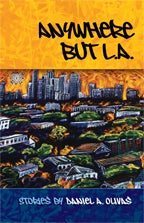
Anywhere But L.A., by Daniel Olivas, Bilingual Press, 2009. "In this collection of short stories, Olivas gives us a vivid and honest portrait of modern Latinos as they search for their place in the world. Funny yet touching, these skillfully rendered characters remind us of our own vulnerability. Individually, the stories are punchy and sharp; collectively, the stories create a colorful mural of a thriving Latino community." Kathleen de Azevedo blurb posted by Daniel Olivas.

September


La Ranfla & Other New Mexico Stories, by Martha Egan, Papalote Press, 2009. "Martha Egan and Papalote Press have put together a seven-story collection of enjoyable, readable short fiction. Two of the stories feature automobiles, hence the ranfla title, and all take place in the state of New Mexico, hence the New Mexico stories subtitle. But for the latter add a subtle flavor of insider-outsider seasoning that I find curious. This doesn't diminish the pleasure of reading the collection, it adds an unsettling dimension that, perhaps, is another New Mexico element." Review by Michael Sedano.


Lavanderia: A Mixed Load of Women, Wash, and Word, edited by Donna J. Watson, Michelle Sierra, and Lucia Gbaya-Kanga, San Diego City Works Press, 2009. "This anthology initiates us into one of the most sacred domestic rituals of our mundane world—the purging of physical and psychic stains, or the art and work of doing laundry. The writers' voices rise above the sounds of washing machines, non-televised daytime dramas, and laughter. Removing the clothespins from their mouths, these women reveal their secrets, fears, loves, and regrets in poem and story form. As finely detailed as the vintage sleeve of a rummage sale find, the work in Lavanderia brings the circle closer to home as you find yourself nodding and remembering and thanking every woman who ever sat next to you in a laundromat and made conversation." Publisher's blurb posted by Liz Vega. This collection features the story Goddess of Filth by La Bloga contributor Olga Garcia Echeverria.

Marielitos, Balseros, and Other Exiles, by Cecilia Rodríguez Milanés, Ig Publishing, 2009. "In her debut collection, Milanés tells varied, often heartbreaking tales of Cuban-American exiles. ... Complex and woeful, Milanés's rich ensemble act may remind readers of Junot Diaz's Drown and Denis Johnson's Jesus' Son.” Publishers Weekly review posted by Daniel Olivas.

October


Phoenix Noir,
edited by Patrick Millikin, Akashic Press, 2009. "Brand-new stories by: Diana Gabaldon, Lee Child, James Sallis, Luis Alberto Urrea, Jon Talton, Megan Abbott, Charles Kelly, Robert Anglen, Patrick Millikin, Laura Tohe, Kurt Reichenbaugh, Gary Phillips, David Corbett, Don Winslow, Dogo Barry Graham, and Stella Pope Duarte. Sunshine is the new noir . . . . From its frontier origins, Phoenix has always had a dark, lawless side. It is a city founded upon shady development deals, good ol' boy politics, police corruption, organized crime, and exploitative use of natural resources. Close proximity to the Mexican border makes the city a natural destination spot for illegal trafficking of all kinds--narcotics, weapons, humans." Publisher's blurb posted by Manuel Ramos.


War Dances, by Sherman Alexie, Grove, 2009. "[A] heartbreaking and hilarious collection of stories that explore the precarious balance between self-preservation and external responsibility in art, family, and the world at large. Brazen, and wise, War Dances takes us to the heart of what it means to be human." Publisher's blurb posted by Manuel Ramos.


Sun, Stone, and Shadows: 20 Great Mexican Short Stories, edited by Jorge Hernández, Tezontle, 2008. "The editor has done a marvelous job of selecting stories that offer snapshot scenes of Mexico’s soul. This slim volume indeed portrays a land and people authentically, with passion, agony, insight, and smooth prose that blisters the heart. ... [T]his book was a revelation ... I recommend it highly and suggest you pick up a copy soon; at $10 it’s more than a bargain." Review by Manuel Ramos.


The Man Who Could Fly and Other Stories, Rudolfo Anaya, University of Oklahoma Press, 2006. "The stories in The Man…, some previously published in the ever elusive and long out of print, The Silence of the Llano, may very well showcase Anaya at his finest. Intermingled with poignant folklore, religion, magic, and spirituality, readers of all walks of life now have an opportunity to join Anaya as he travels among people and places not often found in his novels. Undeniably influenced by the cuentos of his youth, Anaya’s stories cease to be merely words in print, but rather voices which will echo long after the book is shelved." Review by Jesse Tijerina.

November


Lorraine M. López, Homicide Survivors Picnic and Other Stories, BkMk Press, 2009. "A reader gets what the title proposes, a dank dark collection mirroring the debilitating heat and humidity of Southern weather. Unexpected will be the characters. Lopez’ central characters--many of them women-- are struggling everyday gente surrounded by, or engaged with losers. ... I’m raising my index finger in Lorraine López’ direction--not the bird nor a Packer's foam rubber prop, but the “you’re number one” finger--in appreciation of a finely honed collection of short fiction any reader will find absorbing." Review by Michael Sedano.

There you have it - a list of 20 short story collections guaranteed not to disappoint. Click on the links above and you will find the information you need to order the books; or take a walk over to the independent book store and pick up a few copies firsthand. If you get behind and are still looking for gifts after the New Year, let me suggest Mexico City Noir, edited by Paco Ignacio Taibo II, coming from Akashic Press in early 2010. I'm reading it now, and it's killer. Just right for the holidays, maybe even Valentine's Day.

_______________________

Six word story contest: thanks to the excellent few who submitted a six word story last week; they were great. The winner of a fresh copy of The King of the Chicanos is Liz Vega for this poignant word play:

Saddest sun set when they married.

Congratulations, Liz - the book is yours when it comes out in the spring.

Later.