Thursday, August 25, 2022

Chicanonautica: Demonic Possession in Arizona Politics

by Ernest Hogan

The only thing that changes in Arizona politics is that it keeps getting more grotesque. New politicians repeat the same clichés over and over. And of course, these being copies of copies of copies, they get distorted . . .  Newbies puke out the same old bullshit about abortion, taxes, traditional values, and of course, all those Mexicans sneaking across the border.


One guy has NO TRESPASSING—VIOLATORS WILL BE PROSECUTED on his campaign signs. Another is out to STOP CRITICAL RACE THEORY. Still another is claims that abortion is a Satanic ritual. And the name Trump keeps manifesting.


This kind of rhetoric has been getting hacks elected in Arizona for generations and is what got Trump into the White House.


It doesn’t seem to be worthwhile to learn the new names, except to know who to vote against.


One, however, is standing out: Kari Lake, the new Republican candidate for governor. 


Arizonians know her as a former Fox-affiliate news anchor, which translates to an attempt to put a pretty face on an ugly corporation. I only remember her face. She was usually smiling. Damned if I can remember anything she ever said.


She left that job “100% my choice. Fox did not want me to leave, nor did they ever ask me to leave,” according to the Phoenix New Times, and became a Trump zombie; her official campaign site repeats the same old song.


I was hoping to find some juicy quotes showing her take on things, but alas, originality is not her strong suite. While Colorado Representative Lauren Boebert comes up with stuff like “AOC, Warren, and the rest of the Genocide Squad will not rest until every baby in America is at risk,” Lake says things like: “I believe President Joe Biden is President Joe Biden just like O. J. (Simpson) is innocent,” which sounds like it was churned out by a defective AI.


Still, Lake won the Republican candidacy for governor in the recent primary, with 48.0% of the vote. It was a hard-fought race, with Karrin Taylor Robson, a Pence ally, getting 43.2%.


There was a Latinos for Karrin Taylor Robson page on Facebook, but knowing conservative, Republican Latinos, there’s no telling who they’ll vote for.


And to quote Lake again, “The establishment-side of the GOP is dying. This is Trump's GOP.”


On the Democratic side, Katie Hobbs won her primary by 72.3%.


And now Lake has said that Hobbs’ not believing that the 2020 election was stolen is “disqualifying” and “sickening.” I wonder if she loses, is she going to claim that this election was stolen from her?


If that weren’t all, Lake has called for Arizona to secede from the United States of America. “We must fire the Federal Government,” she has said.


This is horror movie stuff here. It’s as if demonic entities are possessing Republican politicians. Or perhaps a mutant variant of the Ophiocordyceps fungus has infected these poor folks with spores, sending tendrils into their brains, forcing them to go around spreading the infection. Maybe a mass exorcism is in order.


When I recently passed through Payson, Arizona, the Republican Headquarters was flying the American flag upside down. Some kind of emergency is going on.


But, there’s probably nothing to the rumor that Kari Lake can turn her head around 350 degrees . . .


Ernest Hogan once wrote a story in which Arizona seceded from the Union. He hopes he was not being prophetic.

Wednesday, August 24, 2022

International Latino Book Award Ganadores 2022


This is the list of picture books awards. To find more information, visit https://www.latinobookawards.org


Felicidades a todos los ganadores. 


A1 CHILDREN BOOK AWARDS


The Alma Flor Ada Best Latino Focused Children’s Picture Book Award – English

GOLD MEDAL -Child of the Flower-Song People: Luz Jiménez, Daughter of the Nahua, Gloria Amescua, Illustrated by Duncan Tonatiuh; Abrams Books For Young Readers; ; Insights from the ILBA judges, 'Gorgeous book, with a story that has not been told often. Would be a wonderful movie or TV show. '

SILVER MEDAL -Tía Fortuna’s New Home, Ruth Behar, illustrated by Devon Holzwarth; Alfred A. Knopf Publishing; Ancestry of the author(s): Havana, Cuba; The author(s) lives in: Ann Arbor/ Detroit, MI; Insights from the ILBA judges, 'A warm and charming story to reassure the youyh that change can be good and sometimes necessary.'

BRONZE MEDAL -Bisa’s Carnaval, Joana Pastro, illustrated by Carolina Coroa; Scholastic Inc.: Orchard Books; Ancestry of the author(s): Both from Brazil; The author(s) lives in: Dublin; Insights from the ILBA judges, 'Great to see Brazilian Portuguese language and culture in a children's book.'


The Alma Flor Ada Best Latino Focused Children’s Picture Book Award – Spanish

GOLD MEDAL -¡Corre, pequeño Chaski! Una aventura en el camino Inka, Mariana Llanos, Illustrated by Mariana Ruiz Johnson; Barefoot Books; Ancestry of the author(s): Perú; The author (s) lives in: Oklahoma City; Insights from the ILBA judges, 'Amazing! Beautifully told and illustrated - great character and stakes.'

SILVER MEDAL -Pura’s Cuentos: How Pura Belpré Libraries Reshaped Libraries with Her Stories, Annete Bay Pimentel, illustrated by Magaly Morales; Abrams Books For Young Readers; Insights from the ILBA judges, 'Author and illustrator hit a grand Slam!! An outstanding biography on the acclaimed Pura Belpre!!'


Best Children’s Fiction Picture Book – Bilingual

GOLD MEDAL -Let’s Be Friends / Seamos Amigos, René Colato Laínez; Illustrated by Nomar Perez; Holiday House, Inc.; Ancestry of the author(s): El Salvador; The author(s) lives in: Los Angeles, CA; Insights from the ILBA judges, 'Excellent simple, bright illustrations. Fully bilingual. Great read-aloud perfect for the classroom or storytime.'

SILVER MEDAL -Isabel and Her Colores Go to School, Alexandra Alessandri, illustrated by Courtney Dawson; Sleeping Bear Press; Ancestry of the author(s): US/ Colombia; The author(s) lives in: Miami, FL; Insights from the ILBA judges, 'Beautiful pictures that appeal to kids and enhance the story.'


Best Children’s Fiction Picture Book – English

GOLD MEDAL -Abuelita and Me, Leonarda Carranza, illustrated by Rafael Mayani; Annick Press; Ancestry of the author(s): El Salvador; The author(s) lives in: Toronto; Insights from the ILBA judges, 'Sweet, engaging story of the relationship between abuelita and nieta, plus a lesson about ageism and how to combat others' negative attitudes.'

SILVER MEDAL -Tía Fortuna’s New Home, Ruth Behar, Illustrated by Devon Holzwarth; Alfred A. Knopf, Random House Children’s Books; Ancestry of the author(s): Cuban/USA; The author (s) lives in: New York, NY; Insights from the ILBA judges, 'This story will stick with young readers for a long time.Well illustrated!!'

BRONZE MEDAL -May Your Life Be Deliciosa, Michael Genhart, illustrated by Loris Lora; Abrams Books For Young Readers; Insights from the ILBA judges, 'A beautiful story that turns a tamale into a benediction and blessing.'


Mejor libro ilustrado de Ficción para niños

GOLD MEDAL -Pitu le Baila al Mar, Gama Valle; Illustrated by Yamel Figueroa ; Editorial Destellos LLC; Ancestry of the author(s): Puerto Rico; The author(s) lives in: New York City; Insights from the ILBA judges, 'The author brings to light several social issues at a level that the readers can identify with.'

SILVER MEDAL -La Jirafa que no Cabía en su Cuento, Haydée Zayas Ramos; Editorial Destellos LLC; Ancestry of the author(s): Puerto Rico; The author(s) lives in: San Juan; Insights from the ILBA judges, 'This is a fun book for kids and parents. Also, the illustrations are adorable.'

BRONZE MEDAL -El monstruo más feo del mundo, Luis Amavisca, Illustrated by Erica Salcedo; nubeOCHO; Ancestry of the author(s): España ; The author(s) lives in: Málaga; Insights from the ILBA judges, 'This book is hilarious! Its simplicity and repetition of words makes it comprehensible for youngsters.'


Best Children’s NonFiction Picture Book – English

GOLD MEDAL -One Whole Me, Dia Mixon, Illustrated by Natalia Jiménez Osorio; El Mundo Mixon Books; Ancestry of the author(s): USA/African American; The author(s) lives in: Columbus, Ohio; Insights from the ILBA judges, 'Perfection! Lovely and fun to read, empowering for bicultural readers.'

SILVER MEDAL -In the Spirit of a Dream: 13 Stories of American Immigrants of Color, Aida Salazar, illustrated by Alina Chau; Scholastic Inc.: Orchard Books; Ancestry of the author(s): Mexico; The author(s) lives in: San Francisco, CA; Insights from the ILBA judges, 'I love the subject matter and the way each story was presented.'

BRONZE MEDAL -Alphabet & Affirmations with The Black Unicorn, Sandra Elaine Scott; Vision Your Dreams; Ancestry of the author(s): Panama/USA; The author(s) lives in: Boston; Insights from the ILBA judges, 'Very empowering for young readers and age appropriate. Excellent teaching tool!'


Best Children’s Nonfiction Picture Book – Spanish or Bilingual

GOLD MEDAL -Pura’s Cuentos: How Pura Belpré Libraries Reshaped Libraries with Her Stories, Annete Bay Pimentel, illustrated by Magaly Morales; Abrams Books For Young Readers; Insights from the ILBA judges, 'This book should be in every school library. It was a pure joy to read.'


Best Educational Children’s Picture Book – Bilingual

GOLD MEDAL -Pura’s Cuentos: How Pura Belpré Libraries Reshaped Libraries with Her Stories, Annete Bay Pimentel, Illustrated by Magaly Morales; Abrams Books For Young Readers; ; Insights from the ILBA judges, 'I think this book emphasizes the beautiful traditions of the oral storytelling, which Latino people, like myself, grown up hearing.'

SILVER MEDAL -Popol Vuh Stories for Children, Denis O’Leary; Floricanto Press; Ancestry of the author(s): USA; The author(s) lives in: Los Angeles; Insights from the ILBA judges, 'I believe the value of this book resides on the three languages in which is narrated, English, Spanish and Yucatec Maya.'

BRONZE MEDAL -Lala and the Pond by the Rock / Lala y el Charco de la Piedra, Susana Illera Martínez; Snow Fountain Press; Ancestry of the author(s): Columbia; The author(s) lives in: Miami, FL; Insights from the ILBA judges, 'he illustrations of this book are beautiful, and they have a lot of value, especially because the illustrator put a lot of effort on the drawings.'


Best Educational Children’s Picture Book – English

GOLD MEDAL -Child of the Flower-Song People: Luz Jiménez, Daughter of the Nahua, Gloria Amescua, Illustrated by Duncan Tonatiuh; Abrams Books For Young Readers;  Insights from the ILBA judges, 'The storyline is honest, deep, about challenges wherein one culture attempts.'

SILVER MEDAL -We Move Together, Kelly Fritsch, Anne McGuire, illustrated by Eduardo Trejos; AK Press; Ancestry of the author(s): Canada & Costa Rica; The author(s) lives in: Toronto & Ottawa; Insights from the ILBA judges, 'Colors are great, illustrations keep the attention and tie everything together.'


Best Educational Children’s Picture Book – Spanish

GOLD MEDAL -Morderse las uñas, Paula Merlán, illustrated by Brenda Figueroa; Cuento de Luz; Ancestry of the author(s): Spain; Insights from the ILBA judges, 'This is a beautifully illustrated story that tries to help kids get rid of the bad habit of biting their nails.'


Most Inspirational Children’s Picture Book – Bilingual

GOLD MEDAL -Pura’s Cuentos: How Pura Belpré Libraries Reshaped Libraries with Her Stories, Annete Bay Pimentel, Illustrated by Magaly Morales; Abrams Books For Young Readers; ; Insights from the ILBA judges, 'Wonderful book about a Puerto Rican story teller and her love for story telling.'

SILVER MEDAL -The Last Butterfly / La última mariposa, Regina Moya & Carmen Tafolla; FlowerSong Press; Ancestry of the author(s): Mexico; The author(s) lives in: San Antonio. TX; Insights from the ILBA judges, 'Beautifully told and illustrated, students will love the activity at the end.'


Most Inspirational Children’s Picture Book – English

GOLD MEDAL -Courageous Camila: A story about finding your inner warrior, Naibe Reynoso & Giselle Carrillo; Illustrated by María Tuti; Con Todo Press; Ancestry of the author(s): USA/Mexican-American; The author(s) lives in: Los Angeles; Insights from the ILBA judges, 'This book is so empowering, demonstrating the struggle but rewarding end of following dreams.'

SILVER MEDAL -The Voices of the Trees, Elisa Guerra y Fernando Reimers; Illustrated by Ana RoGu; Pearson Educación; Ancestry of the author(s): Elisa Guerra: México. Fernando Reimers: Venezuela. Ana RoGu: México; The author(s) lives in: Elisa / Ana: Aguascalientes, México. Fernando: Cambridge, MA.; Insights from the ILBA judges, 'This book is not just amazing, it's greatly needed with our current times of global warming.'

BRONZE MEDAL -Child of the Flower-Song People: Luz Jiménez, Daughter of the Nahua, Gloria Amescua, Illustrated by Duncan Tonatiuh; Abrams Books For Young Readers; ; Insights from the ILBA judges, 'Great inspiration! This story must be told. Diego Rivera would put her in murals!'


Most Inspirational Children’s Picture Book – Spanish

GOLD MEDAL -Tienes un color especial, Lorena Sierco Espino; Mr. Momo, Lantia Publishing Group; Ancestry of the author(s): Spain; The author(s) lives in: Barcelona; Insights from the ILBA judges, ' Refreshing! This is an adorable sweet story.'

SILVER MEDAL -Memoria de un abedul, Daniel Cañas, illustrated by Blanca Millán; Cuento de Luz; Ancestry of the author(s): Spain; Insights from the ILBA judges, 'Very well written, a good book to read aloud to children.'

BRONZE MEDAL -Peque y yo, Alicia Acosta, Illustrated by Mercé Galí; nubeOCHO; Ancestry of the author(s): España ; The author(s) lives in: Málaga; Insights from the ILBA judges, 'Beautifully written, accessible for children to understand grief. A read standout! '


Best Learn to Read Book

GOLD MEDAL -The Awesome Reading Adventures of Super Sammy and Marvelous Megan, Vanessa Caraveo; Vanessa Caraveo; Ancestry of the author(s): USA/ Mexican-American; The author(s) lives in: Harlingen, Texas; Insights from the ILBA judges, 'I like the storyline of siblings and their adventures.'


Tuesday, August 23, 2022

GOPlague-time, Galardonado In Silence, Roblest Impressions

 Michael Sedano

As if caregiving isn't enough challenge for a semi-old man (in two weeks I'll be 77), now I'm dealing with the GOPlague. Barbara has tested positive twice for the virus. She's got it, but it's not going to get her.

Me, I test negative. My claim to temporary invincibility comes as no idle boast. After all, I survived the cold war high above the frozen Korean DMZ, and back in July 2014, I died. 

The Ancestors sent me back so I wouldn't miss all those life events that flashed before my eyes as I was departing. My one regret was I wouldn't get to share my granddaughter's milestones. "Burn Sage," the ancestors told me. I do, every morning. The Ancestors are in the smoke, powerful medicine.

Provenance? I was overjoyed that Barbara had built strength and had energy to come into the grocery store and push the cart. My negligence allowed her to complete the aislesweeps unmasked. The only time she's gone into public without masking, the GOPlague gets her.

And that's the view from the coast, Tuesday, August 22, 2022. The only penultimate Tuesday of August in 2022 you're ever going to see, for the rest of your life. Make it great, gente. Read, raza, and GOTV. Never vote R.


Silence of the Latino Book Awards


The weekend of August 19-20 brought raza writers from across the continent to receive an International Latino Book Award. Almost 600 titles won a prize, if not a Medal, an honorable mention. The awards structure offers 208 categories, accounting for two full days of meetings at L.A. City College.


I searched the Google for news of "International Latino Book Awards" to disappointing results. The dearth of news about the awards fills me with frustration at lack of effort, somewhere. 


Essentially, the only news promotions the Awards get is from the organizers. Running the show is Empowering Latino Futures, renamed  from "Latino Literacy Now", whose dubious history of poorly-attended Edward James Olmos Book & Family Festivals are good cause to change identity, while pursuing the same business plan.


I don't know if the abysmal publicity about the Awards owes itself to poor promotion out of the Empowering Latino Futures' office, or deliberate erasure by newspaper culture editors. Raza literature doesn't get ink, just as raza actors don't get roles, raza directors don't get gigs, raza books don't get awards. So we have to do it ourselves.


Next year's Award campaign evidently keeps the same $90 entry fee per title. Authors, Agents, and Publishers interested in next year's awards can click this link. But do note, ELF staff have not updated the company webpage in detail.


Most Galardonadas Galardonados receive a dust jacket sticker, and authority to call oneself Prize-winning Author. Empowering Latino Futures promises some Award-winners $1000 cash and a marketing campaign. ELF places a $2500 value on the  marketing package that sends press releases and stories to 625 "Latino media outlets." 


Wouldn't it be something if ELF were to share that 625-name list with the Galardonadx? The only news I get about the Awards comes from happy Award-winning Authors on the MetaFace, so distributing proven leads to the writers genuinely has value.


It would be something if those 625 Latino media outlets ran the story big, with fotos and a local spin? A local writer's P.R. release has a better chance with a small-town editor, me parece, but the writer needs a name and number/email.

La Bloga congratulates all the participants in the International Latino Book Awards, and encourages participation in this, or similar, programs, with a caveat:

This Award is a sticker on a book. You gotta put that book and sticker onto bookshelves, you gotta send out your own press releases, don't restrict yourself to local Latino media outlets. You gotta toot your own horn. 

Learn to pronounce "Indefatigable" when people ask about your marketing campaign.


Guest Writer: Hugo Garcia

A guest at CasaSedano asked if I had read anything interesting, lately? I had just the answer for him sitting on my TBR pile, Against the Wall, in Spanish, as Contra la muralla, from Arte Publico Press.

The guest, retired newspaper editor and Spanish-language newspaper journalist, Hugo García, devoured the volume and enthusiastically sketched a few notes. The collection is available from the publisher (link).

In Alberto Roblest's Contra la Muralla's 17 short stories, reality and perception mix, even in the same sentence. The dramatic effect is not always clear to the reader.

When Roblest succeeds, like in El Dia Anterior al Anterior he skillfully describes its protagonists:
To date Grace hated her job...Sometimes she dreamt the plane was crushed by God's hand slamming it against the clouds; The Scorpions got off the limousine at the airport entrance astonished there were no fans anywhere; Pedro Martinez Ocaña aka Tigrillo was born without talent for politics or investments. To be honest he lacked talent to do anything; Cristal was worried her only support could die any moment leaving her destitute. She knew she had to hurry before his children and his two ex wives beat her to it. (García's translation) 
Roblest intrigues the reader as to how his people will intersect and how this will affect the story's end? Other times, the reader is left wondering what the stories were really about.

Throughout the stories Roblest shows a mastery  of character description and deep awareness of current political and economic corruption in the U.S., for example, in Obelisco Ennegrecido  Roblest covers the Washington Monument in cockroaches. 

Some of the Cuentos are only a couple of pages long like Laberinto in which its protagonist is chased by a fat being called la Chingada and Una Vez Abajo no se olviden de Encomendarse a Dios where the narrator is intrigued that a man in a suit and slippers stands in New York's Times Square looking up at the sky calling God.

Some stories are several pages long like El Dia anterior al Dia anterior and Lost and Found. Longer works allow the writer to present a traditional linear narrative until he gives the story a suprising end. 

In all, there is something for every one in its 17 short stories.

Monday, August 22, 2022

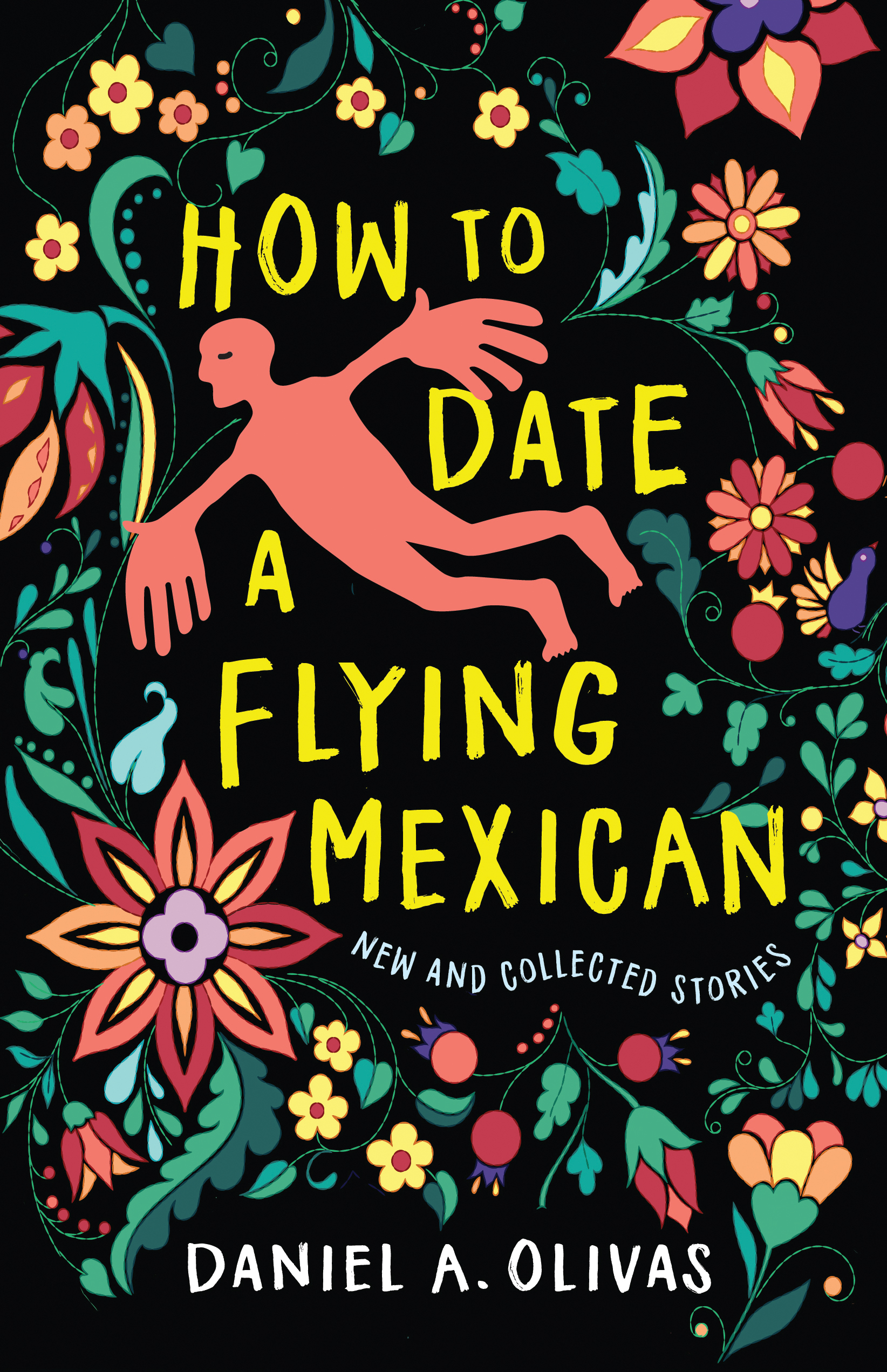
“How to Date a Flying Mexican” comes to the New Short Fiction Series, August 31, in a live streamed performance

The New Short Fiction Series, Los Angeles' longest running spoken word series, presents selections from How To Date A Flying Mexican: New and Collected Stories (University of Nevada Press) by Daniel A. Olivas, Wednesday, August 31, on Crowdcast. This live streamed performance stars host and spoken word artist Sally Shore, with guest cast Holger Moncada Jr. (Promised Land, Penny Dreadful: City of Angels) and Jill Remez (The Neighborhood, The Bold and the Beautiful). 

Performance stream begins at 7:00 p.m. Tickets are $12.00 advance purchase, $20 day of stream. For tickets and program information, visit https://www.crowdcast.io/e/how-to-date-a-flying/register.

Praise for How to Date a Flying Mexican

"How to Date a Flying Mexican is a beautifully realized work that comes out of the depths of the Mexican and Mexican American cultural experience."

    —Michael Nava, Los Angeles Review of Books

"Throughout all of his stories, there are strong Chicano characters, who embody tales that range from the laugh-out-loud funny to the heartbreaking. A timely retrospective from an important voice in Latinx literature."

    —Wendy J. Fox, BuzzFeed

"Prompted by tragedy—the death of his father and the pandemic—Olivas revisits decades of writing to produce this collection of new and previously published stories. Olivas’s work is surreal, dystopian, critical, and introspective, ultimately moving into contemporary political rhetoric."

    —Alta Journal

“Daniel Olivas loves to tell stories and his writing reflects that joy. Every story is told with a wink and a smile, encouraging you to follow along for the ride.”

    —Maceo Montoya, associate professor of Chicano/a Studies, University of California, Davis, and author of Preparatory Notes for Future Masterpieces

“From gritty realism to mythic and sci-fi speculative, Olivas dishes up an exquisite feast of short fictions filled to the brim with small and outsized everyday struggles—and failures.”

    —Frederick Luis Aldama, award winning author and Jacob & Frances Sanger Mossiker Chair in the Humanities at UT Austin 

 “This kinetic new collection of stories is exuberant and poignant, filled with the homegrown details of Latinx life as well as a kind of cheerful, saucy magic.”

     —Yxta Maya Murray, law professor, Loyola Law School and author of The World Doesn’t Work that Way, but It Could: Stories


Friday, August 19, 2022

A Quick Recovery from Covid-19

 Melinda Palacio


Thanks to the fact that I was vaccinated and double boosted, the Covid virus manifested itself like a big bad cold. I never had fever, which makes me question all the places that take your temperature to make sure you are Covid free, such as my dental office. At the first confirmation with a double line on the test strip, I called my doctor, who prescribed Paxlovid, a drug made by Pfizer, of the one and done vaccine fame. I figured since I already accepted the vaccine, I should take the drug. Three horse pills twice a day for five days and it worked for me and my sister who also tested positive for the virus on the same day. When she called to cancel our Viva La Fiesta plans in Santa Barbara, I was sad but not sick. The next day we both took tests and even though we were a hundred miles apart, both managed to get sick. Rest is the best medicine and my faithful companion, Pandora the Pandemic Pup, was more than happy to share my quarantined sick bed. The next best things are old fashioned medicine your mom might have given you when you were a child and had a cold. Chicken soup, something about chicken fat and broth is good medicine. I didn't have chicken, but I had plenty of carrots and chicken broth. I made myself a soup with carrots, lots of fresh ginger, and garlic. I'm lucky I still have oranges and lemon and mint in my backyard. Drinking tea with ginger and mint fresh citrus and honey was very helpful for my cough. 


My throat lozenges came with inspirational messages to keep me calm. Hot liquid also helped when I would get the massive cough that would wake me up at night. I learned to keep a warm cup of tea handy. Good ol' vapo rub also helped. I rubbed petroleum jelly on my chest and throat to help me sleep. When I discovered I had a eucalyptus aromatherapy roller, I used it instead of the Vicks. I also used a yoga hack to keep the phlegm from gurgling up and interrupting my sleep. I remembered how to use a bolster under your shoulder blades to open your heart. The technique of using pillows to lift my chest, made for a very restful sleep. Drinking lots of water with ginger, fresh mint and citrus is something I plan to continue, as well as the regiment of taking vitamin C, D, and Zinc. Basil, Oregano, Peppermint are wonderful anti-viral plant medicine. I added them to my soup and water and tea. At day four, I was sure I was over the Vid, but I still tested positive. I finished the last day of pills and two days later finally tested negative. My diet was soup and salad and lots of fruit for snacks. I think making sure I filled my body with liquids and fruits and vegetables helped. Fresh air, sunshine, light exercise and sleep made a big difference. As much as I wish the virus had never entered my body, there is no shame in getting Covid; even Doctor Fauci got it. I hope no one else get the virus, but if it strikes you, stay calm, treat yourself to plenty of home remedies and plant medicine and get plenty of rest. The horse pills or Paxlovid helps too. 

After a few days in bed even my trusty dog was bored. Quarantine and illness is not fun. We took walks, early in the morning when the neighborhood was still asleep. After I was feeling better, but still in quarantine, I took Pandora for a drive. She loves a drive almost as much as a walk. She goes everywhere with me and it's so nice to have a quarantine companion. 


A bored Pandora


. 
A happy dog.


A happy me, Covid free. 


Thursday, August 18, 2022

Excerpt from a recently completed novel: Late Bus to San Cristobal

 Fiction by Daniel Cano                                                                                    
San Cristobal, Chiapas, El Centro
 

Interview with a Vietnam Veteran: Ralph Salazar

Bar Sam Clemons, San Cristobal, Chiapas, MX

February 7, 2013

By Anthony Reza


     Ralph Salazar waits, for what seems like an eternity, looking at his drink. He listens to the young guitarist on stage, Pablo Verdugo, who starts in on the next song. In a calm voice, he begins, “Professor Reza, three incidents brought me to this point in my life.”  

                                                                                   37.      

     ONE: In his senior year of college, Ralph not only made the Dean’s Honor Roll but his shit list, as well. He was fervently anti-war and understood the children of privilege, like himself, would be exempt from serving. It was a poor man’s war, the first truly integrated war—blacks and Asians welcome, come one, come all, and he hated the injustice of it.

     He was also a thorn in the dean’s side. If there was a protest march, Ralph and his friends either helped organize it or participated in it. He was young and rebellious, a Jesuit high school education, a liberal’s liberal, and, at 6’-4”, an intimidating Chicano.

     His parents were an anomaly, both university graduates, his father an engineer and professor, his mother a pediatrician, the two of them Pacoima born and bred. After their careers took off, they bought a home in the upper-class, Westside enclave of Cheviot Hills, near MGM studios, midway between Beverly Hills and the Pacific.  

     At twelve, Ralph was reading science and politics. He liked novels and, by fourteen, he had read all of Twain, but his favorite was Steinbeck’s Grapes of Wrath, his high school freshman Jesuit lit teacher inspiring his students to identify with the downtrodden, Jesus’ people. Whatever sport was in season, he participated, accepting Ignatius Loyola’s belief in the sanctity of both body and soul. He was an academic and athletic prodigy, an All-City tight end his sophomore year.

     In college, he was way ahead of the other Chicano students, academically and socially. Instead of hanging out with students like himself, he chose to run around with the politically minded ethnic kids, Chicanos and blacks, public high school graduates, the best and brightest of their communities, and he encouraged a few who nearly dropped out to stay in school and avoid the draft. He quickly noticed they had what he lacked, insights into the underbelly of American society. While he protested poverty and social injustice, they lived it.

      That’s when he met an older grad student, Gilbert Miro, a dynamic and ruggedly handsome older Chicano activist, who could hold a student audience riveted for hours. A committed Vietnam veteran against the war, Miro had experienced what they learned in class, which drew students into his orbit, except Ralph, who was wary of the older student’s magnetic personality.

     After promising to end the war, the U.S. invaded Cambodia. The anti-war movement seethed. In Madison, Wisconsin, someone had bombed a military research building on campus, killing a grad student working late. In Oakland, Huey Newton had just been released from prison, and the word was, the FBI was infiltrating the Black Panthers and activist student organizations on college campuses.

     The killings at Kent State made everyone aware: if the government could kill middle-class white kids, they could kill anyone. Many believed the initial media reports that students had ambushed and killed two national guardsmen, a lie planted in the press by a national guard commander. Later reports described guardsmen chasing and shooting unarmed students, who had thought, all along, the guardsmen were using blank rounds. At Jackson State, days later, authorities killed two more students and wounded twelve. The country was on high alert. Middle America believed Chinese, Russian, and Cuban meddling was the real culprit.

     The President ordered the FBI to destroy the student radical movement by any means necessary, legal or not. J. Edgar Hoover disagreed. He didn’t want his agents on college campuses. That should be the work of local law enforcement. What he really feared was losing his power to the executive branch. Law enforcement across the country saddled up their forces. Nobody knew what to believe. It was in this boiling caldron that word had spread quickly about the big Chicano celebration, anti-war march, and moratorium in East L.A.

     It was a warm summer day, and though Gilbert had warned him to stay away from the moratorium, Ralph ignored him and met some friends at Laguna Park. As he remembered it, everything moved so fast, speakers, music, art exhibits, and fellowship, a true peaceful experience, thousands of people, enjoying the day and picnicking, until, without warning, a wave of helmeted police and sheriffs, swinging their batons, rushed the crowd, causing a wild fracas, confused people running in all directions seeking escape.

     In the melee, Ralph and two friends ran into a dead-end alley followed by a deputy they’d seen strike a young woman on the head with his baton. A surge of anger rushed through Ralph who coaxed the deputy forward, whispering to his friend, “Just follow what I do.” 

     The deputy approached, his baton raised, like a cobra ready to strike. Ralph was faster and charged, taking the big cop by surprise. “I’m a deputy sheriff!” he screamed, as a warning. Ralph wrestled him to the ground, his friends pummeling him with fists and feet then turned to make their escape. They called to Ralph, who had his knee on the man’s chest and his long, fingers around the cop’s throat. Ralph squeezed. The cop gasped for air. His friends pleaded with him get off the cop and run. Ralph heard a gurgle and saw the whites of the cop’s eyes. “You shit,” the deputy gasped, looking up at Ralph’s cold eyes. 

     Four white-helmeted LAPD rushed up and blocked the exit. One of Ralph’s friends managed to break free. Ralph stood, wild-eyed, fists at his side. The police surrounded him and his remaining friend. Without a word, just a grunt, Ralph took down one cop before the others began pelting him and his friend with their clubs. Ralph raised his hands to protect his face. Then it stopped. Ralph lowered his hands, looked up, and saw Gilbert Miro on top of him, an FBI badge dangling from his neck. Gilbert placed handcuffs on Ralph’s wrists, and he hollered at the cops to back off. Two officers, one a lieutenant, ordered Gilbert, “Move away! He’s our bust.”

     Gilbert spat, raising his FBI badge, “No, man! He’s in my custody. He’s been under federal surveillance for months.”

     “Over my dead body, the lieutenant roared, placing his face right up to Gilbert’s, who stood and pulled Ralph up from the ground. “You want your boss dealing with J. Edgar Hoover’s operation,” Gilbert said, sharply, “take your chances.”

     The cops surrounded Gilbert. They waited as an LAPD car pulled up. Two cops blocked Gilbert as another cop hit Ralph a few more times in the ribs. Then, they threw him into the car. Finally, the deputy stood up, still gasping for air. “Kill the son of a bitch.”

     With their scholarly son facing ten to fifteen years for assaulting a police officer, Ralph’s parents hired the best attorneys, who pled self-defense, and, as evidence, showed photos and home film of police chasing and beating people during the event. Ralph’s lawyers argued that any citizen had the legal right to defend himself against police if the police used excessive force.

     Gilbert appeared in court to testify that Ralph had been a federal asset in numerous investigations, which was news to Ralph and his attorney. The deputy Ralph had assaulted testified that the kid had nearly choked him to death, which the judge found something of an exaggeration. The prosecutor argued even federal assets could not assault police, whether the cops used excessive force or not. The judge, pushing 70 years of age, looked like he just wanted to get home. He found Ralph guilty, but rather sentencing him to the ten years the prosecution had requested, the judge sentenced Ralph to five.

     Gilbert, in the privacy of the judge’s chambers, and only the attorneys present, asked the judge and prosecutor to consider offering Ralph a choice—incarceration or the military? Ralph’s attorneys reminded the judge, their client had no criminal record, a sterling academic record, and was due to graduate with honors the following year. To the prosecutor's ire, the judge agreed.

     When Ralph’s attorney dropped the good news on him, Ralph sat for a moment, quietly. He cried out, “Hell, no! I’ll go to jail before I go into the army.” He was vehemently opposed to military service, and to the war.

     His parents had protested the war, so they understood, but they told Ralph a prison record would ruin his future. He’d be labeled an ex-con, a scourge to society. They insisted he take the deal. With his education, they might even make him an officer. He’d do a couple of years in the Army, get out, finish college, and move on with his life.

     It took some arguing, but Ralph agreed, reluctantly, except one of the prosecutors, Jonathan Fortlow, a preppy attorney vying for D.A., snickered at Ralph and said if this deal was going to happen, it had to be the Marines, and the infantry at Camp Lejeune, N.C., where he’d be far from home, and bad influences. The court agreed and managed all the details. Within two months, Ralph had completed Boot Camp, jungle warfare training, and was on his way to Danang on a Navy carrier. 

     “I hated the Sempre Fi, Orah! bullshit, like being with a herd of sheep. I couldn’t split or they’d impose the original jail sentence. One way or another, they got one more Mexican to fight their war. I can’t even describe my level of pissed off, back then.”

     I hear a loud click, the end of the tape. I slip in another. Ralph waits until I press the “play.” He falls into a rhythm and talks like he’s gone over the story a thousand times.

TWO: I got to Vietnam in ’72, a wild time up near the DMZ, the war’s end, or so we thought. A lot of guys seethed because they knew the Army had started shipping troops home, and they figured the Marines were next. Talk about confusion. “Vietnamization,” turning the war over to the South Vietnamese we knew would be a disaster. They didn’t want to fight, and the Saigon government was corrupt. Most Vietnamese knew Saigon’s democracy was a scam and the South could fall, anytime. We woke up each day with one thing on our mind – to survive another day.

     We heard rumors about the army. Officers down south were hiding out in headquarters, either drunk, gambling, or waiting for their gourmet dinners, and their ticket home. The soldiers were mostly anti-war protestors--draftees. The word was everyone was getting high, not just weed but opium and heroin. Nobody wanted to fight. They just wanted to stay stoned until the war ended.

     It started spreading to the Corps, enlistment down, so they had to start drafting. Officers and NCOs stopped sending their men on unnecessary missions. You’d get half a squad disobeying orders, anyway. Most NCOs and officers understood. They could read the writing on the wall.

     I had a month to go, and I didn’t want to lose one guy. A few lifers knew it would be their last chance to earn medals or a promotion before Washington pulled the plug. Lieutenant Mariano Moore, an Annapolis grad, joined the Marines and was itching to make captain regardless of who he had to sacrifice. My machine gunner, Tommy Moreno, said, the way he saw it, Moore never forgave his Mexican mother for abandoning him to a violent Protestant English, Irish father, so Moore took his rage out on us, the Chicanos in his command.

     He’d order us on operations other officers refused. If we even questioned him, he’d threaten to bust us. “You’re Marines, first,” he’d tell us. “Don’t forget that.”

     It didn’t matter if reports said the mission was a death trap. He volunteered us, anyway. Even the chopper pilots didn’t want to fly. When it was finished, we lost guys for nothing. After, I was ready to waste him then and there, to hell with prison.

     I had friends who told me to wait it out, until the right time. Then, Moore volunteered us for another operation, just when three guys in our squad were ready to go home. No need for details. I’ll just say in any band of young, armed desperate men, there is always someone crazy, scared, or determined enough to eliminate a threat, and once that threshold is crossed, there is no return.

     Moore avoided the bush, so we waited for the right time. It was a routine patrol, just beyond the perimeter of our base camp, Moore buzzing around overhead in his chopper. We got him to land.  He near panicked when the chopper took off without him. Someone heard a shot. Everyone started firing, mass confusion. I detonated a claymore. Moore went down, just like that, fast, zip.

     The USMC investigators chalked up Moore’s death as another casualty. Forget the evidence pointed to something more sinister. The CID ignored the rumors that Moore would be leaving Vietnam in a body-bag or a Medivac. Lieutenants were like fodder. For the officers who remained, one more dead Louie meant more medals and promotions for them. We never knew whether it was a bullet, a grenade, or my claymore that did the job on Moore, not many recognizable remains. Get this. I go to Vietnam and end up killing a half-breed Mexican, and I had no hesitation in doing it.

     I hit the stop button on my recorder. “Hold up a sec. I need a drink of water.” I reach for a bottle on the table, and I drain it, slowly, feeling the liquid flow down my throat. I try not to think, just act. I take a long breath. “Alright.” I press the play and record button to start, again. He talks, matter-of-factly, no stress.

     I met Gilbert in Thailand, on my R&R. He was on some kind of assignment. Strange, I turned to the man who I believed had betrayed me. I told him about Vietnam, how different it was since he had been there. I told him about Moore, but Gilbert said he didn’t want details into Moore’s demise. He had said, “There are worse punishments than death.”

     “Ralph, let’s stop a minute? I need to use the head.”

     He raises an eyebrow. As I walk past the people at the tables, it’s like they’re all watching me. I shake it off and try letting his confessions just slip off me, but they don’t. In the bathroom, I realize, even though forty-years have passed, I’m recording an American Marine admitting to assassinating an officer. Ralph has to know by telling me, it will be in my book, and made public. I wash my face, return to the table, and sit.

     I reach out to start the recorder. Ralph puts his large hand over mine. “You asked,” he says. “Write it just the way I’m telling it.”

     “You’re admitting to murder.”

     “I’m beyond their reach. Besides, Mariano Moore’s a pseudonym.”

     I press the record button on the recorder. He starts again, as if we’d had no break.

THREE:

Wednesday, August 17, 2022

24th International Latino Book Awards Ceremony


August 19-20, 2022

Saturday, Aug. 20

Los Angeles City College


From https://www.latinobookawards.org


August 19-20, 2022. 

This event will be divided into FOUR ceremonies spread across two days. During each ceremony we will announce 1st, 2nd and 3rd place winners.


Friday, Aug. 19

12:00 pm -

Poetry

EBooks

Audiobooks

Portuguese

Design

Translation

Mariposa

Themed, & Marketing


6:00 pm- 

Fiction Awards Ceremony


Saturday, Aug. 20


12:00 pm- 

Children, Youth & Young Adult Awards Ceremony


5:00 pm- 

Nonfiction Awards Ceremony


ISLA Latino Publishing University

UPDATE, this event will now be launched with two free workshops for all attendees of the ILBA Ceremony. The rest of the workshops will happen virtually every month after August. The ISLA Latino Publishing University is an education program to support author growth, to provide a setting to network, and to increase publishing success. The core of this program is a series of workshops in English and Spanish targeting topics that authors and small publishers often ask about.


Both events will be at this location:

Los Angeles City College

855 N. Vermont Ave.

Los Angeles, CA 90029